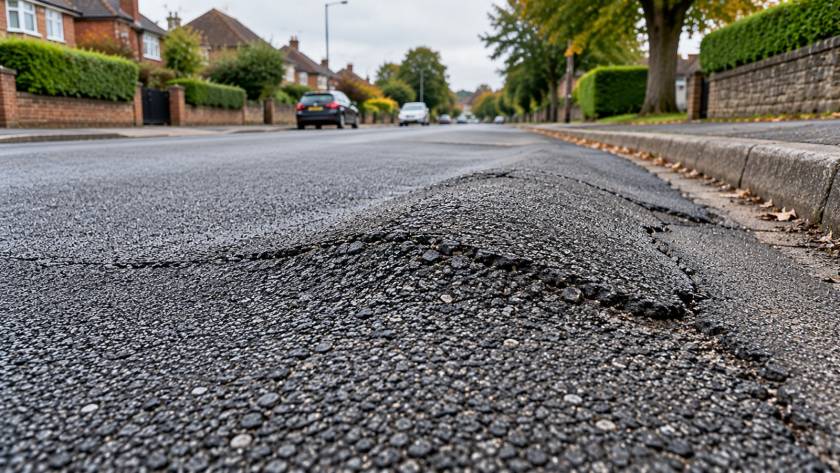
Tarmac is often associated with cracking when a surface begins to deteriorate, but cracks are not the only sign of a problem. In some cases, the surface can begin to lift, swell or form noticeable bulges. These raised areas may appear gradually or develop relatively quickly, and they can indicate movement within the layers beneath…
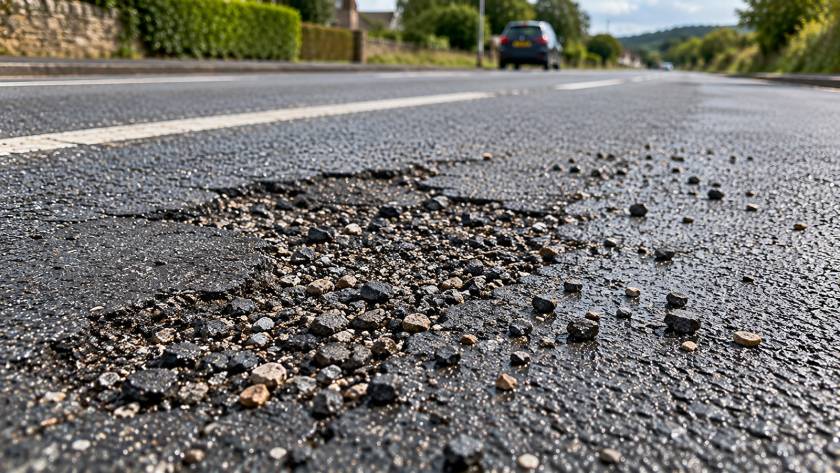
Small patches of loose aggregate on a road can seem relatively minor when they first appear. A few loose stones or a slightly rough area may not immediately affect access, but these changes can indicate that the surface material is beginning to deteriorate. For property owners and commercial site managers, recognising the problem early can…
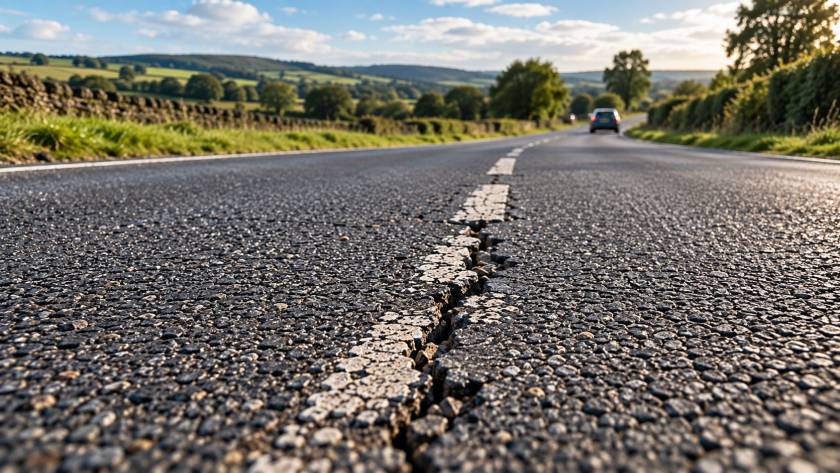
Cracking along the centre of a road is a relatively common form of surface deterioration. It can appear as a narrow, almost straight crack following the length of the carriageway, or it may develop into a wider and more irregular damaged area as the surface ages.
For property owners, estate managers and commercial site operators,…
A pothole repair should restore the damaged area so that it sits level with the surrounding road and provides a stable surface for passing traffic. In practice, however, some repairs gradually sink below the existing carriageway. What initially appears to be a successful repair can develop into a noticeable depression, creating an uneven surface and…
A road does not need to look badly damaged to require attention. In many cases, the most effective time to carry out preventative road surfacing is while the surface still appears reasonably sound. Waiting for widespread potholes, deep cracking or obvious deformation can allow relatively minor deterioration to develop into a much larger structural problem.…
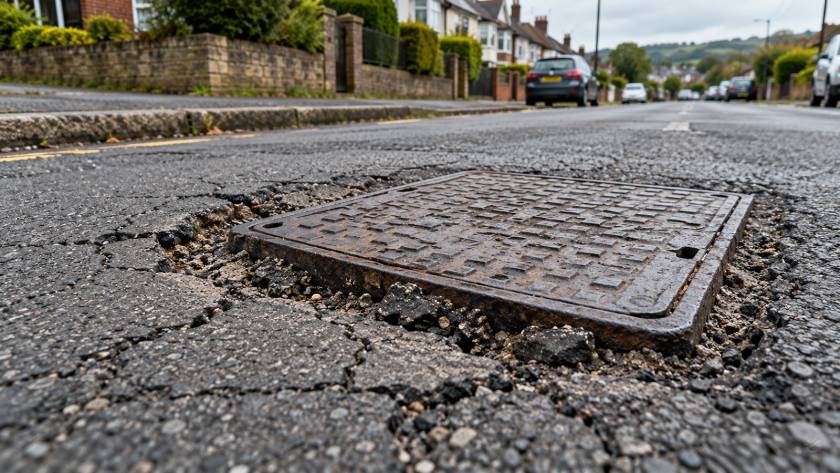
Tarmac surfaces are designed to provide a continuous, durable layer capable of handling vehicle movements, changing weather conditions and repeated loading. Manholes interrupt that continuity. Instead of the surfacing being supported by a consistent construction beneath it, the material must meet a rigid chamber, frame and cover that behave differently from the surrounding road structure.…
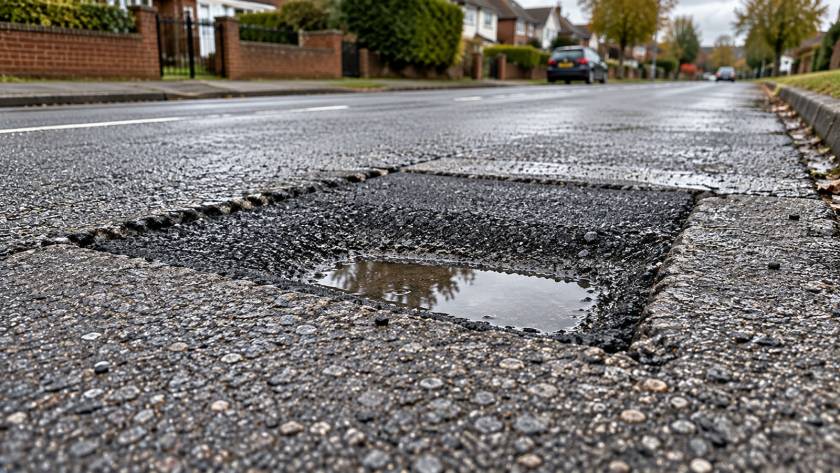
Anyone who regularly uses car parks, private roads, commercial estates or access roads will have seen pothole repairs that look surprisingly neat compared with the original damage. A pothole may begin as an irregular hole with cracked and crumbling edges, yet after repair it often appears as a clearly defined square or rectangle of fresh…
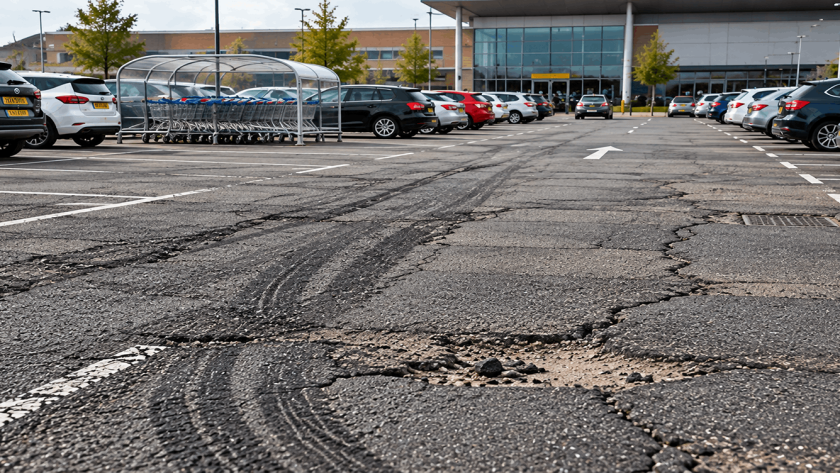
Supermarket car parks may appear to be relatively straightforward areas of hardstanding, but the demands placed on them are unusually varied. Throughout a normal trading day, the surface has to accommodate passenger vehicles, delivery lorries, refuse vehicles, trolley movements, pedestrians and frequent turning traffic. These different loads repeatedly affect the same parts of the car…
Potholes are one of the most familiar forms of road surface damage in the UK. They appear on public roads, private access routes, commercial yards, car parks and industrial estates, often creating an immediate need for repair. Yet one problem can be particularly frustrating for property owners and site managers: a pothole is repaired, only…
Before road resurfacing begins, it is common to see a collection of painted lines, arrows, letters and symbols appearing across the existing surface. To someone passing through the site, these marks can look temporary or even confusing. In reality, they are an important part of the preparation process and help contractors understand what lies beneath…
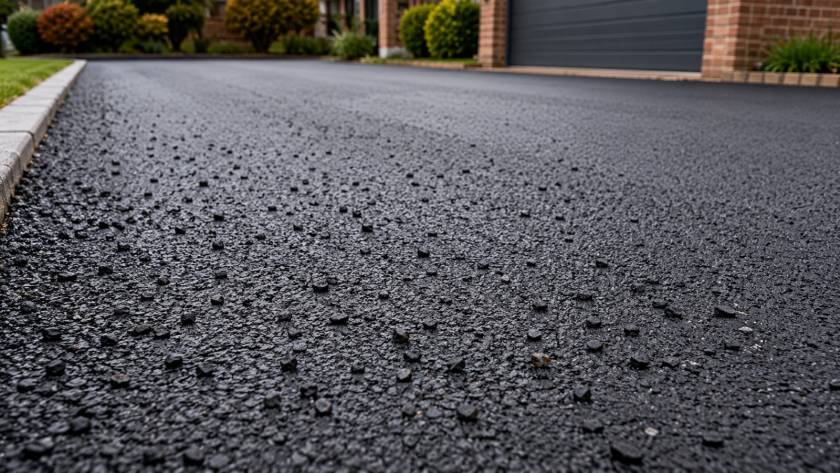
Newly laid tarmac usually creates a clean, uniform and durable surface, so noticing tiny stones coming loose soon after installation can understandably raise questions. Property owners and commercial site managers may wonder whether the surface has been installed incorrectly or whether the loose material is an early sign that the tarmac is beginning to deteriorate.…
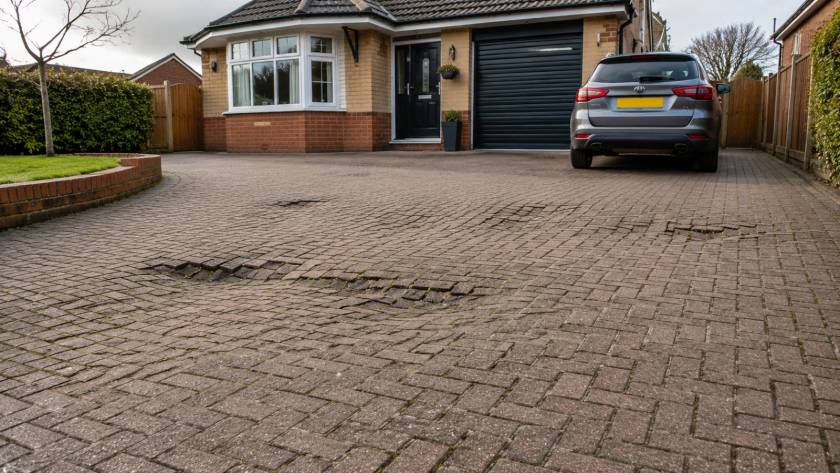
An uneven driveway is more than an appearance issue. Changes in the surface can affect drainage, vehicle access, pedestrian safety and the overall condition of the surrounding property. Small dips and raised areas may initially seem minor, but they can gradually become more noticeable as vehicles repeatedly travel across the surface and changing weather conditions…