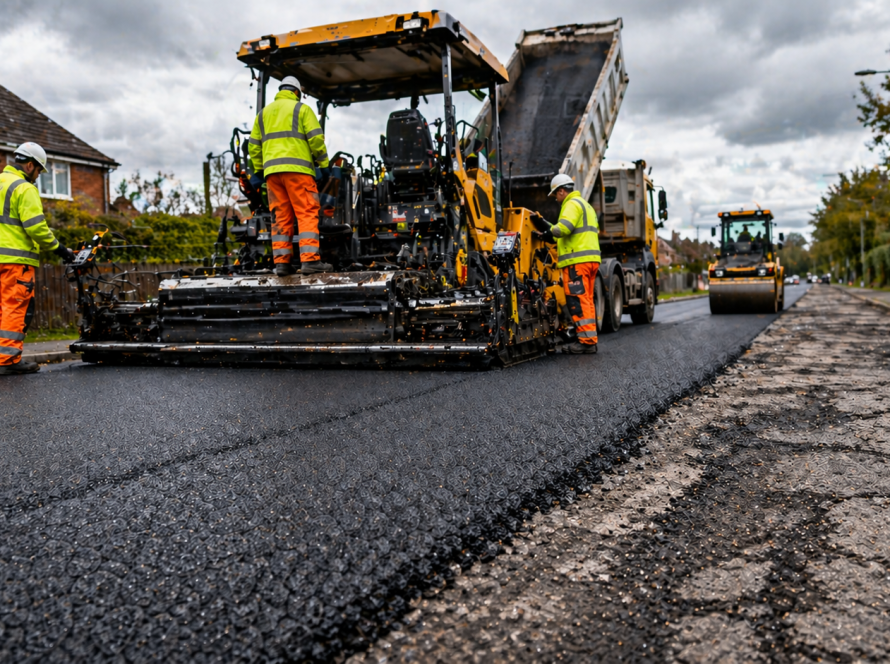
Roads, access routes and commercial yards are expected to provide safe passage for vehicles, pedestrians and emergency services throughout the year. Whether the surface serves a business park, industrial estate, residential development or private access road, deterioration can quickly develop into a significant safety concern if left unchecked.
Safety inspections are designed to identify hazards before they result in accidents, vehicle damage or costly structural failures. Inspectors assess both the visible condition of the surface and the underlying factors that may indicate a developing problem. Defects that appear minor at first can rapidly worsen under repeated traffic loading, adverse weather and inadequate drainage.
Property owners and site managers who understand the most common causes of inspection failures are better placed to schedule preventative maintenance before defects become expensive repairs.
Potholes and Surface Break-Up
Potholes remain one of the most common reasons roads fail safety inspections. They develop when water penetrates small cracks in the surface, weakening the underlying layers before repeated traffic causes the material to break away.
Even relatively shallow potholes present hazards for cars, heavy goods vehicles, cyclists and pedestrians. They can increase the likelihood of tyre damage, suspension problems and trip hazards while allowing further water penetration that accelerates deterioration.
Professional pothole repairs restore both the structural integrity and surface profile before damage spreads across a larger area.
Cracking Throughout the Surface
Cracks are often the earliest visible sign that a road requires attention. While fine surface cracking may initially appear cosmetic, it provides direct routes for water to enter the pavement structure.
Longitudinal cracks running with the direction of travel, transverse cracks crossing the carriageway and interconnected block cracking can all indicate different structural issues. If ignored, these defects allow frost, moisture and traffic movement to weaken the road beneath the wearing course.
Early repair prevents minor defects from developing into more extensive failures that require significant resurfacing works.
Uneven Surfaces and Settlement
Roads should provide a consistent driving surface without sudden changes in level. Areas of settlement, depressions or raised sections can affect vehicle control and increase the risk of standing water.
Settlement often results from inadequate ground preparation, poorly compacted sub-base materials or erosion beneath the pavement structure. Heavy commercial traffic may accelerate these problems if the road was not originally designed for the expected loading.
Professional assessment helps determine whether localised repairs are appropriate or whether more extensive reconstruction is required.
Standing Water and Poor Drainage
Drainage problems frequently contribute to failed inspections because water is one of the leading causes of road deterioration.
Standing water reduces tyre grip, increases spray, creates hydroplaning risks and allows moisture to penetrate deeper into the pavement. During colder weather, trapped water may freeze and expand, causing further cracking and surface failure.
Well-designed drainage works alongside properly constructed surfacing to remove water efficiently and extend the lifespan of the road.
Edge Deterioration
Road edges often experience greater stress than central carriageways because they receive less structural support while being exposed to repeated loading from vehicles turning or running close to the verge.
Broken edges reduce the usable width of the road and can develop into larger failures if unsupported material continues to break away.
Routine inspections should include the full road width rather than focusing solely on the wheel tracks where traffic is most concentrated.
Surface Polishing and Loss of Grip
As roads age, repeated vehicle movement gradually wears away the surface texture that provides tyre grip.
Highly polished surfaces become increasingly slippery during wet weather, reducing braking performance and increasing stopping distances. This is particularly important at junctions, bends, loading areas and locations with frequent vehicle manoeuvres.
Maintaining appropriate surface texture forms an important part of long-term road safety management.
Rutting and Wheel Track Deformation
Heavy traffic travelling along the same route over many years may create depressions known as ruts within the wheel paths.
These defects collect water, reduce driving comfort and may affect steering stability. Rutting often indicates that the pavement structure beneath the surface is no longer adequately supporting traffic loads.
Where rutting becomes significant, resurfacing or reconstruction may be necessary to restore a safe driving surface.
Loose Surface Material
Loose aggregate, broken asphalt fragments and deteriorating surfacing materials can all present hazards during safety inspections.
Loose material reduces traction while increasing the likelihood of debris being thrown by vehicle tyres. This can damage vehicles and create additional hazards for pedestrians and cyclists.
Removing loose material and repairing the underlying defect prevents ongoing deterioration while improving overall site safety.
Damaged Road Markings
Although the pavement itself may remain structurally sound, faded or damaged road markings can also contribute to safety concerns.
Clear markings assist with vehicle positioning, pedestrian safety and traffic management throughout commercial sites and private developments. Where markings become worn or disappear altogether, confusion may increase, particularly during poor weather or low-light conditions.
Road markings should always be renewed following resurfacing works to maintain visibility and compliance.
Why Early Maintenance Saves Money
Many inspection failures begin as relatively minor defects that could have been repaired quickly and economically.
Small cracks can be sealed before water causes widespread deterioration. Localised repairs prevent potholes from expanding. Drainage improvements reduce long-term structural damage, while routine maintenance helps preserve the value of previous investment.
Delaying repairs often results in larger areas requiring reconstruction, increased disruption to site operations and significantly higher overall costs.
Working with experienced specialists in commercial road surfacing allows defects to be identified early and repaired using methods appropriate for the condition of the existing pavement.
Professional Surfacing Supports Long-Term Compliance
Safety inspections should not be viewed as isolated events but as part of an ongoing maintenance strategy. Roads that receive regular inspection, preventative maintenance and timely repairs generally remain safer, last longer and require fewer major interventions.
High-quality installation also plays an important role in preventing future defects. Proper foundation preparation, effective drainage, suitable materials and skilled workmanship all contribute to a road capable of withstanding years of daily traffic.
Choosing experienced contractors for tarmac installation helps ensure that new surfaces are built with long-term durability, safety and compliance in mind.