Weeds growing between block pavers are one of the most common frustrations for property owners and site managers. A paved driveway, courtyard, access area or pedestrian route may look clean and well finished when first installed, only for small shoots of grass and weeds to begin appearing in the joints later.
It is easy to assume that these weeds are growing upwards from the soil beneath the paving. In many cases, however, that is not what is happening. Understanding where the growth actually comes from can help explain why simply pulling weeds out rarely provides a permanent solution.
Block paving is constructed from individual paving units separated by narrow joints. Those joints are necessary because they allow the blocks to sit correctly together while helping the finished area behave as a complete paved surface. Over time, however, the joints can collect fine soil, dust, organic material and moisture.
Once enough material accumulates, the joint effectively becomes a very small growing environment. Seeds carried by the wind, birds, vehicles, footwear and surrounding vegetation can settle into it. Given moisture and suitable temperatures, germination can follow.
This means visible weeds are often a symptom of what has accumulated at surface level rather than evidence that plants have forced their way through the entire paving construction.
What Should Be Under Properly Installed Block Paving?
The condition underneath block paving is important because the blocks themselves are only the visible surface of a much larger construction system. Long-term performance depends heavily on what lies below.
A properly prepared paved area requires a stable formation and suitable supporting layers. The exact construction will depend on the site, expected traffic and ground conditions, but the principle remains consistent: the finished paving needs adequate support and effective management of water.
Ground preparation is particularly important on driveways and areas carrying vehicles. If the underlying construction is weak, uneven or poorly compacted, movement can develop at the surface. Individual blocks may settle, joints can widen and depressions may appear.
Those changes can make weed problems worse because wider or damaged joints collect more debris and retain moisture more easily.
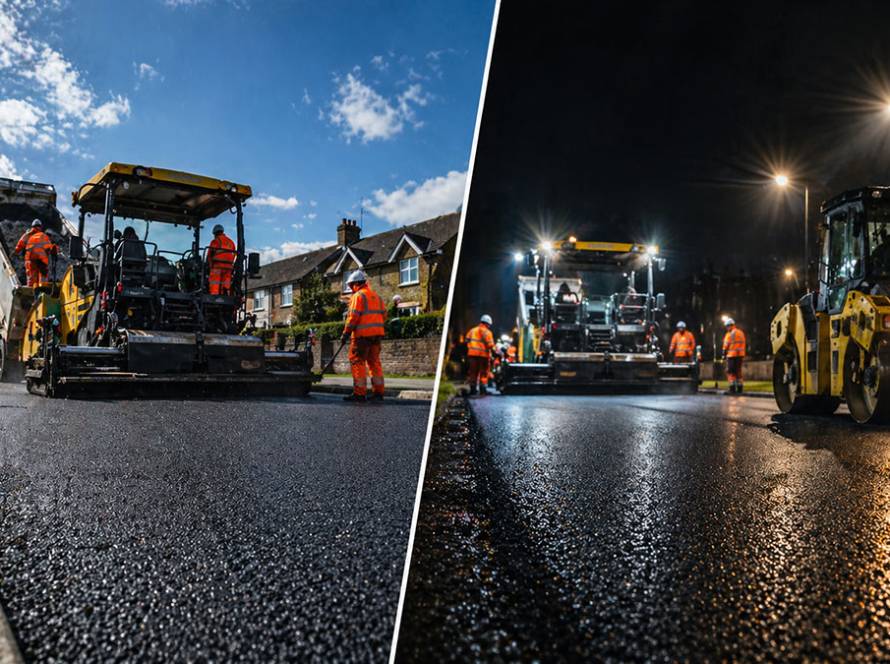
The same principle applies to other forms of professional commercial surfacing and road surfacing. The visible surface is only one part of the installation. The preparation, supporting structure, drainage and compaction beneath it have a major influence on how well the finished area performs.
Are the Weeds Actually Growing From Underneath?
In some cases, established vegetation can originate from beneath paving, particularly where preparation has been inadequate or existing roots and vegetation were not properly dealt with before construction. However, it is misleading to assume that every weed visible between blocks has travelled upwards from the natural ground.
Many common weeds can establish themselves in surprisingly small quantities of material. Fine debris settles into paving joints over time, particularly where regular sweeping and maintenance are limited. Organic matter breaks down, moisture becomes trapped and seeds arrive from the surrounding environment.
The resulting weed can appear deeply rooted because its roots extend into the jointing material. When the plant is pulled, resistance from those roots may create the impression that it is connected to the soil far beneath the paving.
Often, the important issue is therefore the condition of the joints rather than the presence of soil immediately beneath every weed.
Why Joint Condition Matters
The joints between blocks contribute to the stability of the paved area. When jointing material is lost through weather, pressure washing, vehicle movement or general wear, spaces can become more vulnerable to contamination.
Loose joints can fill with dust and soil. Once vegetation begins growing, roots can hold additional organic material and moisture in place. The joint gradually becomes increasingly suitable for further growth.
This can create a cycle in which removing the visible weeds improves appearance temporarily but does not address the environment that allowed them to establish.
Why Some Block-Paved Areas Develop More Weeds Than Others
Two areas installed with similar paving blocks can behave very differently over time. Exposure, traffic, drainage, surrounding vegetation and maintenance all influence the amount of weed growth that develops.
A driveway beneath trees, for example, may receive significantly more leaves, seeds and organic debris than an exposed paved area. Shaded sections can also remain damp for longer after rainfall. Moisture combined with accumulated material creates favourable conditions for moss and weed growth.
Low-traffic areas can experience more noticeable growth as well. Regular vehicle and pedestrian movement may disturb very young plants before they become established, whereas quiet edges and corners can remain untouched for long periods.
Surface levels also matter. Where water repeatedly collects in depressions, the joints stay damp and fine material can be deposited as the water evaporates or drains away.
Drainage Problems Can Make Weed Growth Worse
Water management is closely connected with the condition of external paved surfaces. Standing water does not automatically cause weeds, but persistent moisture can make joints far more favourable for germination.
If paving has settled, water may begin collecting in low points that were not present when the surface was installed. This can indicate movement within the supporting construction rather than a purely cosmetic problem.
Drainage therefore deserves attention when weed growth appears alongside puddling, settlement or movement. Treating the plants without considering why particular areas remain damp may result in the same problem returning.
For property owners assessing a wider driveway or access problem, professional surfacing services can help determine whether deterioration is limited to the visible surface or associated with the underlying construction.
Does Weed Growth Mean the Block Paving Has Failed?
A few weeds between otherwise stable blocks do not necessarily indicate structural failure. External paving is continuously exposed to airborne seeds, dirt, weather and organic contamination, so occasional growth can occur even on a sound paved area.
The situation becomes more significant when weeds appear alongside other defects.
If joints are becoming noticeably wider, blocks are moving underfoot, wheel tracks are sinking or substantial depressions are developing, the problem may extend beyond routine maintenance. These symptoms can suggest that the supporting layers are no longer providing uniform support.
Poor edge restraint can also contribute to movement. Block paving depends on confinement to maintain its arrangement. Where edges become loose or unsupported, blocks can gradually spread, increasing joint widths and creating more opportunities for contamination and vegetation.
Why Pulling the Weeds Is Often Only Temporary
Removing a weed deals with the visible plant but does not necessarily remove the conditions that allowed it to grow.
If the joint still contains soil, organic debris and moisture, another seed can occupy the same space. Similarly, if jointing material has been lost, simply pulling weeds without restoring the joints leaves open spaces that can quickly become contaminated again.
This explains why some driveways seem to require repeated weeding throughout the growing season. The problem is not necessarily an unusually aggressive source of vegetation beneath the paving. The joints themselves may have become suitable places for seeds to establish.
Effective maintenance therefore involves considering the paving as a complete surface rather than treating each weed as an isolated problem.
Can Pressure Washing Make the Problem Worse?
Pressure washing can transform the appearance of dirty block paving, but aggressive cleaning can also remove jointing material.
A powerful jet directed into the joints may wash out material as well as moss, dirt and vegetation. The surface can initially look much cleaner, yet the newly opened joints may subsequently collect more debris.
This does not mean pressure washing should never be used. It means the condition of the joints should be considered after cleaning. Where jointing material has been displaced, appropriate reinstatement may be necessary to maintain the integrity of the paved area.
Cleaning methods should also be appropriate for the condition of the surface. Older paving with movement, damaged edges or unstable blocks may require more attention than a structurally sound area that simply needs routine maintenance.
When the Problem Is More Than Weeds
Weeds can sometimes draw attention to defects that would otherwise go unnoticed.
A property owner may initially focus on unwanted vegetation but then discover that the affected section also feels uneven or unstable. This is particularly important on vehicle routes, commercial entrances and frequently used access areas where surface movement can develop into a more significant maintenance issue.
Where repeated local repairs no longer provide a satisfactory result, it may be sensible to consider whether the existing surface remains appropriate for the way the area is being used.
For heavily trafficked access areas, alternative construction methods such as professional tarmac installation and road surfacing may provide a more suitable solution depending on the site and required performance.
Machine installation can also be appropriate for larger areas where consistent placement and compaction are important. Professional machine lay tarmac is commonly considered for larger access roads and commercial surfaces where the requirements differ significantly from those of a small domestic paved area.
The Importance of Looking Below the Visible Surface
One of the most useful lessons from weeds between block pavers is that surface appearance does not always tell the complete story.
A weed may simply have germinated in accumulated debris. Equally, widespread growth combined with open joints, settlement and persistent standing water can point towards broader maintenance or construction issues.
The condition of the blocks, joints, edges, drainage and supporting layers should therefore be considered together. Focusing only on the visible vegetation can overlook the reason one part of a paved area repeatedly experiences problems while another remains relatively clean.
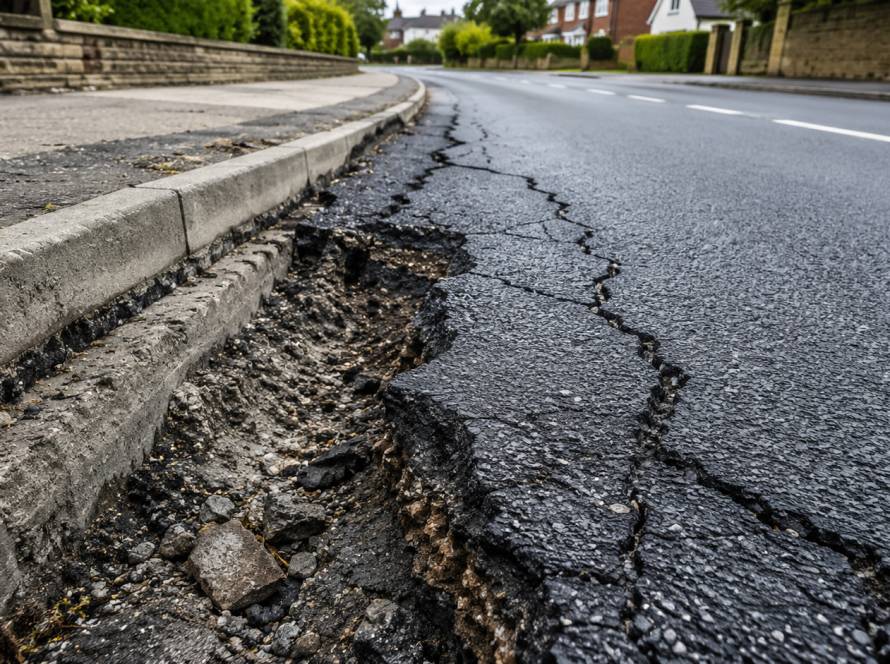
This principle is equally relevant when examining other external surfaces. Cracking, depressions, loose materials and recurring pothole repairs can all be influenced by conditions beneath the surface rather than the visible defect alone.
Maintaining Block Paving for the Longer Term
Well-maintained block paving can remain attractive and practical for many years, but it should not be treated as a completely maintenance-free surface.
Keeping the area reasonably clear of leaves, soil and organic debris reduces the amount of material available for seeds to establish in. Particular attention should be paid to quiet edges, shaded sections and areas beside planting beds, where contamination can build up more quickly.
The joints should also remain in suitable condition. After intensive cleaning or where material has gradually disappeared, open joints should not simply be ignored.
Most importantly, changes in levels or stability deserve attention. Repeated weed growth alone is usually manageable, but weeds combined with sinking blocks, spreading edges or drainage problems can indicate that the paved construction needs closer assessment.
Understanding what is really happening underneath block pavers makes it easier to distinguish normal outdoor maintenance from a developing surface problem. The weeds themselves are often only the most visible part of the issue. The condition of the joints, drainage, supporting layers and surrounding environment determines whether they remain an occasional nuisance or become part of a recurring deterioration problem.