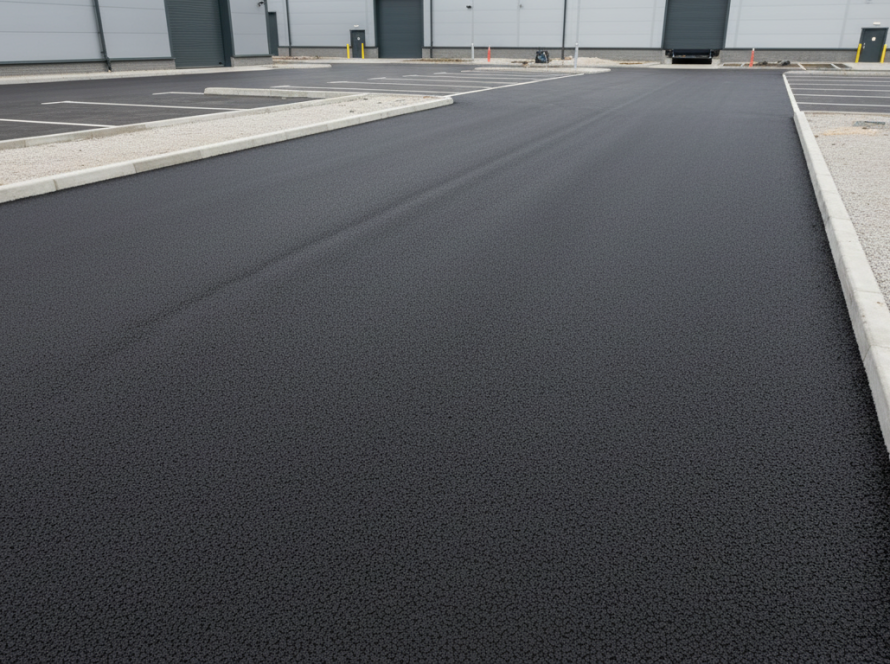
Road surfacing projects in the UK are often planned around operational constraints, traffic flow, and environmental conditions. One of the most common considerations is whether the work should be carried out during the day or at night. Both approaches are widely used across commercial, industrial, and public sector projects, and each comes with its own set of advantages and limitations.
For property owners and site managers, understanding the practical differences between daytime and nighttime surfacing is essential. The decision does not simply affect scheduling; it can influence installation quality, project efficiency, safety, and long-term surface performance.
Understanding Daytime Road Surfacing
Daytime surfacing is the traditional approach and remains the most common method for many private and commercial projects. It allows contractors to operate under natural light, with full visibility of the working area and surrounding environment.
Visibility and Quality Control
Working during daylight provides optimal visibility, which supports precision during every stage of the surfacing process. From sub-base preparation to final compaction, clear visibility allows contractors to identify inconsistencies and correct them immediately.
This is particularly important during processes such as tarmac installation, where even minor irregularities can affect the final finish and long-term durability of the surface.
Temperature Stability
Daytime temperatures tend to be more stable, especially during the warmer months. This consistency supports better material handling and compaction. Asphalt and tarmac materials rely on controlled temperatures to achieve proper bonding and density, and working during the day can make this easier to manage.
However, in colder seasons, daytime temperatures may still present challenges, particularly in early mornings or late afternoons when conditions begin to drop.
Ease of Site Management
Managing a surfacing project is generally more straightforward during the day. Access to equipment, staff availability, and communication between teams are all easier to coordinate. This can lead to smoother project delivery and fewer delays.
For commercial environments, where coordination is key, working with experienced teams offering commercial surfacing ensures that daytime operations are handled efficiently without compromising quality.
Understanding Nighttime Road Surfacing
Night surfacing is commonly used in areas where daytime work would cause significant disruption. This includes busy roads, city centres, and high-traffic commercial sites that operate continuously during the day.
Reduced Traffic Disruption
One of the primary advantages of nighttime surfacing is the reduction in traffic and operational disruption. For sites that rely on constant access, carrying out work overnight allows normal activities to continue during the day.
This is particularly beneficial for logistics hubs, retail parks, and business estates where closures during working hours are not practical.
Faster Project Completion
With fewer vehicles and pedestrians to manage, night work can often progress more quickly. There is less need for traffic control measures, and contractors can work more continuously without interruptions.
In some cases, this leads to shorter overall project durations, which can be a significant advantage for time-sensitive developments.
Controlled Working Environment
Nighttime conditions can provide a more controlled environment in terms of traffic and external interference. This allows teams to focus entirely on the surfacing process without constant adjustments for passing vehicles or public access.
However, this benefit must be balanced against other challenges associated with working after dark.
Key Challenges of Night Surfacing
While night surfacing offers clear logistical advantages, it also introduces specific challenges that must be carefully managed to maintain quality.
Limited Visibility
Artificial lighting is required for all nighttime operations, and while modern lighting systems are effective, they do not fully replicate natural daylight. Reduced visibility can make it more difficult to detect surface imperfections during installation.
This places greater importance on experienced operators and precise machinery, such as those used in machine lay tarmac, to ensure consistent results despite lower visibility conditions.
Temperature Variability
Nighttime temperatures are typically lower, which can affect how surfacing materials behave. Asphalt cools more quickly in colder conditions, reducing the available time for proper compaction.
If not managed correctly, this can lead to weaker surfaces and reduced long-term performance. Contractors must adjust their methods accordingly, often using specialised techniques to maintain material workability.
Workforce Considerations
Working at night requires careful planning around workforce availability and safety. Fatigue, reduced concentration, and limited access to support services can all impact productivity and quality if not properly addressed.
Professional surfacing teams are trained to manage these conditions, ensuring that standards are maintained regardless of working hours.
Comparing Surface Quality: Day vs Night
When comparing the quality of road surfacing completed during the day versus at night, the outcome largely depends on the expertise of the contractor and the methods used.
Daytime surfacing generally offers a slight advantage in terms of visibility and temperature consistency, which can support higher precision during installation. However, this does not mean that night surfacing produces inferior results.
With the right equipment, planning, and experienced personnel, nighttime surfacing can achieve the same high standards. The key difference lies in the level of control required. Night work demands stricter management of lighting, temperature, and workflow to ensure consistent outcomes.
Impact on Long-Term Performance
The long-term performance of a road surface is influenced more by preparation, materials, and installation quality than by the time of day the work is carried out.
Proper ground preparation, correct layering, and effective compaction are the primary factors that determine durability. Whether the work is completed during the day or at night, these elements must be executed to a high standard.
Regular maintenance, including timely pothole repairs, also plays a significant role in preserving surface integrity over time.
Choosing the Right Approach for Your Project
Selecting between day and night surfacing depends on several practical considerations. Site usage is often the most important factor. Locations with constant daytime activity may benefit from overnight work to minimise disruption.
Conversely, sites with flexible access or lower traffic volumes may find daytime surfacing more practical and cost-effective.
Environmental conditions should also be considered. Warmer periods may favour daytime work, while certain projects may require night operations to meet deadlines or avoid peak usage hours.
Reviewing previous project outcomes can help inform this decision. Looking at completed work through a professional portfolio of surfacing projects provides valuable insight into how different approaches perform in real-world conditions.
Balancing Efficiency and Quality
There is no universal answer to whether day or night surfacing produces better results. Both methods are capable of delivering high-quality, durable surfaces when carried out correctly.
The decision should be based on a balance between operational needs, environmental conditions, and project timelines. Efficiency is important, but it should never come at the expense of quality.
Working with experienced contractors ensures that whichever approach is chosen, the project is executed with the necessary expertise and attention to detail.
Conclusion
Night and day road surfacing each offer distinct advantages, and the best choice depends on the specific requirements of the site. Daytime work provides optimal visibility and easier coordination, while nighttime surfacing reduces disruption and can improve efficiency in busy environments.
Ultimately, the quality of the finished surface is determined by the standards of preparation, materials, and installation rather than the time of day. With proper planning and professional execution, both approaches can deliver reliable, long-lasting results suitable for UK conditions.