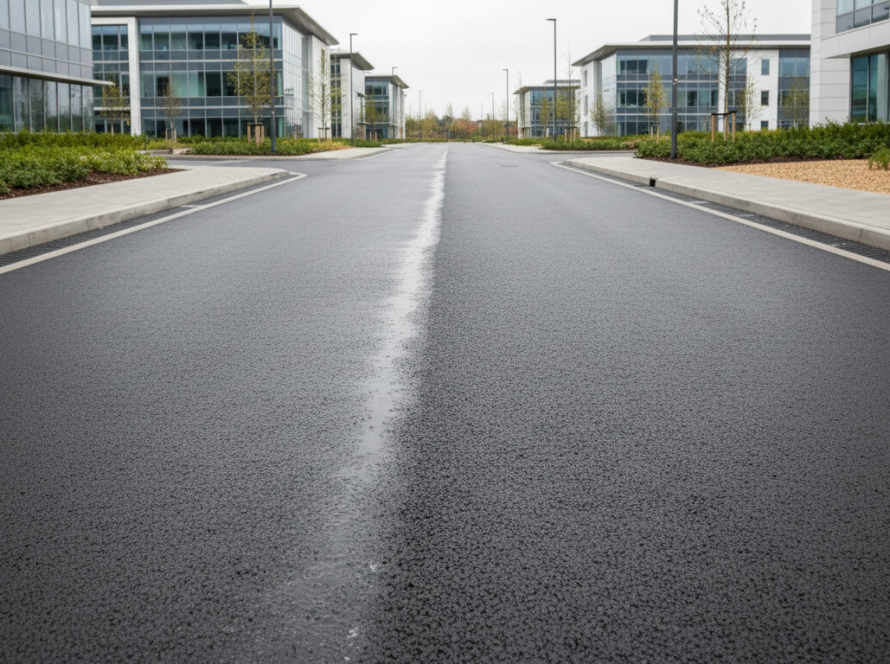
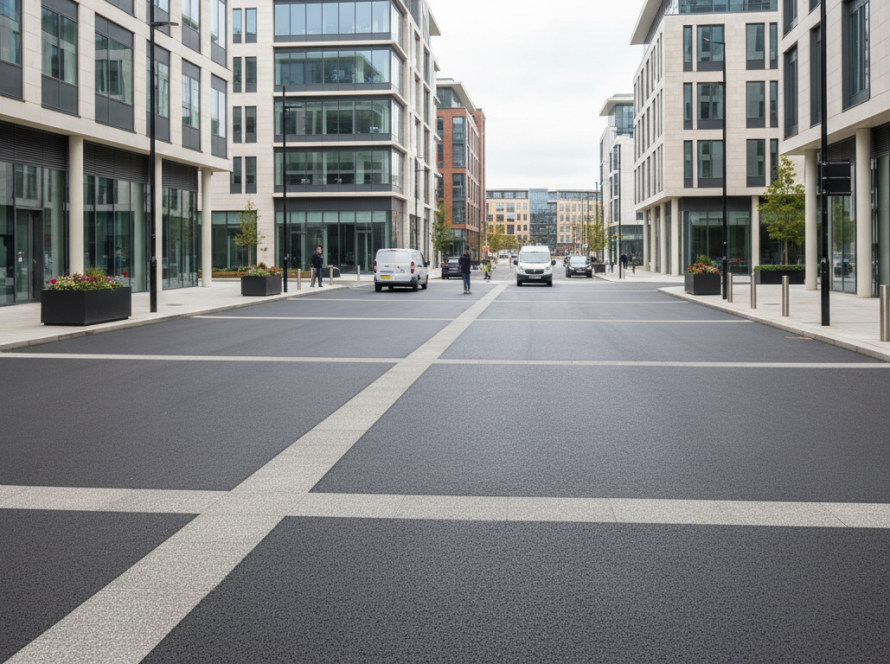
A freshly laid asphalt surface is often judged by how smooth and even it looks. For property owners and commercial site managers, a clean finish can suggest that the surfacing work has been completed to a high standard. However, road surfacing is not simply about producing the smoothest possible surface. The finished material must also provide sufficient grip, manage surface water effectively and remain suitable for the vehicles and pedestrians that use it.
This raises an important question: can asphalt actually be too smooth to be safe? In certain circumstances, the answer is yes. An asphalt surface that lacks appropriate texture can offer reduced tyre grip, particularly during wet weather or in areas where vehicles frequently brake, turn or accelerate.
At the same time, a smooth-looking asphalt road should not automatically be considered unsafe. Professionally installed asphalt can have a very even appearance while retaining the surface characteristics needed for safe use. Understanding asphalt surface safety UK requirements therefore means looking beyond appearance and considering texture, aggregate, drainage, installation quality and the way the surface will be used.
Why Asphalt Surface Texture Matters
Asphalt is made using aggregates combined with bituminous binder. Once the material has been laid and compacted, the characteristics of those aggregates contribute to the texture of the finished surface.
That texture is important because vehicle tyres need adequate contact with the road. A completely featureless surface would provide different grip characteristics from one designed with the appropriate surface texture for vehicle movements and expected traffic conditions.
This is one reason professional tarmac installation involves more than simply spreading and compacting material until it appears flat. The material specification, preparation, laying process and final compaction all contribute to how the completed surface performs.
Surface texture becomes particularly important when conditions are wet. Water between a tyre and the road can affect the amount of effective contact available. A correctly designed and installed surface helps water disperse while maintaining the characteristics required for reliable vehicle movement.
Does Smooth Asphalt Mean Unsafe Asphalt?
There is an important distinction between an asphalt surface being smooth and it being excessively smooth.
A well-laid road should generally feel even when driven over. Unnecessary bumps, depressions and irregularities can create their own safety and maintenance problems. Smoothness in this sense is desirable because it improves ride quality and helps produce a consistent finished surface.
The concern arises when the surface lacks sufficient texture or has become polished through use.
Visual appearance alone is therefore not a reliable measure of asphalt surface safety UK performance. A newly installed machine-laid surface may look exceptionally neat while still providing suitable grip. Conversely, an older surface may appear generally sound while its exposed aggregate has gradually become polished by repeated vehicle movements.
Assessing the condition of asphalt consequently requires consideration of how the surface actually performs rather than simply how attractive or smooth it appears.
How Skid Resistance Affects Road Safety
Skid resistance describes the ability of a road surface to provide friction between the tyres and the pavement. It becomes particularly relevant when vehicles brake, corner or manoeuvre.
Different areas of a site can place very different demands on the asphalt. A long, straight private access road may experience relatively predictable vehicle movements, whereas an entrance junction can involve repeated braking and turning. Loading areas may experience heavy commercial vehicles making tight manoeuvres, while sloping roads introduce additional forces during acceleration and braking.
Professional commercial road surfacing should therefore account for the way an area will actually be used. Selecting and installing a surface purely according to appearance can overlook the practical requirements created by traffic volume, vehicle type and site layout.
High-Risk Areas for Reduced Grip
Certain parts of a road or commercial site deserve particular attention because vehicle movements repeatedly place stress on the same sections of asphalt.
Junction approaches are a good example. Vehicles frequently decelerate in the same area before stopping or turning. Site entrances can experience similar concentrated braking and acceleration. Tight bends, ramps and gradients can also place greater demands on tyre-to-surface contact than straightforward sections of road.
Service yards and loading areas introduce another consideration because commercial vehicles can be considerably heavier than ordinary cars. Slow, tight turning movements can place substantial stresses on the surface.
For these locations, an even finish remains important, but smoothness should never come at the expense of appropriate surface characteristics.
Why Wet Weather Makes Surface Texture More Important
British weather makes drainage and wet-surface performance central considerations in road construction.
During rainfall, water needs somewhere to go. The overall road profile, falls, drainage infrastructure and surface characteristics all contribute to how effectively water is managed. If water is allowed to remain on the carriageway, conditions can become more difficult for vehicles and deterioration of the pavement may also accelerate.
This is why asphalt surface safety UK considerations cannot be separated from drainage. A technically appropriate surface installed without sufficient attention to falls and water management can still develop problems.
Poorly drained depressions may hold standing water after rainfall. Water can also find its way into defects and damaged areas, potentially contributing to progressive deterioration. Correct preparation and professional installation are therefore essential parts of achieving a surface that performs consistently throughout changing weather conditions.
Can Asphalt Become Smoother Over Time?
An asphalt surface does not remain exactly as it was on the day it was installed. Traffic, weather and general wear gradually affect its characteristics.
Repeated tyre movements can wear the exposed aggregate at the surface. In heavily trafficked locations, this process can eventually contribute to polishing. The effect is particularly relevant where the same vehicle movements happen repeatedly, such as at junctions, entrances and turning areas.
The rate at which a surface changes depends on numerous factors, including the materials used, traffic volumes, vehicle weights and the original quality of construction.
Regular inspection is therefore valuable for commercial estates, private roads and other heavily used sites. Surface condition should be considered as part of ongoing maintenance rather than assuming that asphalt remains safe simply because there are no large potholes or obvious structural failures.
The Role of Aggregate in Asphalt Grip
Aggregate is a fundamental component of asphalt and contributes significantly to the characteristics of the finished surface.
Different asphalt applications require appropriate material specifications. A road carrying regular commercial traffic, for example, may have different performance demands from a lightly used residential area. The suitability of the materials should therefore be considered alongside expected traffic and environmental conditions.
Aggregate characteristics also influence how a surface responds to long-term traffic wear. Appropriate material selection is one part of creating a road that provides the required combination of durability, consistency and grip.
This is why surfacing decisions should be based on the complete construction requirement rather than simply choosing a material because of its appearance.
Compaction Needs to Be Correct, Not Simply Maximum
Compaction is essential during asphalt installation. It helps create a stable, consistent pavement and is a major factor in the quality of the finished road.
However, the objective is correct compaction according to the material and application rather than simply attempting to make the asphalt as flat and dense-looking as possible.
Modern machine-laid tarmac can provide a highly consistent finish across larger areas. When the material, machinery and installation process are appropriate for the project, this consistency helps achieve predictable surface performance without unnecessary irregularities.
Compaction also needs to be considered alongside groundwork. An attractive surface cannot compensate for an unsuitable or poorly prepared foundation underneath it. Problems within the sub-base can eventually appear at surface level as settlement, deformation and cracking.
Drainage and Asphalt Safety Work Together
Surface grip is only one part of road safety. The road also needs to remove water effectively.
Drainage begins with the design and preparation of the site. Appropriate falls can direct water towards drainage points rather than allowing it to collect across vehicle routes. Existing drainage systems also need to be considered before new surfacing is installed.
Depressions and uneven areas can create localised pooling. Even when the asphalt itself has suitable texture, standing water can make driving conditions less predictable and can indicate an underlying issue with the surface profile.
For property owners and site managers, persistent pooling after rain should therefore not be dismissed simply because the asphalt otherwise appears to be in good condition.
Surface Condition Should Match the Site’s Use
There is no single surface characteristic that is ideal for every asphalt application. The intended use of the site matters.
Commercial access roads may need to accommodate delivery vehicles, employees, visitors and occasional heavy goods traffic. Industrial yards can involve repeated loading movements and turning vehicles. Private roads may experience lower traffic volumes but still require reliable year-round access.
A suitable surfacing specification should account for these differences. The broader range of professional surfacing services available reflects the fact that roads, driveways and commercial areas have different requirements.
The safest result is therefore not necessarily the roughest or smoothest possible asphalt. It is a surface designed and installed appropriately for its location, expected traffic and operating conditions.
Warning Signs That an Asphalt Surface Needs Attention
A road does not need to have completely failed before its condition deserves investigation. Changes in grip, recurring standing water, visible polishing, cracking, deformation and localised surface damage can all justify closer assessment.
Potholes are a particularly obvious sign that deterioration has progressed. Once the surface has broken apart, water and traffic can contribute to further damage around the affected area. Prompt pothole repairs can help restore damaged sections before defects become more extensive.
Less obvious problems can be equally important from a safety perspective. If drivers consistently report that a particular bend, entrance or braking area feels unusually slippery during rainfall, the concern should be investigated even when the surface looks relatively intact.
Why Installation Quality Influences Long-Term Safety
Good asphalt performance starts below the visible surface. Preparation of the existing ground, sub-base construction, material selection, laying conditions, compaction and drainage all contribute to the finished result.
Poor preparation can lead to settlement and deformation. Inadequate drainage can encourage water-related deterioration. Unsuitable materials may not perform as required under the expected traffic, while inconsistent installation can create variations across the surface.
Professional road surfacing aims to address these factors as one complete system. Examples of completed surfacing projects can also help property owners and site managers understand the differences between applications and finished surfaces.
A road should ultimately provide a consistent platform for its intended users while remaining manageable to inspect and maintain throughout its service life.
Maintaining Safe Asphalt Over the Long Term
Once asphalt has been installed, routine observation can help identify developing problems early.
Commercial site managers are often well placed to notice changes because they see how traffic behaves across the same routes each day. Areas where vehicles repeatedly brake, turn or queue may require more attention than sections carrying straightforward traffic movements.
Drainage should also remain part of routine surface management. Gullies, channels and drainage points need to remain capable of removing water, while new areas of pooling can indicate changes in the pavement profile.
Repairs should address the reason for deterioration wherever possible rather than simply improving appearance. If cracking or deformation is being caused by movement below the asphalt, treating only the visible surface may provide limited long-term benefit.
Achieving the Right Balance Between Smoothness and Grip
Asphalt should provide an even, professional finish, but smooth appearance is only one measure of quality.
The finished road also needs suitable surface texture, appropriate drainage, structural support and a specification capable of handling its expected traffic. Too little texture can potentially affect grip, particularly in wet conditions or areas involving frequent braking and turning. Excessive irregularity, meanwhile, can create problems of its own.
For property owners and commercial site managers, the key principle is to assess asphalt according to performance rather than appearance alone. A high-quality surface can look smooth while still providing the characteristics required for safe use.
Where an existing road has become noticeably polished, slippery when wet, damaged or prone to standing water, its condition deserves professional assessment. Addressing developing issues early can protect both the usability of the site and the long-term condition of the pavement.