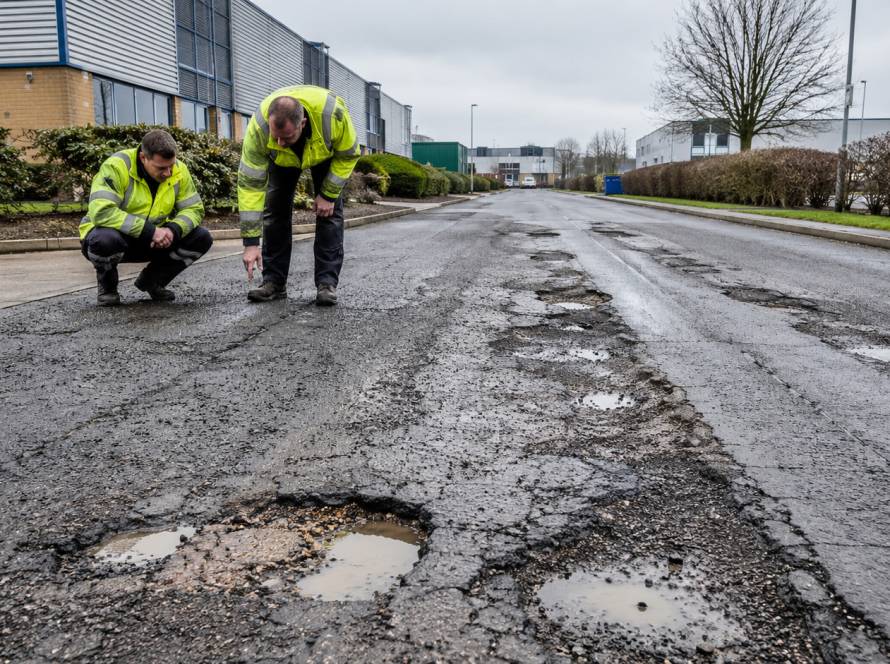
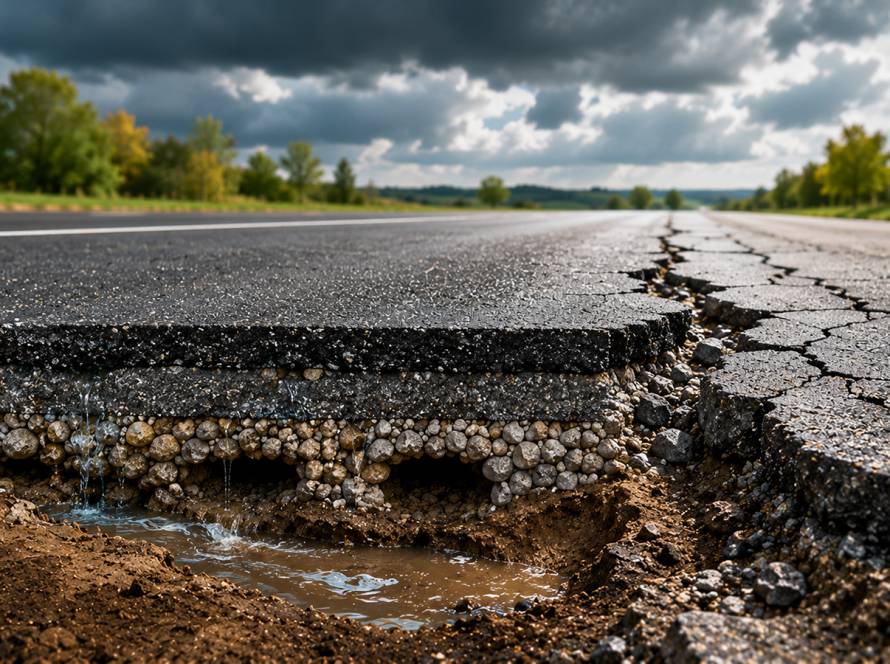
Flooding has become an increasingly common issue across the UK, affecting roads, car parks, commercial premises, residential developments, and access routes. Heavier rainfall events, ageing drainage systems, and expanding urban development have all placed additional pressure on traditional surfacing methods. In many areas, roads and paved surfaces were originally designed for lower traffic volumes and less intense rainfall, making them less capable of managing modern drainage demands.
Traditional impermeable surfacing can contribute to standing water and rapid surface runoff. When rainwater cannot naturally drain into the ground, it flows across paved areas and into already overloaded drainage systems. This increases the likelihood of localised flooding, surface erosion, and water damage to surrounding infrastructure.
As a result, there has been growing interest in water-managed road surfacing UK solutions that actively support drainage and water control. These systems are now being considered not only for environmental reasons, but also for long-term durability, compliance, and operational safety.
Understanding Water-Managed Surfacing
Water-managed surfacing refers to road construction methods and materials designed to control, redirect, slow, or absorb rainwater more effectively than traditional impermeable surfaces. The goal is not necessarily to eliminate water entirely, but to manage it in a controlled and sustainable way.
Modern surfacing systems may include permeable materials, drainage channels, graded surface designs, porous sub-base structures, and engineered runoff control. These approaches are commonly used in commercial developments, industrial estates, residential access roads, and public infrastructure projects.
Professional commercial surfacing contractors increasingly integrate drainage planning into the early stages of road design because water management now plays a critical role in overall surface performance.
How Traditional Road Surfaces Contribute to Flooding
Older road systems were often designed with speed and load-bearing capacity as the primary considerations. While these remain important, many traditional surfaces rely heavily on underground drainage infrastructure to remove water quickly. When these systems become blocked, overwhelmed, or damaged, water begins to accumulate on the surface.
Large impermeable surfaces accelerate runoff because rainwater has nowhere else to go. This can cause several issues, including:
Surface Water Pooling
Standing water forms when road gradients are insufficient or drainage points become overloaded. This can create hazards for vehicles and pedestrians while increasing the risk of surface deterioration.
Drainage System Overload
Heavy rainfall can exceed the capacity of underground drains and gullies. Once overwhelmed, water backs up onto roads and surrounding land.
Accelerated Surface Damage
Water infiltration weakens the structural integrity of road surfaces over time. Cracks, potholes, edge failures, and rutting are all more likely to develop where water management is poor. Regular pothole repairs are often necessary in areas with recurring drainage problems.
The Role of Permeable Surfacing Systems
One of the most significant developments in water-managed road surfacing UK projects has been the use of permeable surfacing systems. These allow water to pass through the surface and into specially designed sub-base layers beneath.
Rather than directing all rainwater into drainage networks immediately, permeable systems temporarily store and gradually disperse water into the ground. This reduces peak runoff volumes and lowers pressure on public drainage systems during heavy rainfall.
Permeable systems are particularly effective in areas such as:
Commercial Car Parks
Large paved commercial areas generate substantial runoff during storms. Permeable surfaces help reduce flash flooding while maintaining stable vehicle access.
Residential Developments
Modern housing schemes increasingly incorporate sustainable drainage principles to comply with planning requirements and environmental regulations.
Access Roads and Shared Surfaces
Private roads, industrial access routes, and shared-use areas benefit from improved water control, especially where drainage infrastructure is limited.
In some situations, resin driveways are also used as part of broader permeable surfacing strategies because resin-bound systems can allow water infiltration while maintaining a smooth and visually consistent finish.
Sustainable Drainage Systems and UK Planning Requirements
Water-managed surfacing is closely linked with Sustainable Drainage Systems, commonly referred to as SuDS. These systems aim to replicate natural drainage behaviour by slowing and managing surface water runoff at source.
Across many parts of the UK, planning authorities now expect developers to demonstrate how surface water will be controlled within a site. This has significantly increased the demand for surfacing systems that support sustainable drainage objectives.
SuDS principles may include:
Controlled Water Storage
Sub-base layers can temporarily hold water before releasing it slowly into surrounding ground or drainage systems.
Flow Reduction
Managing runoff speed helps reduce pressure on local sewers and lowers flood risk downstream.
Water Quality Improvements
Certain permeable systems help filter pollutants before water enters natural watercourses.
Professional tarmac installation projects increasingly involve collaboration between surfacing contractors, drainage engineers, and site designers to ensure these standards are achieved effectively.
Surface Design and Gradient Control
Effective water management depends not only on materials but also on proper surface design. Even highly durable surfacing can fail if gradients and drainage paths are poorly planned.
Road profiles must encourage water to move towards designated collection points without causing erosion or excessive runoff speed. This requires careful attention during both the planning and installation stages.
Crossfall and Surface Levels
Crossfall refers to the slight slope built into road surfaces that encourages water movement toward drainage channels or edges. Incorrect levels can lead to ponding and long-term structural damage.
Drainage Channel Placement
Drainage channels must be positioned to intercept water efficiently without disrupting vehicle movement or creating maintenance difficulties.
Edge Protection
Water accumulation near unsupported edges can weaken road structures over time. Proper edge restraint systems help maintain stability and prevent breakdown.
High-quality machine lay tarmac installation techniques are particularly important in larger commercial projects because consistent levels and compaction directly influence drainage performance.
Climate Change and Future Surfacing Strategies
Climate experts continue to predict more frequent periods of intense rainfall across the UK. This means infrastructure that was once considered adequate may no longer provide sufficient flood resilience in future years.
Water-managed road surfacing UK strategies are increasingly viewed as part of broader climate adaptation planning. Businesses, local authorities, and property developers are beginning to prioritise resilience alongside durability and cost considerations.
Modern surfacing projects are therefore expected to achieve several objectives simultaneously, including:
Flood Risk Reduction
Reducing runoff and controlling drainage improves local flood resilience.
Long-Term Durability
Surfaces that manage water effectively often experience less structural deterioration.
Regulatory Compliance
Planning regulations and environmental standards continue to evolve toward sustainable drainage integration.
Operational Continuity
Commercial sites benefit from reduced disruption caused by flooding, standing water, or surface damage.
The growing focus on resilience means drainage planning is no longer treated as a secondary consideration. Instead, it forms part of the overall design strategy from the earliest project stages.
Maintenance Remains Essential
Even the most advanced water-managed surfacing systems require ongoing maintenance. Drainage channels, permeable layers, and collection points must remain clear to function correctly.
Without proper maintenance, debris accumulation can reduce permeability and limit drainage performance. Over time, neglected systems may begin behaving similarly to traditional impermeable surfaces.
Routine inspections help identify issues such as blocked drainage paths, damaged joints, sediment build-up, or early signs of structural movement. Timely intervention often prevents larger and more costly repairs later.
Experienced contractors offering road surfacing services typically advise clients on suitable inspection schedules and maintenance requirements based on site usage and environmental conditions.
The Future of Water-Managed Road Surfacing UK Projects
The UK surfacing industry continues to evolve in response to environmental pressures, changing regulations, and increasing public awareness of flood risk. Water-managed surfacing is no longer viewed as a specialist feature reserved for large infrastructure schemes. It is becoming a practical consideration across a wide range of commercial and residential projects.
Developers are recognising that effective drainage planning contributes not only to environmental responsibility but also to long-term asset protection. Roads that manage water effectively are often safer, more durable, and more cost-efficient over their operational lifespan.
As urban development continues and rainfall patterns become more unpredictable, the demand for integrated drainage solutions is expected to increase further. Surfacing systems that support sustainable water management are likely to play an increasingly important role in future UK infrastructure projects.