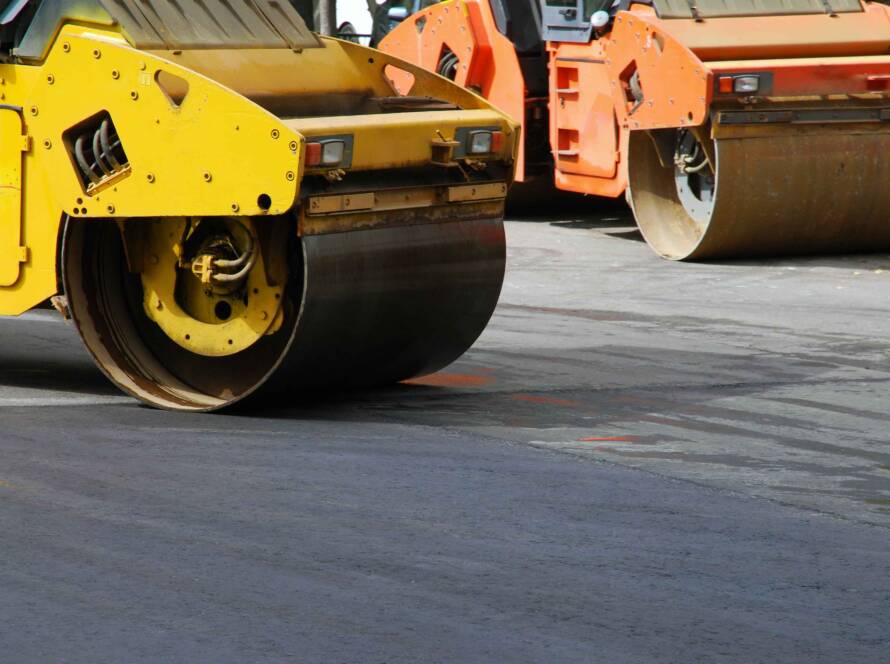
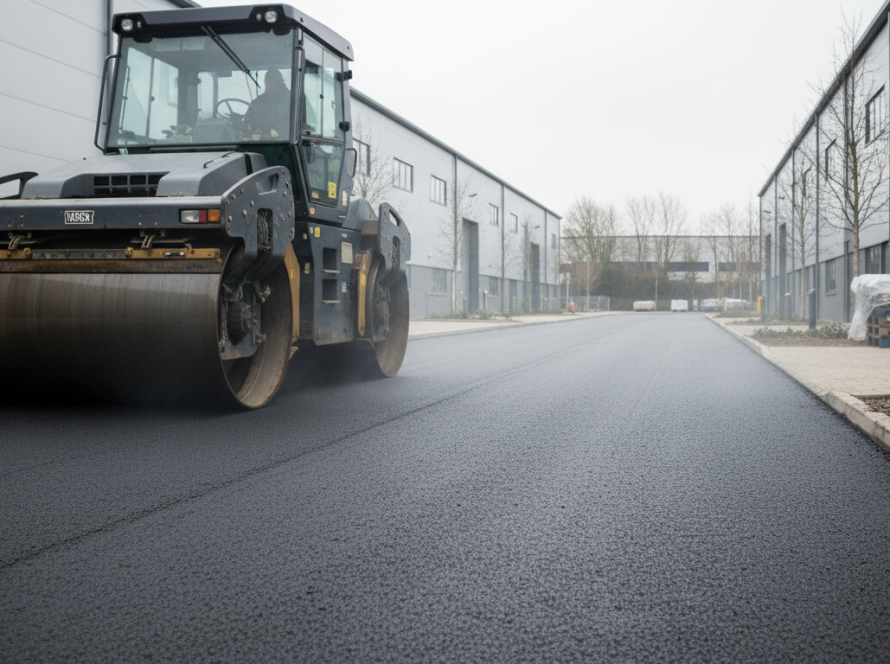
High-friction road surfaces are specialist surfacing systems designed to provide significantly greater skid resistance than conventional asphalt or tarmac. They are commonly installed in locations where vehicles need maximum grip, particularly where braking, cornering or sudden changes in speed are expected.
Across the UK, these specialist surfaces play an important role in reducing accidents and improving safety for motorists, cyclists and pedestrians alike. They are frequently found at busy junctions, pedestrian crossings, roundabouts, steep gradients, sharp bends and approaches to traffic signals.
Unlike standard road surfaces, high-friction systems combine a durable resin binder with exceptionally hard aggregates that create a textured finish capable of maintaining grip under demanding traffic conditions.
Why Grip Matters on the Road
The contact area between a vehicle’s tyres and the road surface is surprisingly small. Even with modern tyres, each contact patch is only about the size of a hand. This makes the condition and texture of the road surface critically important.
When a vehicle brakes, accelerates or changes direction, friction is generated between the tyre and the surface. If insufficient friction exists, tyres can lose traction, increasing stopping distances and the likelihood of skidding.
High-friction road surfaces are engineered to maximise this interaction, helping tyres maintain better contact even during emergency braking or in wet conditions.
For roads experiencing heavy traffic or demanding vehicle movements, professional commercial road surfacing ensures the correct surface specification is selected for long-term performance.
The Materials That Create High Friction
The effectiveness of high-friction road surfaces comes from carefully selected materials rather than simply increasing roughness.
Premium Aggregates
Traditional road surfacing often uses aggregates such as limestone or granite. High-friction systems typically incorporate much harder materials, including calcined bauxite, which offers exceptional resistance to polishing under constant traffic.
As vehicles repeatedly travel across a surface, softer aggregates gradually become smoother, reducing available grip. Hard-wearing aggregates retain their texture for much longer, maintaining consistent skid resistance throughout the surface’s service life.
Resin Binders
Instead of relying solely on bitumen, many high-friction systems use specialist resin binders that securely hold the aggregates in place.
These resins provide excellent adhesion to the underlying pavement while resisting movement caused by heavy traffic, braking forces and varying weather conditions.
The result is a durable surface capable of maintaining its performance even under demanding conditions.
How Surface Texture Improves Safety
The texture of a road surface directly influences how tyres interact with it.
Microscopic roughness creates countless contact points between the tyre rubber and the aggregate particles. This increases the friction generated during braking and steering.
At the same time, the larger surface texture helps disperse water, reducing the risk of aquaplaning and allowing tyres to maintain contact with the road.
This combination of microtexture and macrotexture is fundamental to improving grip in both dry and wet conditions.
Where High-Friction Road Surfaces Are Used
Because of their enhanced performance, these surfaces are normally reserved for locations presenting a higher risk of collisions.
Busy roundabouts benefit from improved grip as vehicles decelerate and change direction. Junction approaches allow drivers to brake more effectively before entering traffic. Pedestrian crossings gain additional stopping capability where vehicles must react quickly to people crossing the road.
Steep descents also benefit from increased friction, particularly during wet or icy weather when conventional surfaces may become more slippery.
Car park entrances, bus lanes, cycle crossings and industrial estates are additional areas where enhanced skid resistance can contribute to improved safety.
The Role of Weather
British weather presents unique challenges for road surfaces.
Frequent rainfall reduces the natural friction available between tyres and conventional asphalt. Standing water can further reduce grip if drainage is inadequate.
High-friction surfaces help counter these conditions by maintaining a textured finish that encourages water to escape from beneath vehicle tyres more efficiently.
Although no surface can eliminate all weather-related risks, improved friction provides drivers with greater control during adverse conditions.
Installation Quality Is Just as Important
Even the highest-quality materials cannot deliver their intended performance if installation standards are poor.
Surface preparation must ensure a clean, structurally sound foundation before any resin or aggregate is applied. Temperature, moisture levels and curing times all influence the final bond strength.
Professional contractors also ensure consistent aggregate coverage so the finished surface provides uniform grip across the entire treatment area.
Experienced teams carrying out tarmac installation understand how correct preparation influences the long-term success of specialist surfacing systems.
Durability and Maintenance
High-friction road surfaces are designed for demanding environments but still require routine inspection.
Over time, heavy traffic can gradually wear away aggregate particles or loosen isolated sections, particularly where exceptionally high braking forces occur.
Regular inspections allow localised repairs before more extensive deterioration develops.
Keeping surfaces clean is equally important. Mud, oil, leaves and debris can temporarily reduce available grip even on high-friction systems.
Where damage does occur, prompt pothole repairs help preserve safety while preventing defects from spreading further.
Environmental Considerations
Modern high-friction systems increasingly balance performance with environmental responsibility.
Manufacturers continue to improve resin formulations while reducing emissions during production. Longer-lasting surfaces also reduce the frequency of replacement, lowering material consumption over the asset’s lifetime.
Targeted installation at higher-risk locations means authorities can improve road safety without resurfacing entire road networks, making high-friction treatments an efficient use of maintenance budgets.
Choosing the Right Surface for the Application
Not every road requires a high-friction surface. Standard asphalt or tarmac remains suitable for many lower-risk locations.
Engineers evaluate traffic volumes, vehicle speeds, accident history, road geometry, drainage performance and braking requirements before determining whether enhanced skid resistance is justified.
Where risks are elevated, investing in high-friction surfacing often delivers long-term safety benefits that outweigh the higher initial installation cost.
Using modern paving equipment such as machine lay tarmac alongside specialist surface treatments helps achieve consistent quality across commercial and public road projects.
Conclusion
The science behind high-friction road surfaces lies in the combination of advanced materials, durable aggregates and specialist installation techniques. By increasing tyre grip, reducing stopping distances and maintaining reliable skid resistance in varying weather conditions, these surfaces make some of the UK’s most challenging roads significantly safer.
While they are not required everywhere, they remain an essential solution for locations where vehicle control is critical. When properly designed, professionally installed and routinely maintained, high-friction road surfaces provide lasting performance and contribute to safer journeys for all road users.