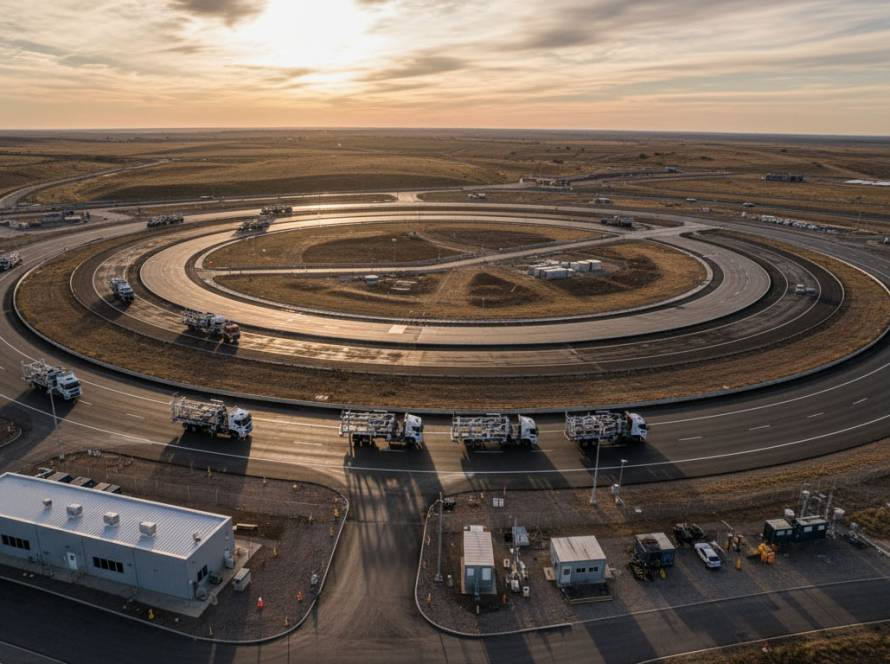
Road surface performance in the UK is a critical consideration for property owners, developers, and commercial site managers responsible for maintaining safe and reliable access routes. Whether the surface serves a private estate road, a commercial yard, or a shared access lane, its long-term behaviour directly affects safety, maintenance costs, and insurance assessments.
Performance is not simply about how a surface looks immediately after installation. It reflects how well the road withstands traffic loads, environmental conditions, and ageing over time. In the UK climate, where rainfall, temperature fluctuations, and freeze-thaw cycles are common, surfaces must be constructed to meet demanding conditions.
Long-term performance testing provides measurable insight into how a road will behave. It allows contractors and stakeholders to assess durability, identify early signs of deterioration, and ensure compliance with expected standards.
Why Long-Term Testing Matters for Road Surfaces
The importance of long-term testing becomes clear when considering the financial and operational risks associated with premature surface failure. A road that deteriorates quickly can lead to increased repair costs, disruption to site operations, and potential liability concerns.
From an insurance perspective, road surface condition plays a significant role in risk assessment. Poorly maintained or structurally weak surfaces increase the likelihood of accidents, vehicle damage, and claims. Insurers often consider the quality of construction and ongoing maintenance when evaluating a site.
Testing provides evidence that a surface has been installed correctly and is performing as expected. This documentation can be valuable for demonstrating due diligence and reducing perceived risk.
Key Factors That Influence Road Surface Performance
Traffic Load and Usage Patterns
One of the most significant factors affecting road performance is traffic load. Surfaces designed for light residential use will behave very differently from those exposed to heavy commercial vehicles.
Repeated stress from vehicles causes gradual deformation, particularly if the surface or sub-base is not designed to accommodate the load. Over time, this can lead to rutting, cracking, and structural fatigue.
Professional commercial surfacing ensures that materials and construction methods are matched to expected usage, helping to maintain performance over the long term.
Sub-Base Integrity
The foundation of any road is its sub-base. Even the highest quality surface materials cannot compensate for a poorly prepared base layer.
A stable and well-compacted sub-base distributes loads evenly and prevents movement within the structure. If the sub-base is weak or inconsistent, surface defects will develop much sooner.
Testing often focuses on load-bearing capacity and compaction levels, as these directly influence long-term durability.
Drainage and Water Management
Water is one of the most damaging elements for road surfaces. Poor drainage allows water to penetrate the structure, weakening the sub-base and accelerating deterioration.
Standing water also increases the risk of surface damage during freeze-thaw cycles, which are common in the UK.
Effective drainage design, including channels and gradients, is essential for maintaining performance. Surfaces installed with proper drainage considerations tend to perform significantly better over time.
Material Quality and Installation Standards
The choice of materials and the quality of installation both play a decisive role in performance. High-quality asphalt or tarmac, when properly laid and compacted, provides a durable and resilient surface.
Using experienced contractors for tarmac installation ensures that correct temperatures, compaction techniques, and layer thicknesses are achieved, all of which contribute to long-term success.
Methods Used in Long-Term Performance Testing
Visual Inspections Over Time
Regular visual inspections are one of the simplest yet most effective ways to monitor road performance. These inspections identify early signs of wear such as cracking, potholes, or surface deformation.
While visual assessments may seem basic, they provide valuable information when conducted consistently over time.
Structural Load Testing
Load testing evaluates how well a road can withstand weight and pressure. This type of testing is particularly important for commercial sites where heavy vehicles are common.
By applying controlled loads and measuring deflection, engineers can assess whether the structure is performing as intended.
Surface Evenness and Texture Analysis
Surface evenness affects both safety and comfort. Uneven surfaces can lead to vehicle damage and increase the risk of accidents.
Texture analysis also plays a role in skid resistance, which is an important factor in wet conditions. Maintaining appropriate surface texture helps ensure safe vehicle operation.
Core Sampling and Material Analysis
Core samples provide insight into the internal structure of the road. By extracting and analysing samples, engineers can assess layer thickness, material composition, and compaction quality.
This method is particularly useful for diagnosing underlying issues that may not be visible on the surface.
The Link Between Road Performance and Insurance Risk
Insurance providers assess risk based on the likelihood of incidents occurring. Road condition is a key factor in this evaluation.
A well-constructed and properly maintained surface reduces the chances of accidents, vehicle damage, and liability claims. Conversely, deteriorating surfaces increase exposure to risk.
Long-term performance testing provides documented evidence that a road is being monitored and maintained. This can support favourable insurance assessments by demonstrating proactive management.
Surfaces with frequent defects such as potholes may require ongoing pothole repairs to maintain safety and reduce liability. However, repeated repairs can indicate deeper structural issues, which insurers may view as a higher risk.
Common Signs of Poor Long-Term Performance
Road surfaces that are not performing well typically show consistent patterns of deterioration. Cracking is often one of the first visible signs, indicating stress within the material.
Rutting may develop in areas subjected to repeated vehicle movement, particularly in loading zones or turning areas. This can lead to water accumulation and further damage.
Potholes represent a more advanced stage of failure, where the surface has broken down completely. These defects not only affect usability but also present safety hazards.
Addressing these issues early through testing and maintenance is essential for preserving performance.
How Professional Installation Supports Long-Term Results
The role of professional installation cannot be overstated when considering road surface performance. Every stage of the process, from ground preparation to final compaction, contributes to the overall outcome.
Using advanced techniques such as machine lay tarmac ensures consistency in layer thickness and compaction. This level of precision is difficult to achieve with manual methods and has a direct impact on durability.
Experienced contractors also understand how to adapt to site-specific conditions, including soil type, drainage requirements, and expected traffic levels. This tailored approach helps ensure that the surface performs reliably over time.
Maintaining Road Performance Through Ongoing Monitoring
Long-term performance is not solely determined at the point of installation. Ongoing monitoring and maintenance are essential for preserving surface quality.
Regular inspections allow for early identification of minor issues before they develop into significant problems. Preventative maintenance, such as sealing cracks or improving drainage, can extend the lifespan of the surface.
Working with a trusted provider through our services ensures that maintenance is carried out professionally and in line with best practices.
Conclusion
Road surface performance in the UK is a complex but essential consideration for any property or site manager. Long-term testing provides the insight needed to ensure that surfaces remain safe, durable, and cost-effective over time.
By understanding the factors that influence performance, investing in quality installation, and maintaining a consistent testing programme, it is possible to minimise risk and maximise value.
For insurers, a well-maintained and thoroughly tested road represents a lower risk profile. For property owners, it offers confidence that their infrastructure will continue to perform as expected.