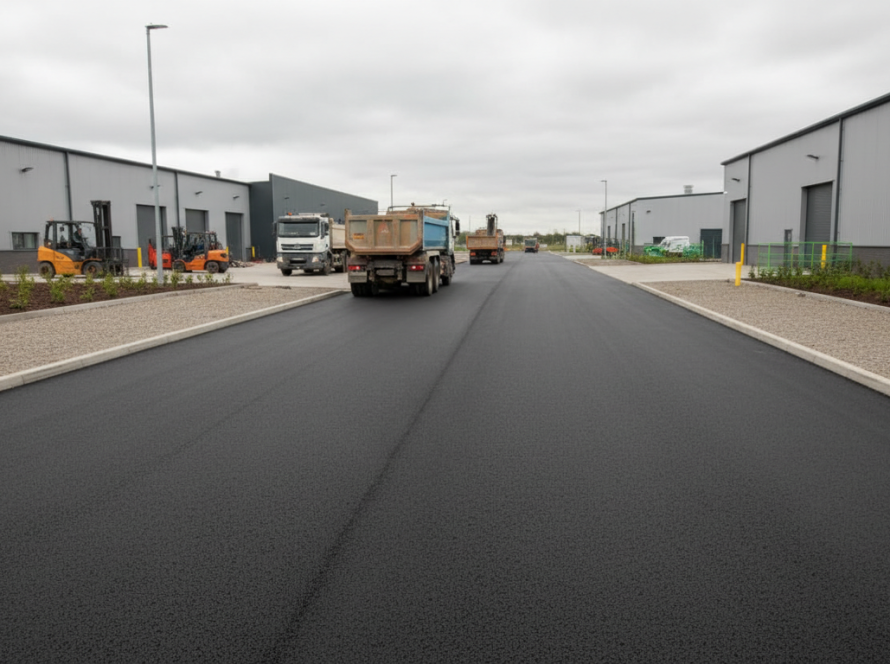
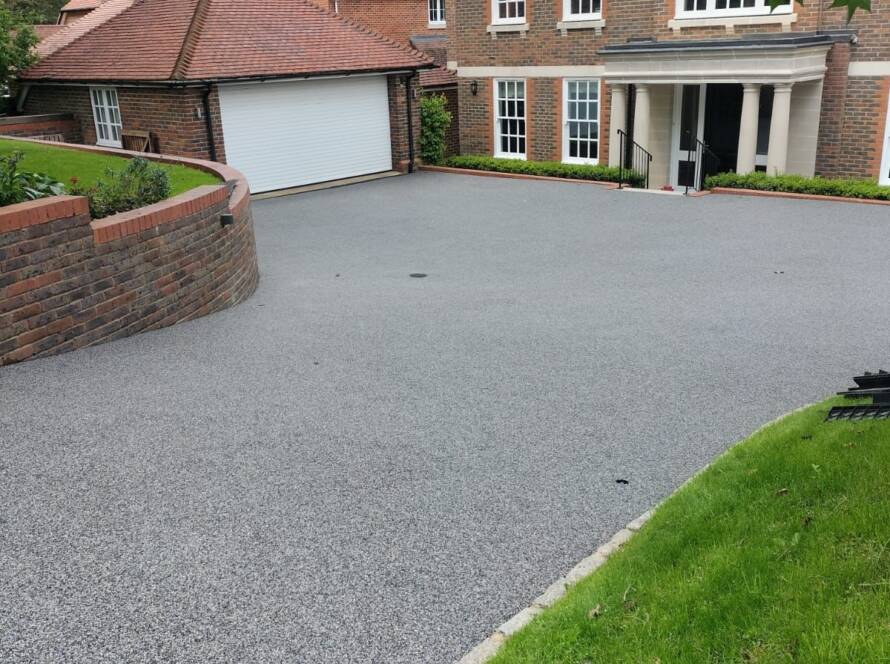
Road surface performance UK standards are not simply about how a newly laid surface looks on completion day. True performance is measured over years of use, through changing weather conditions, varying traffic loads, and the ongoing operational demands of commercial and private sites.
For property owners and commercial site managers, understanding long-term performance testing is essential when planning new installations or resurfacing works. A road may appear smooth and uniform immediately after installation, but without correct structural design, compaction, and drainage integration, deterioration can begin far earlier than expected.
Long-term testing provides evidence that a surface will withstand repeated vehicle loading, resist deformation, maintain skid resistance, and remain structurally sound throughout its design life.
What Is Road Surface Performance?
Road surface performance refers to how effectively a surface maintains its structural integrity, safety characteristics, and appearance over time. In UK conditions, this means resisting heavy rainfall, freeze-thaw cycles, temperature fluctuations, and sustained traffic pressure.
Performance is typically assessed through a combination of structural evaluation, surface condition monitoring, and compliance with relevant specifications. For commercial estates, business parks, logistics facilities, and private access roads, the goal is to minimise reactive maintenance while maintaining safe operating conditions.
High-quality commercial road surfacing projects are designed with long-term durability in mind from the outset, rather than relying on cosmetic improvements alone.
Structural Performance Over Time
Sub-Base Stability
The foundation beneath the visible asphalt layers plays the most significant role in long-term performance. Even a well-finished surface will fail prematurely if the sub-base lacks strength or is poorly compacted.
Over time, inadequate foundations lead to rutting, settlement, and cracking. Performance testing may include assessments of load-bearing capacity and evidence of movement within lower layers.
When upgrading existing surfaces, ensuring proper structural preparation through professional tarmac installation methods helps prevent recurring failure patterns that often affect older developments.
Compaction and Layer Bonding
Correct compaction during installation is essential for long-term durability. Insufficient compaction allows air voids to remain within the material, reducing strength and increasing susceptibility to water ingress.
Performance monitoring over time can reveal whether early surface fretting or cracking indicates compaction deficiencies. Machine application methods such as machine lay tarmac improve consistency across large areas, supporting uniform density and structural resilience.
Surface Condition Monitoring
Long-term road surface performance UK evaluation does not rely solely on structural testing. Surface condition surveys form a key part of ongoing assessment.
Cracking and Deformation
Cracks may appear due to thermal movement, traffic stress, or reflective cracking from underlying layers. While minor surface cracking can be manageable, widespread cracking often signals deeper structural issues.
Deformation such as rutting in wheel paths indicates insufficient load-bearing capacity or compaction. Monitoring these patterns over time allows property managers to intervene before defects escalate.
Skid Resistance
Surface texture plays an important role in safety. Over time, traffic polishing can reduce skid resistance, particularly in braking zones, junctions, and turning areas.
Performance assessments evaluate whether the wearing course maintains sufficient grip under wet conditions. Where deterioration occurs, targeted resurfacing may be required to restore safety standards.
Drainage and Water Management Performance
In the UK climate, water is one of the most significant threats to road longevity. Long-term performance testing must consider how effectively a surface manages rainfall.
Surface Water Runoff
Correct crossfalls and longitudinal gradients ensure water disperses quickly rather than pooling. Standing water accelerates surface breakdown and increases safety risks.
Monitoring drainage performance over several seasons highlights whether original design gradients remain effective or whether settlement has altered water flow.
Edge Integrity and Water Ingress
Edges are common failure points. If restraints weaken or shoulders erode, water can infiltrate lower layers, compromising structural stability.
Regular inspection and timely maintenance, including minor interventions such as pothole repairs, prevent localised water damage from developing into widespread deterioration.
Traffic Loading and Performance Expectations
Road surface performance UK projects must align with realistic traffic forecasts. A surface designed for light vehicle use will not deliver long-term durability under repeated heavy goods vehicle loading.
Commercial and Industrial Sites
Industrial estates and logistics hubs place sustained stress on surfacing through articulated lorries, forklifts, and delivery fleets. Long-term testing in these environments focuses on rut resistance and deformation control.
Private and Business Access Roads
Private access roads and business parks may experience mixed traffic, including cars, vans, and occasional heavy vehicles. In these cases, performance testing ensures the structure accommodates peak demand without premature wear.
Understanding projected traffic load during the design stage is critical. Reviewing previous completed projects through a professional portfolio can provide reassurance regarding surface performance in comparable environments.
Compliance With UK Standards
Road surface performance UK assessments also consider compliance with recognised industry standards and specifications. These standards address material composition, layer thickness, compaction requirements, and surface regularity.
Compliance is not only a matter of installation quality but of documented testing and inspection during and after works. For commercial property owners, demonstrating adherence to recognised practices supports asset value and risk management.
Reputable contractors offering comprehensive road surfacing services typically integrate quality control procedures into every stage of the project, from sub-base preparation to final rolling.
Lifecycle Cost Considerations
Long-term performance testing is closely linked to lifecycle cost management. A surface that performs reliably over its intended lifespan reduces unplanned expenditure and operational disruption.
Reduced Reactive Maintenance
Frequent patching and short-term fixes often indicate that the original installation lacked structural integrity. Over time, repeated temporary repairs become more expensive than a properly designed resurfacing scheme.
Planned Intervention Strategy
Performance monitoring allows for proactive maintenance scheduling. Addressing early-stage cracking or minor surface wear extends the lifespan of the entire structure and avoids large-scale reconstruction.
In commercial settings where downtime affects business continuity, predictable maintenance planning is particularly valuable.
Performance in Redevelopment and Upgrades
Where redevelopment or site upgrades have taken place, long-term testing confirms that new surfacing integrates effectively with existing infrastructure.
Changes in layout, drainage systems, or traffic patterns can alter stress distribution across a site. Ongoing performance evaluation ensures that upgraded surfaces respond as expected under revised operational demands.
For property managers overseeing phased improvements, testing provides measurable evidence that each completed phase meets durability expectations before progressing further.
The Role of Professional Installation
Long-term road surface performance UK outcomes are largely determined at the installation stage. Material selection, thickness specification, compaction standards, and drainage detailing all influence how a surface behaves years after completion.
Professional contractors assess ground conditions, traffic forecasts, and environmental exposure before recommending a suitable surfacing system. This structured approach supports consistent long-term results rather than short-term visual improvements.
Surface performance is not accidental. It is the result of deliberate design decisions and disciplined installation practices.
Conclusion
Road surface performance UK testing ensures that newly installed or upgraded roads deliver structural strength, safety, and durability throughout their intended lifespan. For commercial property owners and site managers, understanding how performance is measured provides greater confidence when investing in resurfacing works.
By focusing on sub-base integrity, compaction quality, drainage effectiveness, and realistic traffic loading, long-term performance can be achieved and maintained. Ongoing monitoring and timely maintenance further protect that investment.
When road surfacing is approached as a long-term asset rather than a short-term fix, sites benefit from reduced disruption, improved safety, and sustained operational efficiency for years to come.