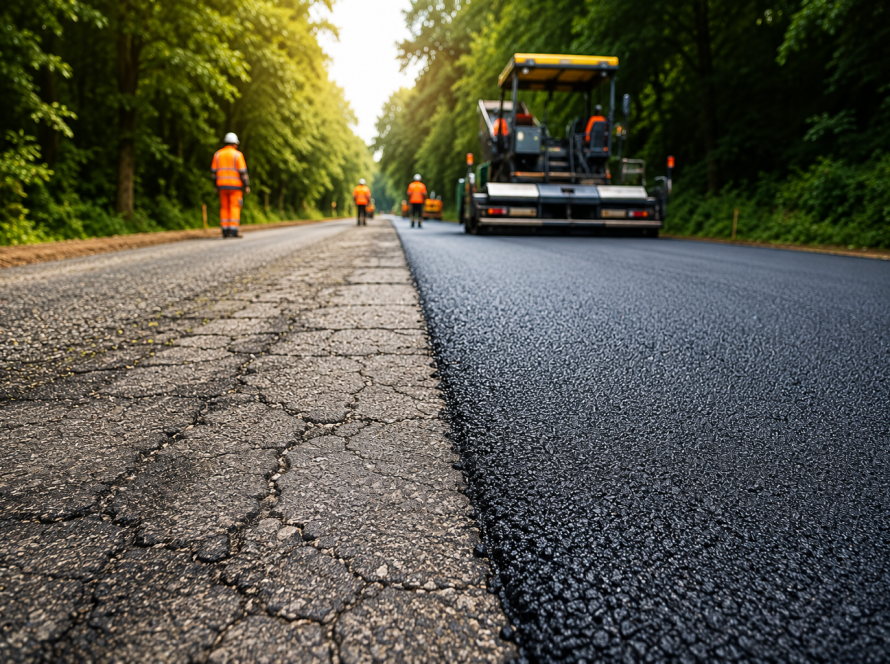
High-traffic roads need more than a neat surface finish. Whether the area serves a commercial estate, industrial yard, retail park, private access road or busy residential development, the surface has to cope with repeated vehicle movement, changing weather, turning forces, standing loads and water exposure. A road that looks suitable on the day it is laid can still fail early if the structure beneath it has not been designed for the level of use it will receive.
For property owners and site managers, the main question is not simply how quickly a road can be surfaced. The more important issue is how long that surface will remain safe, even, durable and cost-effective under daily pressure. High traffic road surfacing UK projects require careful decisions at every stage, from ground preparation and sub-base construction through to material choice, compaction, drainage and planned maintenance.
A long-lasting surface is usually the result of many correct decisions working together. No single layer, material or finish can compensate for poor preparation or unsuitable design. When traffic volumes are high, small weaknesses can become major defects much faster than they would on a lightly used road.
Why High-Traffic Areas Need Specialist Surfacing Design
High-traffic areas place continuous stress on a road surface. Vehicles do not simply pass over the road in a straight line; they brake, accelerate, turn, queue and sometimes remain stationary for long periods. These movements create pressure that affects both the visible surface and the layers underneath.
In commercial settings, the challenge is often greater because the surface may need to handle vans, delivery vehicles, refuse lorries, forklifts, maintenance vehicles or HGVs. These vehicles exert far more force than standard cars, especially in areas where they turn tightly or stop repeatedly. A surface that may be perfectly suitable for a domestic driveway or low-use private lane may not be strong enough for a busy access road or service yard.
Professional commercial surfacing and road surfacing considers how the road will actually be used, rather than treating every project in the same way. This includes looking at vehicle types, expected traffic frequency, turning areas, gradients, drainage routes and the condition of the existing ground.
The Role of the Sub-Base in Long-Term Strength
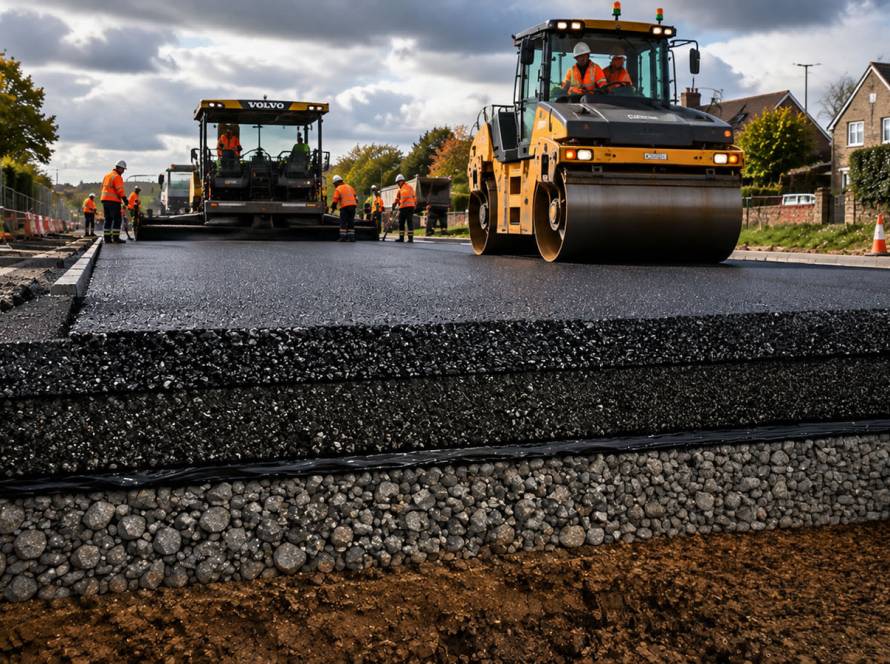
The visible surface is only one part of a road’s structure. In many cases, early failure begins below the surface, where poor ground conditions or an inadequate sub-base allow movement to occur. Once the lower layers begin to shift, the surface above can crack, sink, ripple or break apart.
A strong sub-base spreads vehicle loads across a wider area and helps prevent deformation. In high-traffic locations, the sub-base must be suitable for the weight and frequency of traffic expected on site. If it is too shallow, poorly compacted or built over unstable ground, the finished road may deteriorate even if good-quality surface materials are used.
Ground conditions also matter. Soft, wet or poorly drained ground can weaken the road structure over time. Before surfacing begins, the area should be assessed so that unsuitable material can be removed and replaced where necessary. This is particularly important for commercial estates, access roads and redevelopment sites where previous use may have left inconsistent ground beneath the surface.
Why Proper Compaction Makes a Surface Last Longer
Compaction is one of the most important stages in road surfacing. It reduces air gaps in the material, improves density and helps create a stable, load-bearing structure. Without proper compaction, a surface may appear complete but remain vulnerable to movement, water penetration and premature wear.
In high-traffic areas, poor compaction can lead to rutting, depressions and uneven settlement. These defects often appear where vehicles follow the same path repeatedly, such as entrance lanes, loading routes or access roads within business parks. Once the surface begins to deform, water can collect in low spots, adding further pressure to the road structure.
Experienced contractors use appropriate equipment and methods to achieve consistent compaction across the full area. This is especially important around edges, joints, corners and confined spaces, where weaker compaction can create future failure points. For larger or more demanding projects, machine lay tarmac can help deliver a more consistent finish across wider areas, supporting better levels and smoother installation.
Choosing the Right Surface Material
Material choice has a major influence on durability. Tarmac and asphalt are widely used for roads, access routes and commercial surfaces because they provide strength, flexibility and a practical finish for vehicle traffic. However, the correct specification depends on the demands of the site.
High-traffic areas often require materials that can withstand repeated loading and resist deformation. The chosen surface must also provide suitable grip, shed water effectively and remain stable through seasonal temperature changes. In the UK, surfaces need to cope with rain, frost, occasional heat, standing water and frequent freeze-thaw conditions.
Good tarmac installation is not simply about laying material over an existing area. It involves selecting the correct build-up, preparing the surface properly, managing levels and ensuring the finished road is compacted and sealed appropriately. When each stage is handled correctly, the surface is far more likely to perform well over time.
Drainage and Water Management
Water is one of the biggest causes of road surface deterioration. In high-traffic areas, drainage problems can quickly become expensive because traffic continues to force water into weak points, cracks and joints. Once water enters the structure, it can soften lower layers, create voids and contribute to pothole formation.
A durable road surface should be designed so that water moves away from trafficked areas rather than sitting on the surface. Falls, channels, gullies and surrounding ground levels all need to work together. Poor drainage may not always be obvious immediately after installation, but signs often appear after heavy rain, when water pools in dips or along edges.
Standing water is particularly damaging in areas used by heavy vehicles. Repeated loading over wet sections increases the risk of surface breakdown. Over time, this can lead to cracks, loose material and potholes. Addressing drainage at the design stage is usually far more effective than trying to correct problems after the surface has started to fail.
Edge Strength and Surface Restraint
Edges are often vulnerable in high-traffic road surfacing. If the sides of a road are not properly supported, the surface can begin to spread or crumble under pressure. This is common where vehicles regularly drive close to the edge, where the road meets soft verges, or where turning movements apply sideways stress.
Edge restraint helps hold the surfacing structure in place. It supports the surface, reduces movement and protects against cracking along the margins. In commercial and private road settings, edge details should be considered as part of the full design rather than treated as a finishing touch.
A road may look complete without strong edges, but unsupported margins can shorten its lifespan significantly. Once edge failure begins, water can enter the structure more easily and the damaged area can gradually spread into the main carriageway.
Traffic Load, Turning Stress and Repeated Movement
Not all traffic pressure is equal. A straight road carrying light vehicles at a steady speed faces different stresses from a service yard where vans and lorries brake, reverse and turn throughout the day. Turning areas, junctions, entrances and loading bays often fail earlier because they experience concentrated forces.
When wheels turn while a vehicle is moving slowly or stationary, they can create scuffing and shear stress on the surface. Heavy vehicles increase this effect. Over time, this may cause the surface to twist, loosen or deform, especially if the material specification or compaction is not suitable.
High-traffic road surfacing UK projects should therefore consider the layout of the site. Areas with frequent turning, queuing or loading may need a stronger construction than sections used only for light through-traffic. Treating the whole site as one uniform surface can lead to under-design in the areas that work hardest.
The Importance of Surface Thickness
Surface thickness should match the expected use of the road. If the construction is too thin for the traffic load, the road is more likely to crack, sink or break up. However, thickness alone is not enough. The entire structure, including sub-base quality, binder layers and surface course, must be suitable.
A thicker surface laid over weak foundations will still be at risk. Equally, a well-prepared base with an unsuitable surface layer may not provide the performance needed for high-use areas. The aim is to create a balanced structure where each layer supports the next.
For commercial sites, access roads and shared routes, the specification should be based on practical use rather than appearance alone. This helps ensure the surface can withstand daily wear and remain safe for vehicles, pedestrians and site users.
Maintenance and Early Intervention
Even well-built road surfaces need maintenance. High-traffic areas naturally experience wear, and small defects should be addressed before they develop into larger problems. Cracks, small potholes, loose edges and drainage issues can all worsen quickly when traffic continues to pass over them.
Early pothole repairs help protect the surrounding surface and reduce the risk of further deterioration. Leaving defects untreated allows water to enter the road structure, which can weaken the area around the damage and increase repair costs over time.
Routine inspections are particularly valuable after winter, periods of heavy rain or changes in site use. A road that was originally designed for light commercial traffic may begin to suffer if heavier vehicles start using it regularly. Maintenance should reflect how the site is actually being used, not just how it was used when the surface was first installed.
Why Installation Quality Matters
The durability of a road surface depends heavily on workmanship. Correct levels, consistent material depth, suitable temperatures, proper rolling and attention to joints all affect how long the surface will last. Poor installation can create weaknesses that may not be visible immediately but become apparent once the road is in regular use.
Joints are a common area of concern. If they are not properly formed and sealed, they can allow water into the structure. In high-traffic locations, joints are exposed to constant movement and pressure, so they need to be carefully managed.
Timing also matters. Surfacing work should be planned around weather, access requirements and curing or cooling times. Rushing a project or reopening a road too soon can affect the quality of the finished surface. For busy commercial sites, phased planning may be needed so that access can be maintained without compromising the installation.
Matching the Surface to the Site
Every high-traffic site has different requirements. A private estate road, business park entrance, school access route, retail service yard and industrial loading area may all need different design decisions. The best surface is one that matches the site’s traffic, drainage, layout and long-term use.
This is why experienced contractors assess more than just the visible area to be surfaced. They consider how vehicles enter and leave, where water will go, whether heavy vehicles turn in specific places, how the road connects to surrounding surfaces and whether there are existing defects that indicate deeper structural issues.
Choosing a surfacing solution without this assessment can lead to short-term savings but higher long-term costs. A surface that fails early may require patch repairs, resurfacing or full reconstruction far sooner than expected.
What Makes a High-Traffic Surface Last Longer?
A long-lasting high-traffic surface is built on proper preparation, suitable materials, effective drainage and skilled installation. It needs a stable sub-base, correct compaction, adequate thickness, supported edges and a surface specification that reflects real traffic demands.
The most durable roads are not always the ones that look different at first glance. Often, their strength lies in the work that cannot be seen once the project is complete. Good preparation, correct layer design and careful finishing all help the surface resist movement, water damage and repeated wear.
For property owners and site managers, investing in the right specification at the start can reduce disruption, improve safety and lower long-term repair costs. High traffic road surfacing UK projects should be viewed as structural works, not just cosmetic improvements. When the surface is designed around the way the site is used, it has a much better chance of remaining safe, stable and serviceable for years.