A freshly laid tarmac surface is usually expected to look smooth, consistent and uninterrupted. This is why property owners and site managers can sometimes be concerned when they notice small grooves, straight cuts or visible lines appearing in new tarmac shortly after installation.
In many situations, these marks are completely intentional. Grooves in new tarmac can be associated with joints, drainage arrangements, interfaces between different sections of surfacing, utility work or specific requirements within the overall pavement design. Their purpose depends on their location, dimensions and the type of area that has been surfaced.
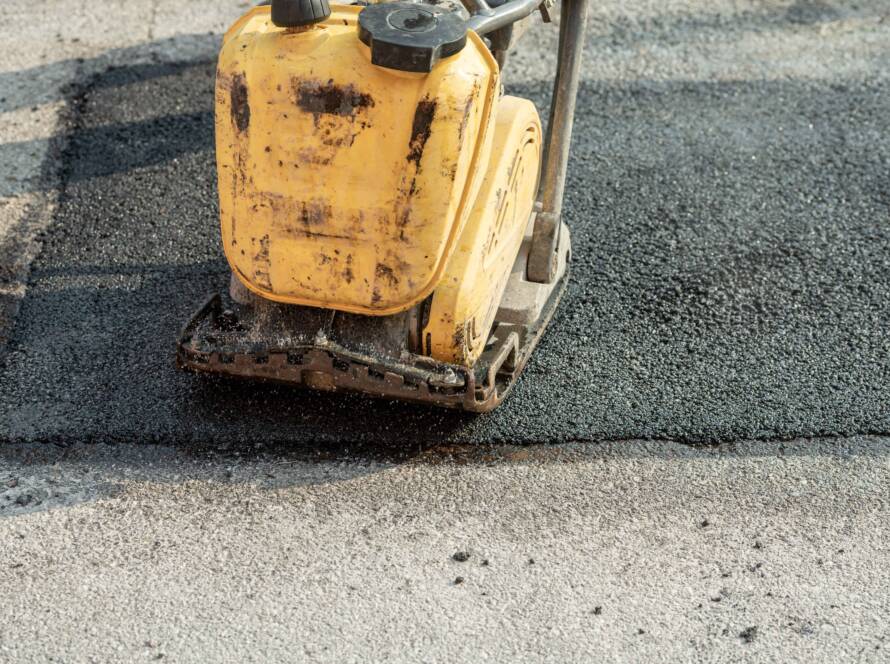
Modern tarmac installation and road surfacing involves considerably more than simply spreading material over the ground. The preparation of the underlying layers, management of levels, compaction, drainage and treatment of joints all contribute to how well the finished surface performs.
Understanding why grooves or cuts have appeared can therefore help distinguish between a normal construction detail and something that may require further inspection.
Grooves Can Be Part of the Construction Process
Tarmac and asphalt surfaces are not always installed as one completely continuous area. Large roads, car parks, commercial yards and access routes may need to be surfaced in separate passes or sections.
Where one section meets another, a joint is created. Contractors need to manage these joints carefully because they can become vulnerable areas if they are not constructed and compacted correctly.
A visible straight line can sometimes look like a groove even though it is actually the point where two separate paving runs meet.
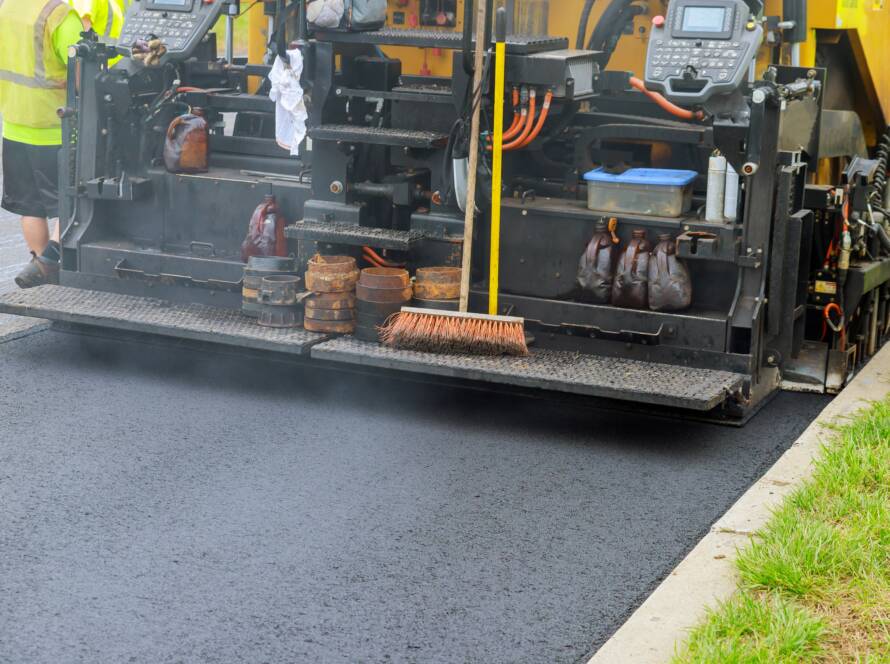
This is particularly common with machine lay tarmac, where paving equipment installs material systematically across the prepared area. Depending on the width and shape of the site, several passes may be required to complete the surface.
The resulting joints should be properly formed so that the different sections work together effectively.
Why Tarmac Joints Matter
Joints deserve particular attention because the edges of laid material can behave differently from the main body of the surface.
Good compaction is essential throughout a tarmac installation, but achieving appropriate density around joints and edges is especially important. If these areas are inadequately constructed, small gaps can eventually provide a route for moisture.
Once water begins penetrating beneath a road surface, it can contribute to deterioration of the layers underneath. Repeated vehicle loading and seasonal weather conditions can then make the problem progressively worse.
This is one reason why apparently minor details in a new surface can have an important role in its long-term performance.
Some Grooves Are Deliberately Saw-Cut
Another possibility is that the grooves have been mechanically cut after the tarmac was installed.
Saw cutting allows contractors to create a clean, controlled line through a surface. This may be required where additional construction work will take place or where the new surface needs to interface neatly with another feature.
Rather than breaking the tarmac irregularly, cutting it produces a defined edge. This can make subsequent work more controlled and reduce unnecessary disturbance to the surrounding surface.
A saw-cut line is generally easy to recognise because it tends to be straight and consistent. Random cracking, by comparison, usually has a much less uniform appearance.
For property owners, this distinction is useful. A precise straight cut is much more likely to have been created intentionally than an irregular crack spreading unpredictably across the surface.
Grooves Around Drainage Features
Water management is an important consideration in virtually every external surfacing project.
New tarmac should normally be installed with appropriate falls and levels so that surface water moves towards suitable drainage points rather than remaining in large puddles.
On some projects, grooves or cut lines may appear close to drainage infrastructure because the surfacing has been formed around channels, gullies or other drainage components.
Professional commercial road surfacing must take drainage into account alongside traffic loading and day-to-day site use. This is particularly important on larger commercial areas where substantial volumes of rainwater may need to be managed during periods of heavy rainfall.
A narrow groove should not automatically be assumed to be a drainage channel itself. Proper drainage channels are normally designed specifically to collect and transport water. However, cuts and joints can form part of the construction detail surrounding those systems.
Why Water Matters to Tarmac
Water is one of the main factors that needs to be controlled around paved surfaces.
When water remains on the surface, it can make areas inconvenient for pedestrians and vehicles. More importantly, if moisture is able to penetrate weaknesses, damaged joints or cracks, it can reach the supporting layers beneath the tarmac.
The condition of these underlying layers has a major influence on the stability of the finished pavement.
This is why drainage should be considered before the final tarmac layer is installed rather than treated as an afterthought.
Are Grooves Used to Improve Grip?
Some road surfaces can incorporate deliberate texturing intended to influence surface grip or water movement. This should not, however, be confused with every line or mark that appears on freshly laid tarmac.
The appearance provides useful clues.
If there are numerous fine, regular grooves across a large section of pavement, they may relate to a particular surface treatment or specification. If there is a single straight groove or only a few clearly defined cuts, they are more likely to be associated with construction joints, drainage details or another feature of the installation.
The intended use of the area also matters. A private driveway, commercial service yard and heavily trafficked access road can have very different design requirements.
A professional contractor should therefore consider the expected traffic, surface use, drainage requirements and existing site conditions before deciding how an area should be surfaced.
When Are Grooves in New Tarmac Normal?
Grooves are generally less concerning when they are straight, consistent and clearly associated with a recognisable construction feature.
For example, a neat line where two sections of tarmac meet can simply indicate a paving joint. Similarly, a controlled cut around a drainage feature or another structure may have been deliberately created during the installation.
New tarmac does not necessarily need to appear completely seamless in order to have been installed correctly.
What matters is whether the details have been constructed appropriately and whether the finished surface can perform its intended function.
The surface should have appropriate levels, suitable compaction and properly managed edges and joints. Water should also be able to drain effectively without consistently collecting in inappropriate areas.
When Should a Groove Be Investigated?
Although many grooves are intentional, not every line appearing in new tarmac should automatically be ignored.
An irregular opening that becomes wider over time may indicate cracking rather than a deliberate construction detail. Movement around the groove, crumbling edges or visible separation can also justify further inspection.
Standing water close to a joint can be another reason to investigate the area, particularly if the water remains for extended periods after rainfall.
Early assessment is useful because small areas of deterioration can sometimes be addressed before they develop into more extensive damage. Professional pothole repairs are an example of remedial work that may eventually become necessary when deterioration has been allowed to progress, although a small groove in new tarmac should not be mistaken for a developing pothole without proper inspection.
The age of the installation is also relevant. A deliberate construction joint should be present from the beginning, whereas a crack that develops and progressively changes after installation may indicate movement or another underlying issue.
The Difference Between a Groove and a Crack
One of the simplest ways to assess a mark in tarmac is to examine its shape.
A deliberately formed groove tends to have relatively straight edges, a consistent width and a clear relationship with another feature of the site. A naturally occurring crack is more likely to wander, branch or change direction.
Cracks can develop for several reasons, including movement in the pavement structure, weaknesses in the supporting layers or deterioration over time.
This distinction becomes particularly important when examining recently completed work. An intentional saw cut should look controlled. Unexpected cracking soon after installation deserves closer attention because a new pavement should have been designed and constructed to remain stable under its anticipated conditions.
Why the Ground Beneath the Tarmac Is Important
The visible tarmac is only the upper part of a complete pavement construction.
Below it are supporting layers that provide stability and distribute loads. The condition and preparation of these layers have a significant effect on how the finished surface behaves.
If the ground beneath a surface is inadequately prepared, movement can eventually become visible above. This can appear as settlement, depressions or cracking.
Correct preparation is therefore an essential part of professional road surfacing services. The thickness and construction of the pavement need to reflect the conditions of the site and the type of traffic expected to use it.
A domestic vehicle area does not experience the same loading as a commercial yard regularly used by delivery vehicles or HGVs. Designing the underlying construction appropriately helps the surface remain stable and reduces the likelihood of premature deterioration.
Heavy Traffic Can Place Additional Stress on Joints
Commercial tarmac surfaces often experience much greater stresses than residential areas.
Large vehicles place substantial loads on the pavement, while turning, braking and manoeuvring can create additional forces at the surface. Junctions, loading areas and turning points can therefore require particular attention.
Joints and edges in these locations need to be properly constructed because they may experience frequent loading.
This is especially relevant for commercial access roads, industrial estates, business premises and service yards. The surface must be suitable for actual site operations rather than simply providing an attractive finish.
Careful installation and suitable material selection help create a pavement capable of coping with these conditions.
Should You Be Concerned About Grooves in Fresh Tarmac?
In most cases, a neat and deliberately formed groove should not immediately be treated as evidence of a problem.
The most important factors are its location, appearance and whether it is changing.
A straight cut that has clearly been produced by machinery is very different from an irregular crack that continues spreading. Similarly, a joint between paving sections is a normal feature of many installations, provided it has been properly constructed.
If there is uncertainty, the best approach is to have the area inspected by an experienced surfacing contractor. This allows the groove to be assessed in the context of the complete pavement rather than judged solely by its appearance.
Examples of completed surfacing work can also help property owners understand how different joints, edges and finishes appear in practice. Viewing a professional road surfacing portfolio can provide useful context when comparing different types of completed surfaces.
Good Tarmac Is About More Than a Smooth Finish
A high-quality tarmac surface should certainly look neat, but appearance is only one part of a successful installation.
The underlying ground preparation, sub-base, drainage, material selection, compaction, edges and joints all contribute to the finished pavement’s performance.
Small grooves in new tarmac can therefore have a legitimate purpose. They may identify construction joints, controlled saw cuts, interfaces with drainage infrastructure or other details required by the project.
Rather than assuming that every visible line represents damage, it is better to consider how the mark has been formed. Straight, consistent and deliberately positioned grooves are often construction details, while irregular cracks, widening gaps, loose edges or movement can justify professional assessment.
A properly designed and installed tarmac surface brings all of these elements together to create a durable area suitable for its intended traffic and environment.