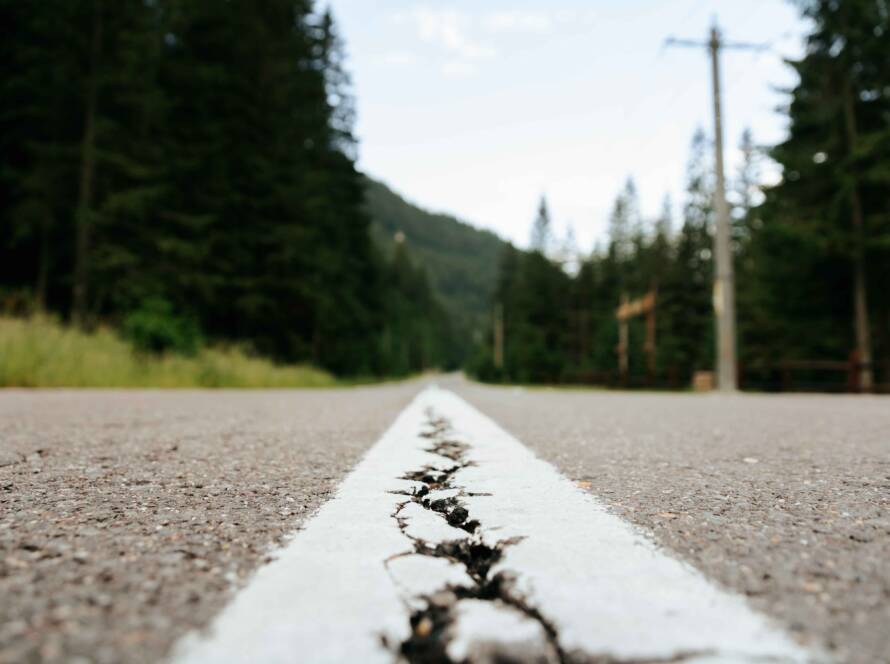
A damaged industrial yard does not automatically need to be completely resurfaced. In many cases, deterioration is concentrated in particular areas, such as loading bays, vehicle turning points, entrances, drainage routes or sections regularly used by heavy goods vehicles. Where the surrounding surface and underlying construction remain in reasonable condition, targeted industrial yard repairs can provide an effective alternative to replacing the entire surface.
The important factor is identifying why the damage has occurred. A visible pothole or cracked section may appear to be a straightforward surface problem, but deterioration can sometimes indicate weakness within the underlying construction. Repairing only the visible damage without addressing its cause can result in the same problem returning.
A professional assessment therefore considers the condition of the surface, the supporting layers beneath it, drainage performance and the type of traffic using the yard. This allows individual areas to be repaired where appropriate while avoiding unnecessary work across sections that remain serviceable.
Why Industrial Yard Surfaces Become Damaged
Industrial yards operate under demanding conditions. Unlike many residential surfaces, they may experience continuous vehicle movements, deliveries, parked trailers, forklifts and heavily loaded HGVs. These pressures can gradually affect even a well-constructed surface.
Turning movements are particularly demanding. When a heavy vehicle turns slowly or manoeuvres within a confined area, its tyres apply significant sideways forces to the surface. Over time, these movements can contribute to deformation, cracking and displacement, particularly if the pavement construction is not suitable for the traffic it receives.
Repeated loading can create similar problems. Loading bays and frequently used traffic routes may deteriorate sooner than quieter areas of the same yard because they experience substantially greater stresses.
Water is another significant consideration. Cracks, failed joints and damaged drainage can allow water into the pavement construction. Once moisture reaches weaker underlying material, vehicle loading can accelerate deterioration. Proper commercial surfacing therefore needs to consider drainage and supporting construction as well as the visible wearing surface.
When Localised Industrial Yard Repairs Are Suitable
Targeted repairs are most appropriate when deterioration is limited to identifiable sections of the yard and the surrounding pavement remains structurally sound.
For example, a pothole developing along a regular vehicle route does not necessarily justify replacing hundreds or thousands of square metres of otherwise usable surfacing. The defective section can often be removed, the underlying material inspected and corrected where necessary, and a new surface installed.
Professional pothole repairs are particularly useful when deterioration is genuinely localised. A properly completed repair involves more than filling a hole with loose material. The failed section needs to be prepared correctly so that the replacement material can form a durable repair capable of dealing with continued traffic.
Larger damaged sections can also be treated locally. Where a particular loading area or turning point has deteriorated, it may be possible to excavate and reconstruct that section without disturbing the remainder of the yard.
This selective approach can extend the working life of an industrial surface while allowing site owners and managers to concentrate expenditure where it is actually required.
Understanding Surface Damage and Structural Failure
One of the most important distinctions when considering industrial yard repairs UK property managers require is the difference between surface deterioration and structural failure.
Surface damage affects the upper part of the pavement and may include local wear, minor cracking or isolated defects. If the supporting layers remain stable, removing and replacing the damaged surface may be sufficient.
Structural failure is more significant. It occurs when the layers supporting the surface can no longer adequately carry the loads passing over them. Visible symptoms can include substantial depressions, repeated cracking, rutting and areas that continue to fail despite previous repairs.
In these situations, simply installing new material over the top may conceal the problem temporarily without solving it.
The damaged material may need to be excavated to sufficient depth so that unstable construction can be removed and replaced. Once a suitable foundation has been restored, new surfacing can be installed and compacted correctly.
This is why the quality of tarmac installation and road surfacing is closely connected to preparation below the finished surface. The durability of the visible layer depends heavily on the stability of what supports it.
Repairing Potholes in an Industrial Yard
Potholes are among the most obvious forms of industrial yard damage. They can affect vehicle movements, create standing water and present an avoidable hazard for drivers and pedestrians.
A pothole frequently begins with a relatively small weakness. Water enters a crack or damaged section, the underlying material becomes less stable, and passing vehicles progressively break away the surrounding surface.
Industrial traffic can accelerate this process significantly.
Where the surrounding construction remains sound, the defective area can normally be cut out and repaired rather than resurfacing the whole yard. The repair area should extend beyond loose or weakened material so that the new construction is supported by stable edges.
The base should also be examined before the new surfacing is installed. If underlying material has become contaminated, saturated or displaced, it needs to be corrected first.
This is particularly important in industrial environments because a repair that is adequate for light traffic may perform poorly under regular HGV movements.
Cracking Does Not Always Mean Complete Resurfacing
Cracking can make an industrial yard appear significantly deteriorated, but the extent and pattern of the cracking are important.
A small number of isolated cracks may indicate local movement or ageing. Depending on their severity and cause, they may be treated without replacing the entire yard.
Widespread interconnected cracking can indicate a more substantial problem. If cracking occurs throughout large areas and is accompanied by movement or deformation, the supporting pavement may be reaching the end of its practical service life.
Repair decisions should therefore not be based purely on appearance. The condition of the surrounding surface and the behaviour of the pavement under traffic provide valuable information about whether targeted repairs remain sensible.
Why Drainage Must Be Checked Before Repairing the Surface
Drainage problems are a common contributor to premature surface deterioration.
An industrial yard should direct water away from trafficked areas towards suitable drainage points. When falls are inadequate, channels become damaged or depressions develop, water can remain on the surface.
Standing water is not simply an inconvenience. If moisture enters cracks or joints, it can weaken the layers below the surface and contribute to progressive deterioration.
Repairing a damaged patch without addressing the water that caused the problem may result in another failure in the same location.
For this reason, drainage should be considered as part of the repair assessment. A localised reconstruction may provide an opportunity to correct levels, restore drainage routes or remove depressions that repeatedly collect water.
Heavy Vehicle Turning Areas Often Need Additional Attention
Industrial yards rarely experience uniform loading. Certain sections carry much greater stresses than others.
Entrances, loading bays, delivery routes and tight turning areas can experience concentrated traffic throughout the working day. A large vehicle turning at low speed places different forces on the surface from a vehicle travelling in a straight line.
This helps explain why one section of an industrial yard can deteriorate while nearby areas remain in good condition.
Where these high-stress areas have failed, targeted reconstruction can often be more appropriate than resurfacing unaffected sections. The replacement construction can be designed around the demands of that particular area.
For larger repairs where consistent placement and compaction are required, machine-laid tarmac can provide a controlled finish across substantial sections of commercial surfacing.
Can Repairs Be Completed While an Industrial Site Remains Operational?
For many businesses, keeping the site accessible is as important as the repair itself. Closing an entire industrial yard can interfere with deliveries, staff movements, production and distribution.
Targeted repairs can provide an advantage because work may be divided into manageable areas. Traffic can potentially be redirected while one section is repaired, allowing other parts of the site to remain operational.
The practicality of this approach depends on the layout of the yard, access points, traffic volumes and the location of the damaged areas.
Careful planning is particularly important where HGVs require sufficient space to turn or where emergency and service access must remain available.
Phasing the work can also prevent vehicles from travelling across newly installed material before it is ready for use. The objective is to coordinate the repair process with normal site operations rather than treating the surfacing work in isolation.
When Does Full Industrial Yard Resurfacing Become Necessary?
There comes a point when continuing to repair individual defects is no longer the most practical approach.
If potholes are appearing across numerous areas, cracking is widespread and substantial sections are deforming, the surface may have deteriorated beyond the stage where isolated repairs provide good long-term value.
Previous repairs are another useful indicator. If the yard contains numerous patches and new failures continue to develop between them, broader resurfacing or reconstruction may offer a more consistent solution.
The condition of the underlying construction remains critical. If extensive sections of the sub-base are unstable, resurfacing alone may not be sufficient. More substantial reconstruction could be required to provide a stable foundation for the replacement surface.
A professional assessment should therefore consider the yard as a complete pavement system rather than simply counting visible defects.
Partial Resurfacing Can Provide a Middle Ground
The decision does not always have to be between repairing a tiny patch and resurfacing the entire industrial yard.
Partial resurfacing can be appropriate when one substantial section has reached the end of its useful life while the remainder remains serviceable.
A loading area, main vehicle route or turning zone might require complete resurfacing, for example, while lightly trafficked storage areas remain in acceptable condition.
This approach concentrates work on the sections experiencing the greatest deterioration and can make future maintenance easier to plan.
The boundaries between existing and replacement surfaces need careful consideration. Poorly formed joints can allow water penetration or create weak edges, so transitions should be constructed properly rather than simply placing new material against a deteriorated edge.
Why Proper Preparation Matters for Industrial Yard Repairs
The durability of an industrial yard repair depends heavily on preparation.
Placing new asphalt or tarmac onto unstable, contaminated or poorly compacted material will not resolve the underlying problem. The repaired area may initially look satisfactory but begin deteriorating once regular commercial traffic returns.
Failed material should therefore be removed to a suitable depth. The exposed construction can then be assessed and unsuitable material replaced where necessary.
Compaction is equally important. Supporting layers need sufficient density and stability to carry traffic without excessive movement, while the surfacing itself needs to be compacted correctly to achieve a consistent, durable finish.
This is particularly important where repaired sections must withstand loaded vehicles soon after the site returns to normal operation.
Choosing Between Repair and Resurfacing
The right approach depends on the extent, cause and depth of the deterioration rather than appearance alone.
Localised potholes, isolated damaged areas and individual failures can often be repaired successfully without resurfacing the entire site. More extensive deterioration may justify partial resurfacing, while widespread structural problems can make complete reconstruction the more sensible long-term option.
Site usage must also influence the decision. A lightly used storage yard has different requirements from a busy distribution facility experiencing continuous articulated vehicle movements.
An experienced surfacing contractor can assess the existing construction alongside traffic requirements, drainage and operational constraints. Reviewing examples of completed surfacing projects can also help property owners and site managers understand the different repair and resurfacing approaches available for commercial environments.
Maintaining an Industrial Yard After Repairs
Once damaged sections have been repaired, regular observation can help prevent small defects from developing into more expensive failures.
New cracks, minor depressions and drainage issues should not simply be ignored until they become severe. Early attention can reduce the amount of material that eventually needs to be removed and replaced.
Keeping drainage routes clear is equally important. Water should be able to leave the trafficked surface effectively rather than collecting around joints, repaired sections or low points.
The overall objective is not to keep replacing the surface unnecessarily. It is to maintain the pavement so that sound areas remain serviceable for as long as reasonably possible.
For many commercial sites, this means combining planned maintenance with targeted repairs and resurfacing only when the condition of the existing yard genuinely requires it.
A Practical Approach to Damaged Industrial Yards
A damaged industrial yard can often be repaired without resurfacing the whole site. Where defects are localised and the surrounding pavement remains stable, targeted repairs can restore damaged areas while retaining serviceable surfacing elsewhere.
The decision changes when deterioration is widespread, drainage problems affect large sections or the underlying construction has lost its ability to support industrial traffic. In these situations, partial resurfacing, full resurfacing or deeper reconstruction may provide better long-term performance.
The most reliable approach is therefore to identify the cause and extent of the damage before choosing the repair method. This allows unnecessary resurfacing to be avoided while ensuring that sections requiring more substantial work are not treated with temporary surface repairs.