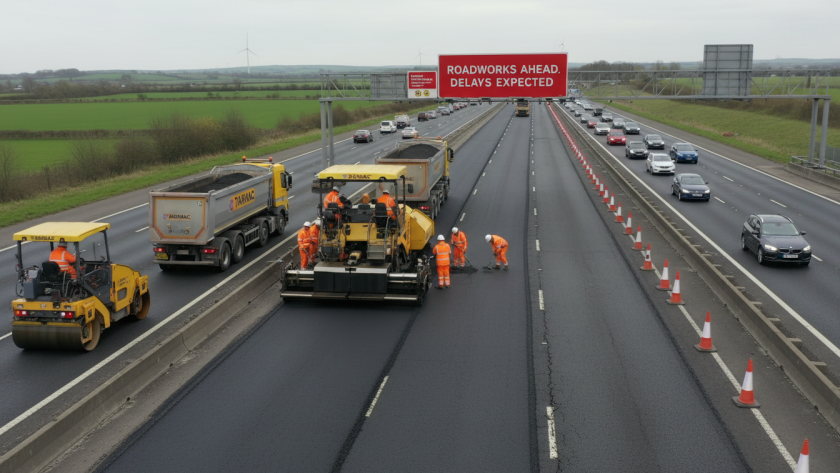
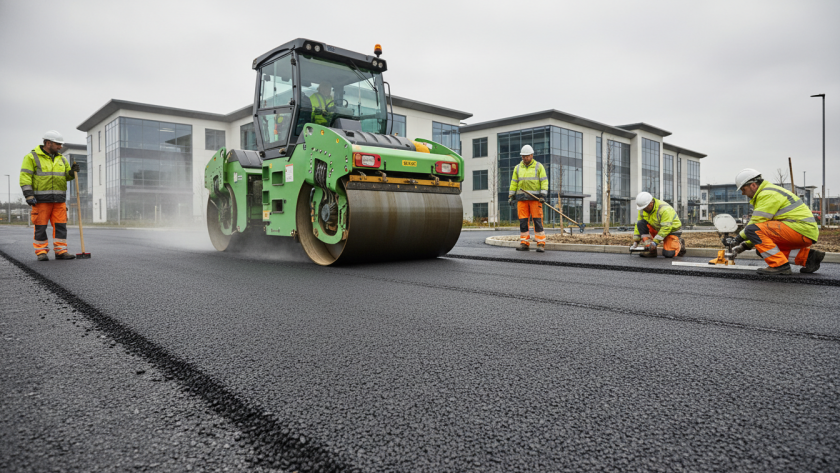
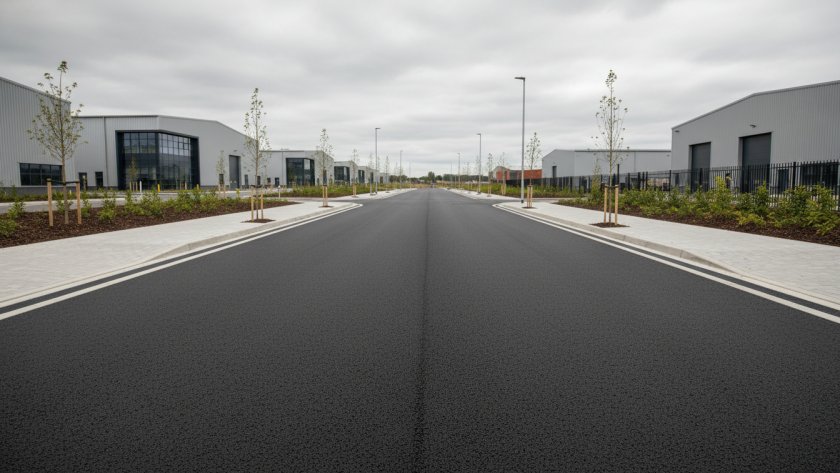
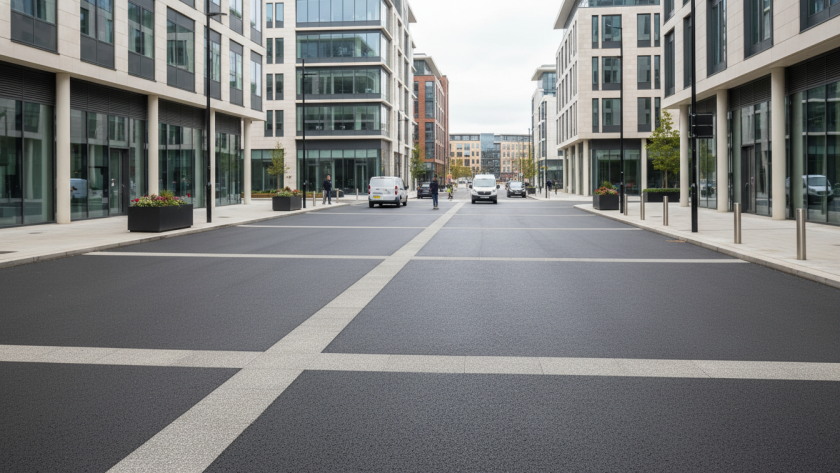
Road surfacing techniques in the UK have developed significantly over the past few decades. What was once a relatively straightforward process of laying and compacting asphalt has become a carefully engineered system designed to maximise durability, improve drainage, and accommodate increasingly heavy traffic loads.
For commercial property owners and site managers, understanding these modern methods…
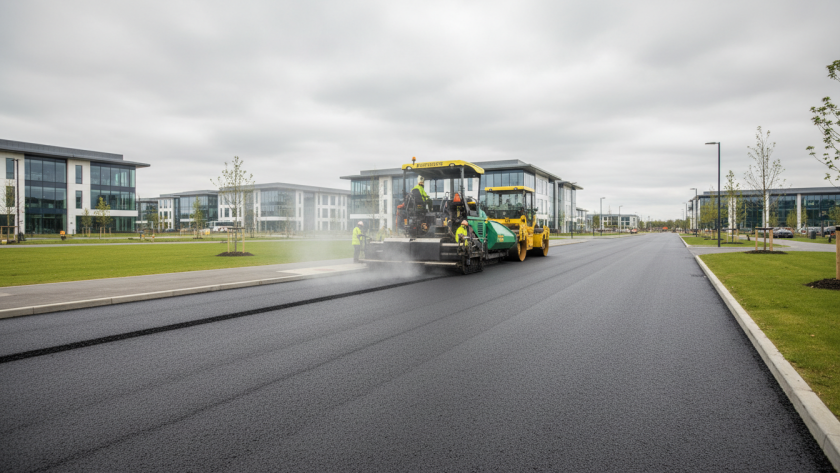
Road surface performance UK standards are not simply about how a newly laid surface looks on completion day. True performance is measured over years of use, through changing weather conditions, varying traffic loads, and the ongoing operational demands of commercial and private sites.
For property owners and commercial site managers, understanding long-term performance testing is…
Road surfacing upgrades UK projects play a critical role in successful redevelopment schemes. Whether refurbishing an ageing industrial estate, modernising a retail park, or converting brownfield land into residential use, the condition and specification of the road network directly influence safety, access, and long-term value.
In many redevelopment settings, existing road infrastructure was installed decades…
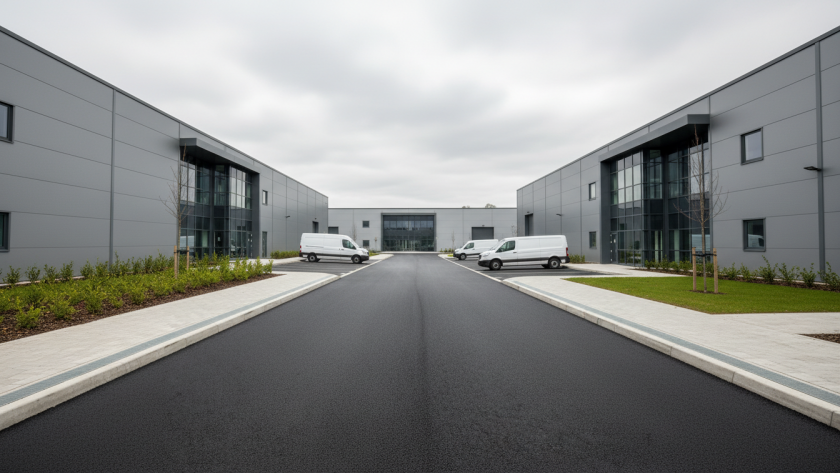
Commercial access road surfacing UK projects are fundamentally different from standard residential driveways or public highway works. These roads are designed specifically to serve business premises, industrial units, logistics hubs, retail parks and office developments. They must accommodate consistent traffic, heavier vehicle loads and operational demands that residential surfaces rarely experience.
For property owners and…
In the UK, weather is rarely predictable. Extended periods of rainfall, sudden downpours and persistent damp conditions are part of everyday project planning. For property owners and commercial site managers, understanding the road surfacing rain impact UK projects face is essential when scheduling works, budgeting for improvements and ensuring long-term durability.
Road surfacing is not…
Road surfacing quality control UK processes are fundamental to delivering durable, compliant and safe roadways across commercial and private developments. For property owners and commercial site managers, the performance of a newly installed surface is not simply about appearance on completion day. It is about how that surface performs under traffic, weather exposure and long-term…
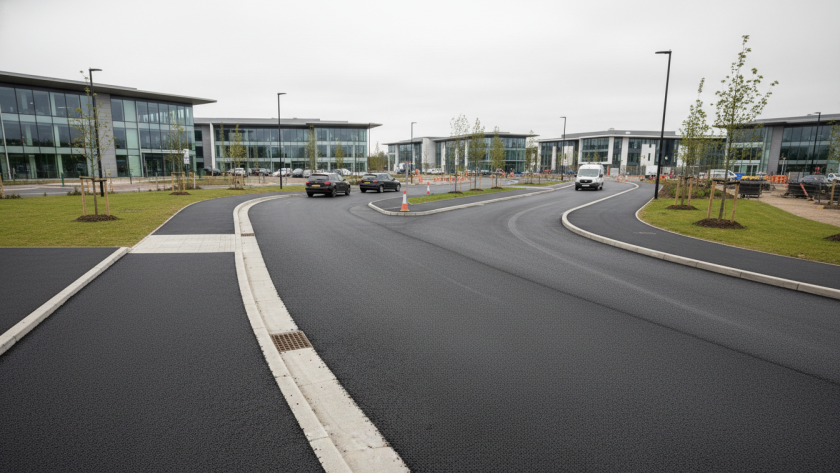
Multi-entrance road surfacing UK projects present a unique set of design and construction considerations. Unlike single-access roads, developments with several entry and exit points must accommodate varying traffic flows, turning movements, delivery vehicles and, in many cases, pedestrian interaction. These entrances may serve residential blocks, retail units, industrial facilities or mixed-use estates, each with different…
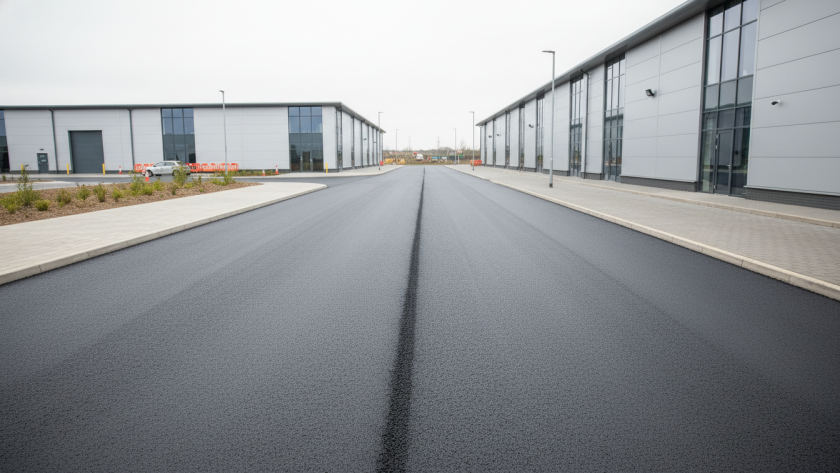
When discussing road construction or resurfacing, attention is often placed on thickness, sub-base quality, and drainage. While these elements are essential, road surfacing finishes UK projects rely heavily on the final surface texture to determine how the road performs over time. The finish is not simply cosmetic. It directly influences grip, water dispersion, durability, noise…
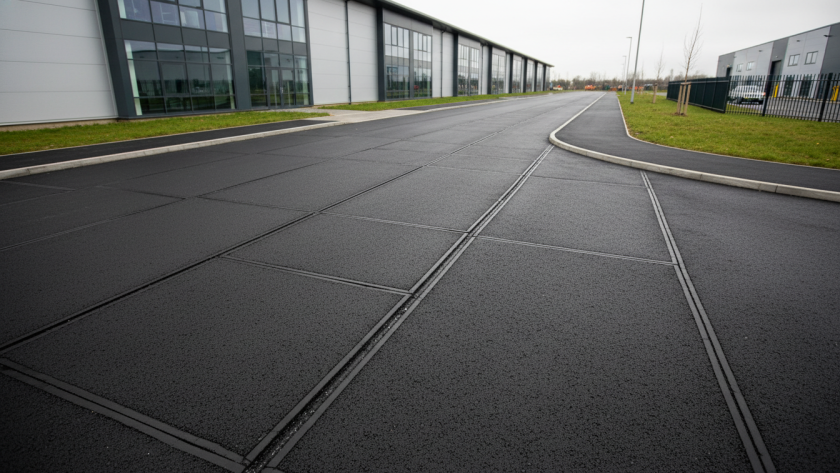
Expansion joints play a critical role in the long-term performance of surfaced roads across the UK. While they are often overlooked by property owners and site managers, these joints are essential for managing movement within the surface structure. Roads are constantly exposed to changing temperatures, traffic loads, and ground conditions, all of which cause materials…
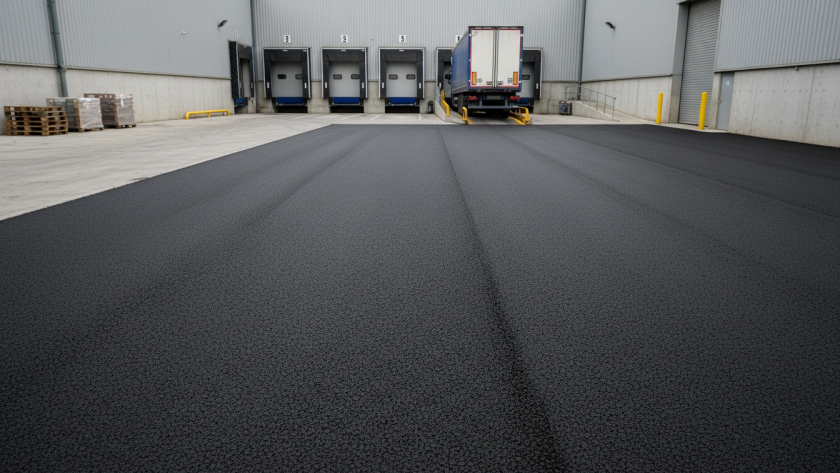
Loading bays and service yards are among the most heavily used external areas on commercial sites. They are subjected to constant vehicle movements, high axle loads, tight turning circles, and frequent stopping and starting. Unlike general access roads, these areas experience concentrated stress in specific zones where delivery vehicles reverse, turn, and idle. As a…
When property owners and commercial site managers consider road surfacing works, the initial installation cost often receives the most attention. While upfront pricing is important, it rarely reflects the true financial impact of a surface over its full lifespan. Long-term costs are shaped by durability, maintenance requirements, performance under traffic loads, and how well the…
Shared surface environments are increasingly common across the UK, particularly within mixed-use developments, town centres, residential estates, retail parks, and transport hubs. These spaces are designed to accommodate pedestrians, cyclists, service vehicles, and low-speed traffic within the same area, without the traditional separation created by kerbs, barriers, or heavy road markings. While this approach improves…