Whether you are resurfacing a commercial access road, private estate, industrial yard or residential development, the quality of the contractor you appoint has a direct impact on the finished surface. A well-installed road or paved area should provide years of reliable service with minimal maintenance, while poor workmanship can lead to premature cracking, drainage problems and expensive repairs.
Selecting a contractor should involve more than comparing quotations. Experience, technical knowledge, equipment, project management and aftercare all contribute to a successful outcome. Asking the right questions before work begins helps you understand whether a contractor is capable of delivering a durable, compliant and professionally finished surface.
What Experience Do You Have with Similar Projects?
Not all surfacing projects are the same. A contractor who primarily installs domestic driveways may not have the expertise required for commercial roads or heavy-duty access routes.
Ask about projects similar in size and purpose to your own. Contractors with relevant experience will be able to explain how they approach different site conditions, traffic loads and drainage requirements while providing examples of completed work.
Viewing a contractor’s project portfolio can also help you assess the quality and variety of previous installations.
What Type of Surfacing Do You Recommend?
Different sites require different surfacing solutions. Factors such as traffic volume, vehicle weight, ground conditions and budget all influence the most suitable material.
An experienced contractor should explain why they recommend a particular solution rather than offering the same specification for every project. They should also discuss expected lifespan, maintenance requirements and long-term performance.
How Will You Prepare the Ground?
The quality of the finished surface depends heavily on what lies beneath it. Proper excavation, sub-base construction and compaction are essential for preventing settlement and structural failure.
Ask how the contractor intends to prepare the site and whether any existing defects need to be addressed before surfacing begins. A clear explanation demonstrates that they understand the importance of building from the ground up.
How Will Drainage Be Managed?
Poor drainage is one of the most common causes of road deterioration. Water that remains on or beneath the surface can weaken the pavement structure, accelerate cracking and reduce the lifespan of the installation.
A professional contractor should explain how surface water will be directed away from the road and whether existing drainage systems require improvement before work starts.
What Equipment Will Be Used?
Modern surfacing equipment contributes to consistent material placement, accurate levels and proper compaction.
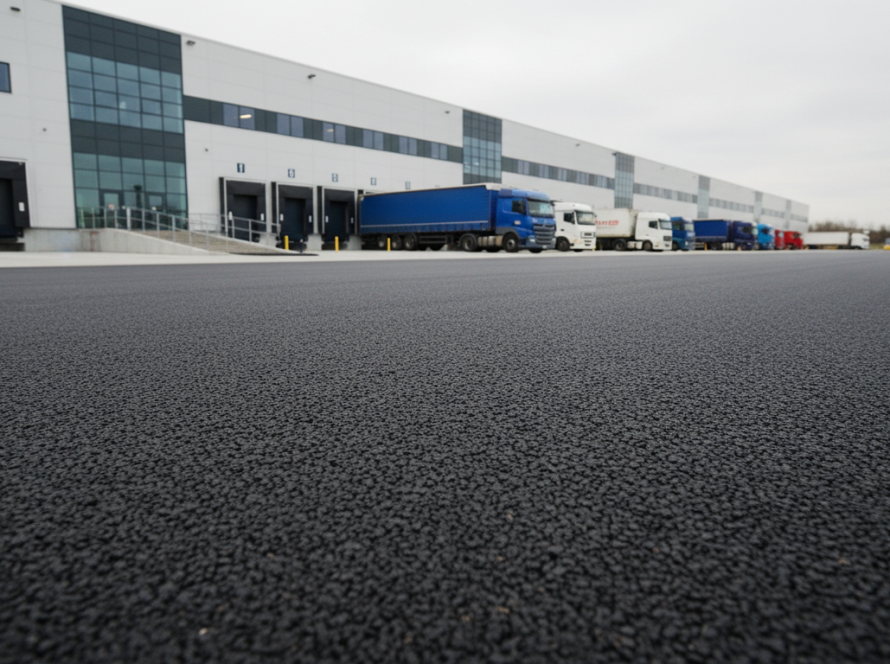
Ask whether the contractor uses specialist machinery appropriate for your project. Larger commercial schemes often benefit from professional machine lay tarmac, which provides a smooth, uniform finish while improving efficiency.
Is the Quotation Fully Detailed?
A written quotation should clearly outline the scope of work, materials, preparation, drainage, surfacing thickness and any additional services included within the price.
Understanding exactly what is covered helps avoid misunderstandings later in the project and allows you to compare quotations on a like-for-like basis rather than simply choosing the lowest figure.
What Guarantees or Warranties Are Provided?
While no surface is completely maintenance-free, reputable contractors are confident in the quality of their workmanship.
Ask whether guarantees apply to both the installation and the materials used. Understanding the terms of any warranty provides reassurance and demonstrates that the contractor stands behind their work.
How Will the Project Be Managed?
Good communication is just as important as technical ability. Ask who will supervise the work, how progress will be communicated and what measures will be taken to minimise disruption.
Professional contractors should provide realistic timescales while explaining how weather conditions or unforeseen ground issues could affect the programme.
Can You Provide References?
Speaking with previous clients offers valuable insight into the contractor’s reliability, professionalism and standard of workmanship.
References can help confirm whether projects were completed on time, within budget and to the expected quality. Positive feedback from clients with similar projects provides additional confidence before work begins.
What Happens if Repairs Are Needed in the Future?
Even well-constructed roads require maintenance over time. Understanding how the contractor supports future repairs and maintenance demonstrates their long-term commitment to their clients.
Professional contractors should be able to advise on inspection schedules, preventative maintenance and repair options should defects develop after many years of service.
Where localised damage occurs, prompt pothole repairs can often prevent more extensive deterioration.
Making an Informed Decision
Hiring a surfacing contractor should be based on competence, experience and transparency rather than price alone. Asking detailed questions allows you to compare contractors more effectively while reducing the risk of unexpected costs or disappointing results.
An experienced contractor will welcome informed questions, provide clear answers and explain how each stage of the project contributes to the long-term performance of the finished surface. Taking the time to evaluate potential contractors carefully helps ensure your investment delivers a safe, durable and professionally finished surface that continues to perform for many years.