A road does not need to look badly damaged to require attention. In many cases, the most effective time to carry out preventative road surfacing is while the surface still appears reasonably sound. Waiting for widespread potholes, deep cracking or obvious deformation can allow relatively minor deterioration to develop into a much larger structural problem.
Road surfaces are exposed to continuous stresses throughout their working life. Vehicle movements, changing temperatures, rainfall, standing water and repeated loading all contribute to gradual deterioration. On commercial access roads, industrial estates, private roads and other heavily used areas, these stresses can be particularly significant.
The visible surface is also only one part of the construction. Beneath it are layers responsible for supporting traffic loads and maintaining stability. A road may therefore appear acceptable from a distance while small defects are already allowing water into the construction or indicating movement below the surface.
This is why professional commercial road surfacing is not simply about responding once a road becomes difficult to use. Good surface management involves identifying the appropriate point for maintenance before deterioration becomes extensive.
What Preventative Road Surfacing Actually Means
Preventative road surfacing UK projects are intended to preserve an existing road while its underlying condition remains suitable for maintenance or resurfacing. The precise work required depends on the construction, traffic levels, drainage and existing defects.
The principle is relatively straightforward. It is usually preferable to address deterioration while it remains concentrated within the upper part of the road rather than allowing problems to progress into deeper structural layers.
Preventative work does not mean applying new material over every ageing surface regardless of condition. The existing road needs to be assessed first. Contractors need to understand why defects are developing and whether the underlying construction remains sufficiently stable.
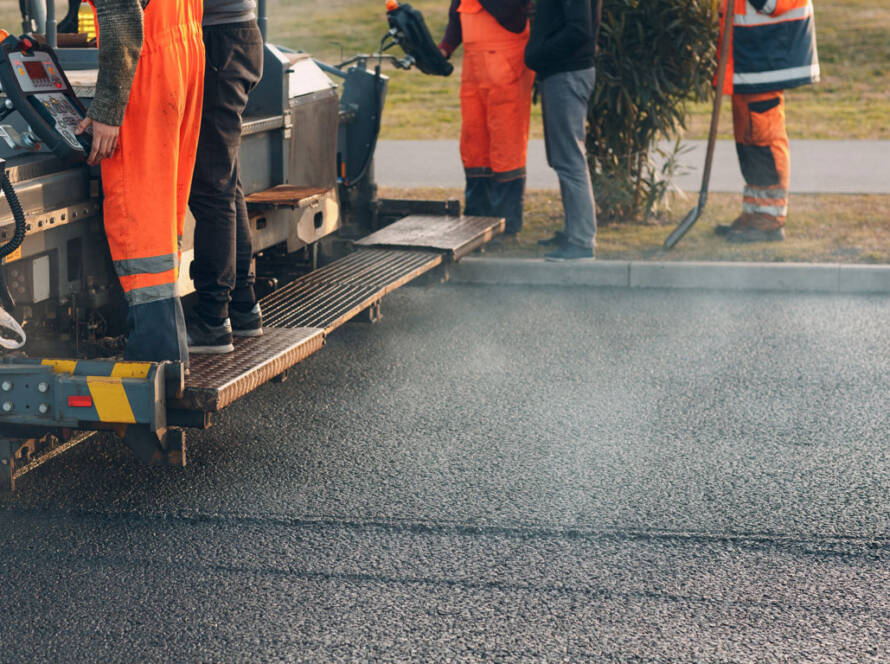
Where an existing surface is suitable, planned tarmac installation and road surfacing can restore a consistent running surface and help protect the layers beneath. Where deeper failures exist, those areas may require additional preparation or repair before resurfacing takes place.
Small Surface Defects Can Lead to Larger Problems
One reason preventative surfacing takes place before a road looks bad is that deterioration is often progressive. Small defects can create conditions that accelerate further damage.
A minor crack, for example, may initially have little effect on vehicles using the road. However, it can provide a route for water to penetrate beneath the surface. Once moisture reaches lower layers, repeated traffic loading can contribute to movement and weakening.
The problem can become more pronounced during colder conditions. Water entering cracks and voids can place additional stress on the surrounding material as weather conditions change. Over time, edges can break away and relatively small defects can become considerably more noticeable.
Once material starts being displaced, vehicles repeatedly passing over the weakened area can accelerate deterioration further. What began as a limited maintenance issue may eventually require pothole repairs or more substantial reconstruction.
Preventative surfacing aims to interrupt this process at an earlier stage.
Water Is One of the Main Reasons Early Action Matters
Water management has a major influence on road performance. A well-constructed road is designed to deal with rainfall, but cracks, damaged edges, poor falls and blocked drainage routes can change how water behaves across and beneath the surface.
Standing water is often an obvious warning sign. Less obvious is water entering through small openings and affecting the construction underneath.
When moisture reaches supporting layers, their ability to perform as intended may be reduced. Repeated loading from cars, vans, delivery vehicles or HGVs can then cause movement. Eventually, that movement may become visible at surface level as cracking, depressions or localised failure.
This explains why preventative road surfacing is often considered alongside drainage. Simply improving the visible surface without understanding persistent water problems can leave the underlying cause unresolved.
An experienced surfacing contractor will therefore consider surface condition, levels, falls, drainage and surrounding areas when determining what work is appropriate.
Early Resurfacing Can Protect the Existing Road Structure
One of the main advantages of carrying out work at the correct time is the possibility of retaining more of the existing road construction.
If the supporting structure remains stable, resurfacing may focus primarily on restoring and protecting the upper layers. This can be significantly different from dealing with a road where widespread structural deterioration has already taken place.
Once the sub-base or other supporting layers have failed, simply replacing the surface may not provide a lasting solution. Failed material may need to be excavated, levels corrected and suitable material installed and compacted before the final surface is laid.
Correct preparation is therefore central to long-term performance. Professional machine-laid tarmac can provide a consistent finish across suitable larger areas, but the finished surface can only perform properly when the construction beneath it provides adequate support.
Preventative work carried out at an appropriate stage can help avoid reaching the point where extensive reconstruction becomes necessary.
Preventative Surfacing Helps Commercial Sites Plan Work
For commercial property owners and site managers, road condition is not purely a maintenance consideration. Access roads, yards, entrances and internal routes can directly affect everyday operations.
Allowing deterioration to reach an advanced stage can make the eventual work more complicated. Larger repairs may require additional excavation, materials, machinery and traffic management. Areas may also need to remain unavailable for longer.
Planning resurfacing before the road reaches that condition can provide greater control over how the work is organised.
On an active commercial site, this can be particularly important. Surfacing can potentially be coordinated around quieter operating periods, delivery requirements and access arrangements. The objective is to complete the necessary work while maintaining safe and practical movement around the site wherever possible.
A planned approach also allows managers to consider connected areas rather than repeatedly responding to individual failures as they occur.
Why Waiting for Potholes Is Usually Too Late
Potholes are one of the clearest signs that a road requires attention, but they should not be treated as the only indication of deterioration.
By the time a pothole forms, material has already been lost from the surface. The surrounding area may also have been weakened, particularly where water penetration or repeated heavy loading has contributed to the failure.
Repairing individual potholes can be entirely appropriate when defects are localised and the surrounding road remains serviceable. However, continually repairing new potholes across an ageing surface may indicate that a wider assessment is required.
The important distinction is between isolated damage and general deterioration. If the road remains fundamentally sound, targeted repairs may be sufficient. If failures are appearing repeatedly across multiple areas, more comprehensive resurfacing may provide a more appropriate solution.
Preventative road surfacing aims to identify that transition before widespread failure develops.
Traffic Loading Can Cause Damage Before It Becomes Obvious
Different roads experience very different levels of stress. A private access road serving a small number of cars has different requirements from a commercial road regularly used by delivery vehicles and HGVs.
Heavy vehicles place substantial loads on the road construction. Turning movements, braking and acceleration can also create concentrated stresses, particularly around entrances, junctions, loading areas and tight turning points.
Damage in these locations may initially appear as slight surface movement, minor cracking or localised wear. Those signs should not automatically be ignored simply because the rest of the road still looks presentable.
The appropriate response depends on what is causing the deterioration. Where traffic loading is expected to remain high, the repair or resurfacing specification needs to reflect how the area is actually used.
A surface that looks good immediately after installation is not the only objective. The construction needs to be suitable for the loads it will experience over its service life.
Edge Deterioration Can Be an Early Warning Sign
Road edges are another area where relatively minor defects can indicate developing problems. Unsupported or damaged edges can gradually break away under vehicle loading, particularly where vehicles frequently drive close to the edge of the surfaced area.
Once deterioration begins, water can enter and surrounding material may become increasingly vulnerable. The usable width of the road can also be affected as edges continue to break down.
Addressing edge problems before substantial material is lost can form part of a preventative maintenance approach. The correct solution depends on the road construction and surrounding ground, but early investigation provides more options than waiting until extensive failure has occurred.
This is particularly relevant on private lanes, rural access routes and commercial roads where vehicles regularly pass close to the surface boundary.
Surface Condition Should Be Reviewed as Part of Site Maintenance
Roads are sometimes treated differently from buildings and other site assets. Roofs, drainage systems and mechanical equipment may receive routine inspections, while surfaced areas are left until a clear problem develops.
Including roads and hardstanding within regular site condition reviews can make maintenance easier to plan.
Changes such as new cracks, areas of standing water, depressions, loose material, damaged edges or repeated local repairs can provide useful information about how the road is performing. Monitoring these changes over time helps distinguish normal ageing from deterioration that may require intervention.
This does not mean every minor mark requires immediate resurfacing. The purpose is to understand the condition of the asset and respond proportionately.
Property owners and facilities managers considering wider maintenance can review the available surfacing services to understand how different repair and resurfacing methods may apply to roads, access areas and other external surfaces.
Preventative Work Can Reduce Whole-Life Disruption
The cost of road deterioration is not limited to the surfacing work itself. On operational sites, failed roads can affect vehicle movement, drainage, pedestrian safety and access to buildings or loading areas.
Reactive repairs can also be difficult to schedule. A defect that suddenly becomes unsafe may require attention at an inconvenient time, whereas planned resurfacing provides greater opportunity to coordinate works with normal site operations.
Preventative road surfacing UK projects should therefore be considered from a whole-life perspective. The aim is not to replace a road unnecessarily early. It is to carry out appropriate work at a point where the existing construction can be preserved and deterioration can be controlled efficiently.
That requires assessment rather than relying solely on appearance.
Knowing When a Road Is Ready for Preventative Surfacing
There is no single visual test that determines when every road should be resurfaced. Age alone is also not sufficient because road performance depends on construction quality, materials, traffic, drainage, ground conditions and previous maintenance.
The best time for preventative work is generally before deterioration has become structurally widespread but after there are enough signs to justify intervention.
Minor cracking across developing areas, repeated local repairs, surface wear, water-related problems and early deformation can all justify a closer assessment. The important question is not simply whether the road looks bad. It is whether the existing surface is continuing to protect and support the road construction effectively.
A professional assessment can establish whether local repairs, resurfacing or more substantial reconstruction is appropriate. Examples of completed surfacing projects can also help property owners and site managers understand the types of environments in which different surfacing approaches are used.
Carrying out preventative road surfacing before obvious failure is ultimately about preserving what is already there. When maintenance takes place at the right stage, more of the existing road structure may remain usable, work can be planned more effectively and small defects are less likely to develop into widespread failures. For property owners and commercial site managers, the condition beneath the surface matters just as much as how the road looks from above.