Road surfacing techniques in the UK have developed significantly over the past few decades. What was once a relatively straightforward process of laying and compacting asphalt has become a carefully engineered system designed to maximise durability, improve drainage, and accommodate increasingly heavy traffic loads.
For commercial property owners and site managers, understanding these modern methods is essential. A well-surfaced road is not just about appearance. It directly affects safety, maintenance costs, vehicle wear, and long-term asset value. Whether the project involves a business park access road, a private estate lane, or a logistics yard, the techniques used during installation will determine how the surface performs under pressure.
Modern surfacing is driven by a combination of improved materials, advanced machinery, and stricter compliance standards. The result is a more resilient, longer-lasting finish when properly specified and installed.
Sub-Base Preparation and Foundation Engineering
Every successful road begins beneath the visible surface. Sub-base construction is one of the most critical elements of modern road surfacing techniques. Without a stable and well-compacted foundation, even the highest quality asphalt will fail prematurely.
In UK conditions, sub-base preparation must account for soil type, drainage characteristics, and anticipated traffic load. Clay-heavy soils, for example, require careful stabilisation to prevent seasonal movement. In commercial settings, sub-base thickness is calculated based on expected vehicle weight, frequency of use, and turning stress.
Mechanical compaction using vibrating rollers ensures the sub-base achieves the correct density. Poor compaction leads to settlement, cracking, and surface deformation. This is why professional commercial surfacing and road surfacing services always prioritise ground investigation and load assessment before any surface material is laid.
Binder and Wearing Courses Explained
Modern UK road construction typically consists of multiple layers. Above the sub-base sits the binder course, which provides structural strength. The wearing course forms the top layer, delivering skid resistance, weather protection, and a smooth finish.
The binder layer distributes traffic loads across the foundation. It is designed to resist deformation under heavy vehicles, particularly in commercial environments such as distribution centres and service yards.
The wearing course, often a dense bitumen macadam or asphalt concrete, is selected according to the road’s function. High-traffic areas may require enhanced aggregate strength and modified bitumen to improve resistance to rutting and cracking.
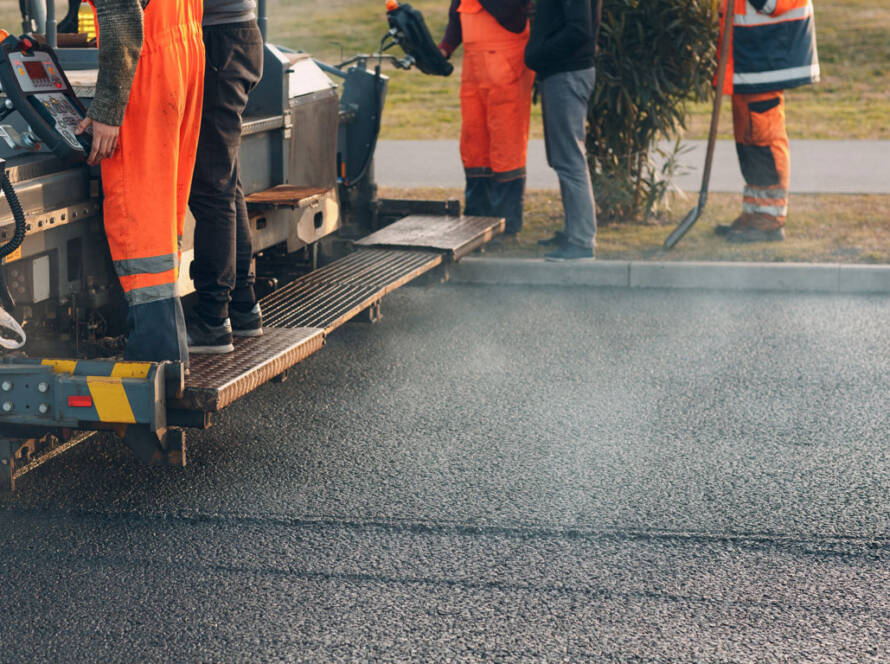
Correct layer thickness and temperature control during installation are key. Modern machine lay tarmac techniques allow for consistent depth, improved joint quality, and better overall surface uniformity compared to manual methods.
Machine-Lay vs Hand-Lay Applications
One of the most noticeable advancements in road surfacing techniques is the widespread use of paving machines. Machine-lay systems ensure consistent material flow, uniform thickness, and precise alignment.
For long access roads or estate infrastructure, machine laying provides superior smoothness and compaction consistency. This approach reduces the risk of weak spots or uneven settlement. It also improves efficiency, minimising installation time and disruption on active sites.
Hand-lay techniques still have their place, particularly in confined or restricted areas where large machinery cannot operate. Tight courtyards, narrow access routes, or complex junctions may require skilled manual finishing. In these situations, experienced operatives ensure joints are properly sealed and levels are carefully matched to prevent water ingress.
Modern road surfacing techniques combine both methods when necessary, selecting the most appropriate approach for each section of the project.
Drainage Integration and Water Management
The UK climate places significant demands on road surfaces. Persistent rainfall, freeze-thaw cycles, and standing water can all accelerate deterioration if drainage is not correctly designed.
Effective road surfacing techniques integrate drainage from the earliest planning stage. This includes the use of crossfall gradients, channel drains, soakaways, and permeable systems where appropriate.
Water that remains on the surface increases the risk of surface stripping, pothole formation, and structural weakening. Over time, this leads to costly intervention works such as pothole repairs, which can often be avoided with better initial design.
Modern installations pay close attention to edge restraints, kerb alignment, and fall direction to ensure water flows naturally toward drainage points. In commercial developments, this also supports compliance with sustainable drainage requirements.
Surface Texture and Skid Resistance
Road safety is closely linked to surface texture. Modern road surfacing techniques focus not only on structural strength but also on achieving appropriate grip levels for vehicles and pedestrians.
Aggregate size and composition directly influence skid resistance. In areas subject to braking or turning, such as junctions or loading bays, enhanced surface texture reduces the risk of skidding, particularly in wet conditions.
Texture depth is carefully controlled during installation. Too smooth, and the surface may become slippery. Too coarse, and it can increase tyre wear and surface noise. Achieving the correct balance is a key part of contemporary UK surfacing practice.
Regular post-installation inspection ensures that skid resistance remains within acceptable parameters over time.
Joint Construction and Edge Detailing
Long-term durability often depends on the smallest details. Construction joints, where two sections of asphalt meet, are potential weak points if not properly formed and sealed.
Modern road surfacing techniques use heated joints and bitumen bonding agents to create strong connections between adjacent runs. This prevents water penetration and reduces the likelihood of early cracking.
Edge detailing is equally important. Without firm edge support, asphalt can spread laterally under traffic pressure, leading to cracking and crumbling. Kerbs, concrete restraints, or reinforced edges provide containment and structural stability.
Attention to these elements distinguishes professional installations from lower-quality work that may look acceptable initially but deteriorate rapidly under use.
Sustainable and Environmentally Considerate Methods
Sustainability has become an increasing focus within UK road construction. Modern road surfacing techniques incorporate recycled aggregates and reclaimed asphalt pavement where suitable.
Advancements in material science have allowed contractors to reduce production temperatures through warm-mix asphalt technologies. This lowers carbon emissions during manufacture and installation while maintaining performance standards.
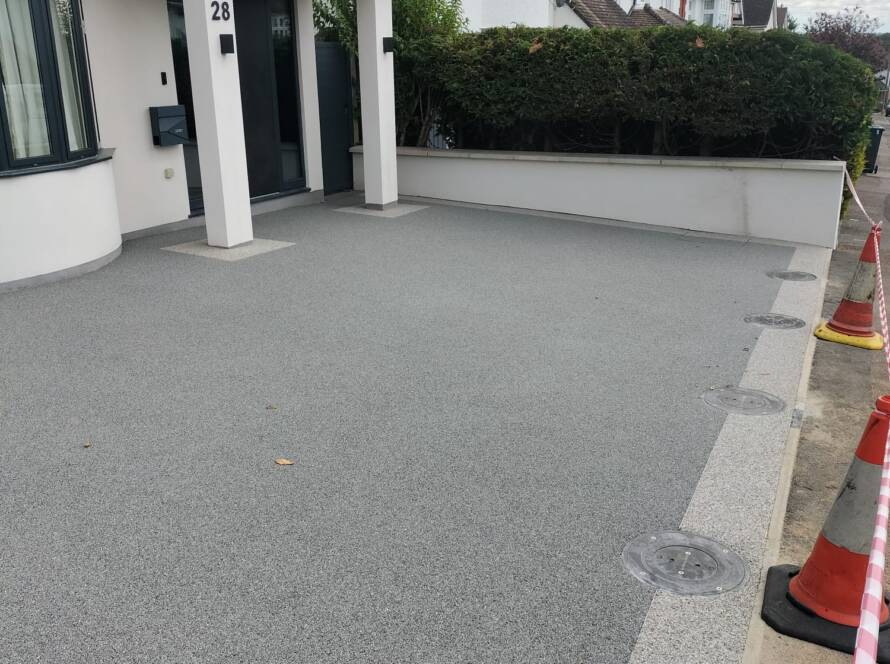
Permeable surfacing solutions are also used in specific settings to support sustainable drainage systems. Although not suitable for all heavy-duty applications, these systems can help manage surface water runoff in residential or light-traffic environments.
Selecting the appropriate method depends on the operational demands of the site and its environmental requirements.
Quality Control and Performance Monitoring
Professional surfacing projects do not end when the final roller pass is complete. Quality control testing ensures thickness, density, and material compliance meet UK specifications.
Core sampling may be carried out to confirm layer depth. Density testing verifies compaction levels. Surface regularity checks ensure smoothness and alignment.
Long-term performance monitoring is particularly important for commercial clients managing extensive estates. Periodic inspections help identify early signs of fatigue, cracking, or drainage issues before they escalate.
By engaging experienced contractors through established tarmac installation and road surfacing services, property owners can ensure that testing and documentation are handled professionally from start to finish.
Choosing the Right Technique for Your Project
Not all sites require the same approach. Traffic type, load frequency, ground conditions, and future expansion plans must all be considered when selecting road surfacing techniques.
A lightly used private lane will have different structural requirements compared to a commercial delivery route serving heavy goods vehicles. Similarly, redevelopment sites may require overlay solutions, while older failing surfaces may need full reconstruction.
An experienced contractor will assess the entire lifecycle of the road, not simply the immediate installation cost. Investing in the correct technique at the outset significantly reduces maintenance expenditure over time.
Long-Term Value Through Proper Installation
Modern road surfacing techniques in the UK are designed to deliver durability, safety, and cost efficiency when applied correctly. From engineered sub-bases to advanced machine-lay systems and integrated drainage, each stage plays a role in long-term performance.
For property owners and commercial site managers, the priority should always be structural integrity and compliance rather than short-term savings. A professionally installed road surface supports daily operations, enhances safety, and protects the underlying asset for many years.
Understanding how contemporary methods work enables better decision-making and ensures that surfacing projects are approached with the technical care they require.