Roads across the United Kingdom are exposed to some of the most demanding operating conditions in Europe. Constant rainfall, fluctuating temperatures, heavy commercial traffic and ageing infrastructure all contribute to the gradual breakdown of road surfaces. While many people assume potholes appear overnight, the reality is that road failure is usually the result of several factors working together over time.
Whether the surface serves an industrial estate, a private access road, a business park or a residential development, understanding what causes deterioration can help property owners make better decisions about maintenance and resurfacing. Investing in high-quality construction from the outset often prevents far more expensive repairs later.
The Impact of Heavy Traffic
One of the biggest contributors to UK road surface damage is repeated traffic loading. Every vehicle places stress on the surface, but heavy goods vehicles, buses and construction equipment generate significantly greater forces than standard cars.
When these heavy loads travel repeatedly along the same wheel paths, the asphalt gradually compresses and weakens. Over time, this creates depressions, surface cracking and deformation. Junctions, loading bays and turning areas are especially vulnerable because vehicles apply additional twisting forces while braking or changing direction.
Professional commercial road surfacing takes expected traffic volumes into account during the design stage, ensuring the finished surface has sufficient strength to withstand long-term use.
Water Is One of the Biggest Enemies
Rainfall is unavoidable in the UK, but standing water should never be accepted as normal on a properly constructed road.
Water gradually finds its way through even the smallest cracks. Once beneath the surface, it begins weakening the sub-base by washing away fine materials and reducing its load-bearing capacity. During colder months, trapped water may freeze and expand, causing cracks to widen further.
Eventually, sections of the surface lose support from underneath, leading to potholes and localised collapse.
This is why effective drainage is just as important as the quality of the surfacing material itself. Correct gradients, drainage channels and edge detailing all help keep water moving away from the pavement structure before significant damage occurs.
Weak Foundations Create Bigger Problems
The visible asphalt layer is only one part of a road’s construction.
Beneath it lies the sub-base, which provides the structural support needed to distribute traffic loads evenly. If this foundation is poorly compacted, contaminated or too thin, the upper surface will inevitably begin to fail regardless of how well it was laid.
Ground conditions vary considerably across the UK. Clay soils, made ground and previously disturbed land each require different preparation methods. Thorough site assessment and proper excavation ensure the finished road remains stable for many years.
Experienced contractors understand that successful projects begin long before the asphalt arrives on site.
Temperature Changes Take Their Toll
Although the UK rarely experiences extreme temperatures compared with other parts of the world, repeated seasonal changes still affect road performance.
During warmer weather, asphalt becomes slightly more flexible. In winter, it contracts and becomes more brittle. These continual expansion and contraction cycles create stress within the surface, particularly where existing weaknesses are already present.
Over several years, tiny cracks gradually enlarge until water penetrates deeper into the pavement structure. Preventative maintenance carried out before cracks become significant can greatly extend the lifespan of a road.
Poor Installation Accelerates Failure
Even premium-quality materials cannot compensate for poor workmanship.
Incorrect asphalt temperatures, inadequate compaction, rushed installation or inconsistent layer thickness all reduce the durability of a finished surface. Small imperfections introduced during construction often become the starting point for future deterioration.
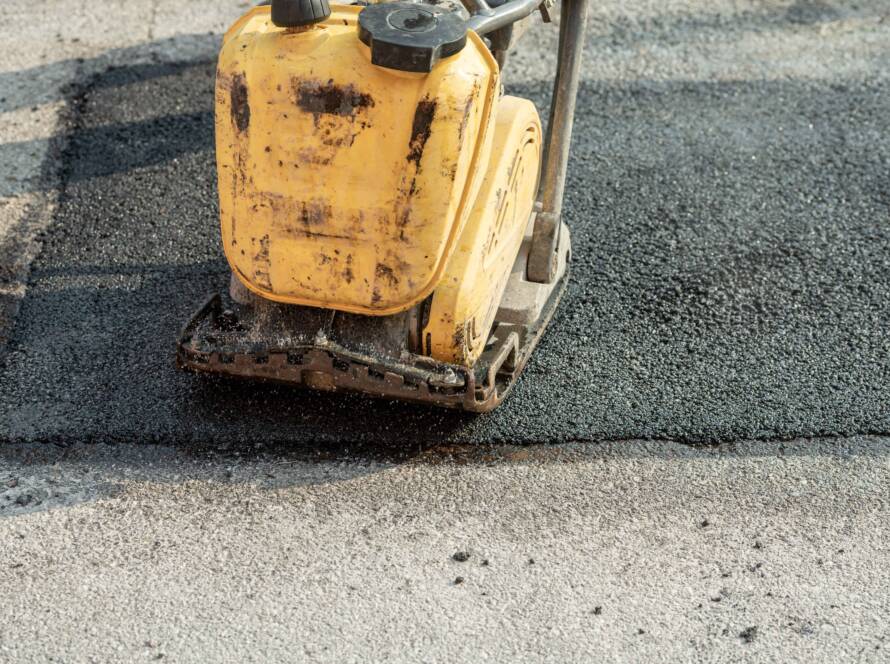
Using modern equipment and proven installation techniques helps ensure each layer bonds correctly, producing a dense, durable surface capable of resisting both traffic and weather.
Professional tarmac installation ensures every stage of the process is completed to recognised industry standards, reducing the likelihood of premature failure.
The Hidden Damage Caused by Utility Works
Road openings for water, electricity, gas and telecommunications are common across both public and private roads.
While necessary, these excavations interrupt the original pavement structure. If reinstatement is not completed correctly, the repaired area may settle unevenly, creating weak points that deteriorate more rapidly than the surrounding surface.
Good reinstatement relies on rebuilding every structural layer correctly rather than simply replacing the visible asphalt.
Lack of Preventative Maintenance
Road surfaces rarely fail without warning.
Small cracks, slight depressions and early signs of edge deterioration provide valuable opportunities for relatively inexpensive repairs. Unfortunately, these issues are often ignored until potholes develop or significant structural repairs become necessary.
Regular inspections allow defects to be identified early, reducing long-term maintenance costs while improving safety for both vehicles and pedestrians.
Prompt repairs prevent water from entering the pavement structure and slowing the overall rate of deterioration.
Why Some Roads Last Decades
Well-constructed roads often remain in excellent condition for many years because every element has been carefully considered from the outset.
Appropriate design, proper drainage, quality materials, effective compaction and experienced workmanship all contribute to long service life. Maintenance also plays an important role, with routine inspections and timely repairs helping preserve structural integrity long after construction has finished.
Modern surfacing techniques continue to improve durability through better material formulations and more precise installation methods.
Projects completed using specialist machine lay tarmac benefit from greater consistency, smoother finishes and improved compaction across larger areas, all of which contribute to longer-lasting road performance.
Repair Before Replacement
Not every damaged road requires complete reconstruction.
Where deterioration is confined to isolated areas, targeted repairs can restore safety and prevent further structural damage. Addressing defects quickly usually proves far more economical than allowing widespread failure to develop.
Professional pothole repairs help eliminate hazards while protecting the surrounding pavement from further water ingress and structural weakening.
Conclusion
The UK’s toughest roads are exposed to relentless traffic, persistent rainfall, changing temperatures and continual wear throughout the year. While these conditions cannot be avoided, their impact can be significantly reduced through proper design, quality materials, skilled installation and proactive maintenance.
For commercial premises, private developments and access roads, investing in professional surfacing from the beginning provides better value over the long term than repeatedly repairing preventable damage. A well-built road is designed not simply to look good on completion but to withstand years of demanding use while maintaining safety, performance and reliability.