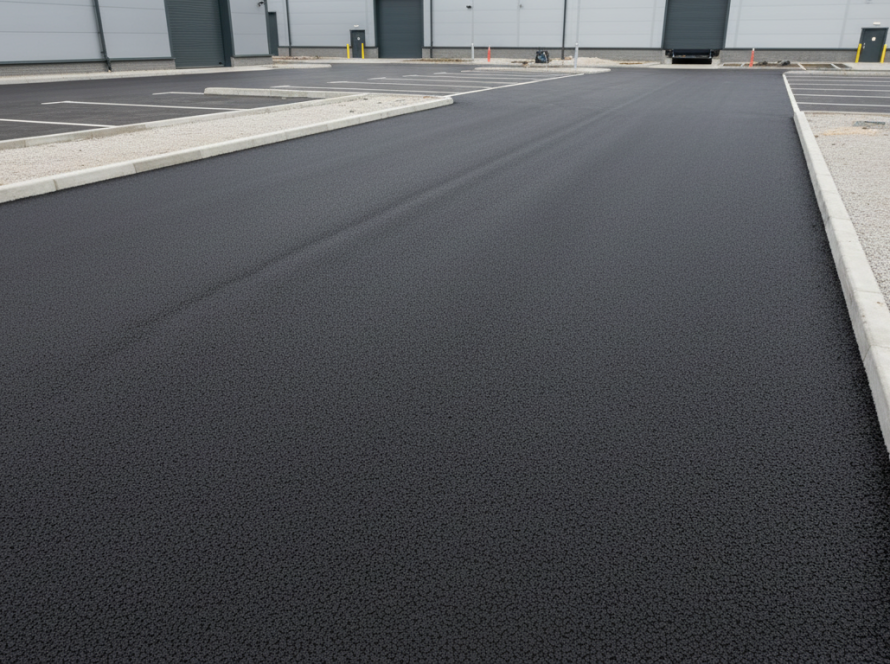
Sloped and uneven ground presents a distinct set of challenges when it comes to road surfacing. Unlike flat areas where material depth and load distribution are relatively predictable, gradients introduce movement forces, drainage pressures, and structural stresses that must be carefully managed. For property owners and site managers in the UK, these challenges are particularly relevant due to frequent rainfall, variable ground conditions, and the need to comply with highway and drainage standards.
Slopes naturally encourage water to travel across the surface rather than soak away evenly. If the surface is not designed correctly, this water movement can undermine the structural layers beneath, leading to erosion, cracking, and early surface failure. Uneven ground can also cause inconsistent compaction, resulting in weak spots that deteriorate faster under traffic loads. Effective sloped road surfacing in the UK therefore depends on precise preparation, correct material selection, and professional installation techniques that account for gradient and ground variation.
Why Ground Preparation Is Critical on Slopes
Ground preparation is the foundation of any successful surfacing project, but it becomes even more important on sloped or irregular terrain. The existing ground must be assessed for stability, bearing capacity, and moisture content before any work begins. On slopes, poorly prepared ground can shift under load, especially during periods of heavy rain or freeze-thaw cycles, causing the surface layers to deform or slip.
Professional contractors will typically regrade uneven areas to achieve a controlled and consistent slope, ensuring that load forces are directed safely into the sub-base. This process often involves excavation, removal of unsuitable material, and installation of engineered sub-base layers that can resist movement. When carried out correctly, this preparation provides a stable platform for long-term surface performance, reducing the risk of subsidence and surface distortion over time.
Managing Drainage on Sloped Road Surfaces
Drainage control is one of the most important considerations in sloped road surfacing. Water that is allowed to flow unchecked across a surface can penetrate joints, edges, and micro-cracks, weakening the structure beneath. In the UK climate, this issue is magnified by regular rainfall and periods of standing water.
Effective drainage design ensures that water is directed away from the surface and into appropriate channels or soakaways. This may involve incorporating subtle crossfalls, installing linear drainage systems, or adjusting the slope profile to prevent water from pooling. Proper drainage not only protects the surface layers but also preserves the integrity of the sub-base, helping the road withstand traffic loads without premature deterioration.
Material Selection for Sloped and Uneven Ground
Choosing the right surfacing material is essential when working on gradients. Asphalt and tarmac remain popular choices for sloped road surfacing in the UK due to their flexibility, durability, and ability to bond effectively to prepared bases. These materials can accommodate slight ground movement without cracking, making them well suited to uneven terrain.
The specific asphalt mix used may be adjusted to improve stability and skid resistance, particularly on steeper slopes where traction is critical. Surface texture also plays a role in safety, especially for access roads used by vehicles in wet conditions. A professionally specified material ensures that the finished surface performs reliably while meeting practical and safety requirements.
Installation Techniques That Improve Stability
Installation technique has a direct impact on the performance of sloped road surfaces. Material must be laid evenly and compacted correctly to prevent slippage or separation between layers. On uneven ground, achieving uniform compaction can be challenging, which is why experienced contractors use specialist equipment and controlled laying methods.
For larger areas and access roads, machine-laid surfacing provides consistent thickness and compaction, reducing the risk of weak points. Professional machine lay tarmac services are particularly effective on gradients, as they allow precise control over material placement and finish. This approach helps create a smooth, durable surface that maintains its integrity under regular traffic.
Edge Restraints and Structural Support
Edge restraint is another key factor in sloped road surfacing projects. On gradients, surface materials are subject to downhill forces that can cause spreading or edge breakdown if not properly contained. Robust edge restraints prevent lateral movement, helping the surface maintain its shape and strength over time.
Depending on the site, edge support may be provided by kerbs, concrete restraints, or structural edging systems integrated into the design. These elements work together with the surfacing layers to resist movement and protect vulnerable edges from erosion and impact damage.
Traffic Load Considerations on Slopes
Traffic loading behaves differently on sloped surfaces compared to flat areas. Vehicles exert additional braking and acceleration forces on gradients, increasing stress on the surface layers. This is particularly relevant for commercial access roads, delivery routes, and shared access areas where heavier vehicles are common.
To accommodate these forces, the surface thickness and sub-base design must be appropriate for the expected traffic volume and weight. Professional contractors experienced in commercial surfacing and road surfacing understand how to balance structural strength with practical site constraints, ensuring that the finished road performs reliably under daily use.
Preventing Surface Slippage and Early Failure
One of the most common issues with poorly installed sloped road surfaces is material slippage, where layers gradually move downhill over time. This can result in rippling, cracking, or separation between layers, ultimately requiring costly repairs. Preventing this problem requires a combination of correct ground preparation, appropriate material choice, and controlled installation.
Professional tarmac installation techniques focus on achieving strong interlayer bonding and consistent compaction. When combined with effective drainage and edge restraint, these measures significantly reduce the risk of surface movement and early failure.
Maintenance Considerations for Sloped Surfaces
Even well-designed sloped road surfaces require ongoing maintenance to remain in good condition. Regular inspections help identify early signs of wear, drainage issues, or minor defects before they develop into more serious problems. On slopes, small cracks or surface imperfections can quickly worsen if water is allowed to penetrate the structure.
Timely repairs, such as localised resurfacing or professional pothole repairs, play an important role in extending the lifespan of the surface. Proactive maintenance not only preserves safety but also reduces long-term costs by avoiding extensive remedial works.
When Professional Assessment Is Essential
Sloped and uneven ground should never be treated as a routine surfacing task. Each site presents unique challenges that require careful assessment and tailored solutions. Professional contractors will evaluate gradient severity, soil conditions, drainage requirements, and traffic demands before recommending an appropriate approach.
Engaging experienced specialists ensures that the finished surface meets performance expectations and complies with relevant standards. For property owners and site managers, this level of expertise provides reassurance that the investment will deliver long-term value and reliability.
Long-Term Performance on Sloped and Uneven Roads
When designed and installed correctly, sloped road surfacing can perform just as effectively as surfaces laid on flat ground. The key lies in understanding the forces at work and addressing them through careful planning and professional execution. By focusing on preparation, drainage, material selection, and installation quality, it is possible to achieve a stable, durable surface that withstands both environmental conditions and traffic demands.
For UK sites with challenging terrain, taking a considered approach to sloped road surfacing is essential. The right decisions at the design and installation stages directly influence safety, durability, and overall lifecycle costs, making professional involvement a critical factor in long-term success.