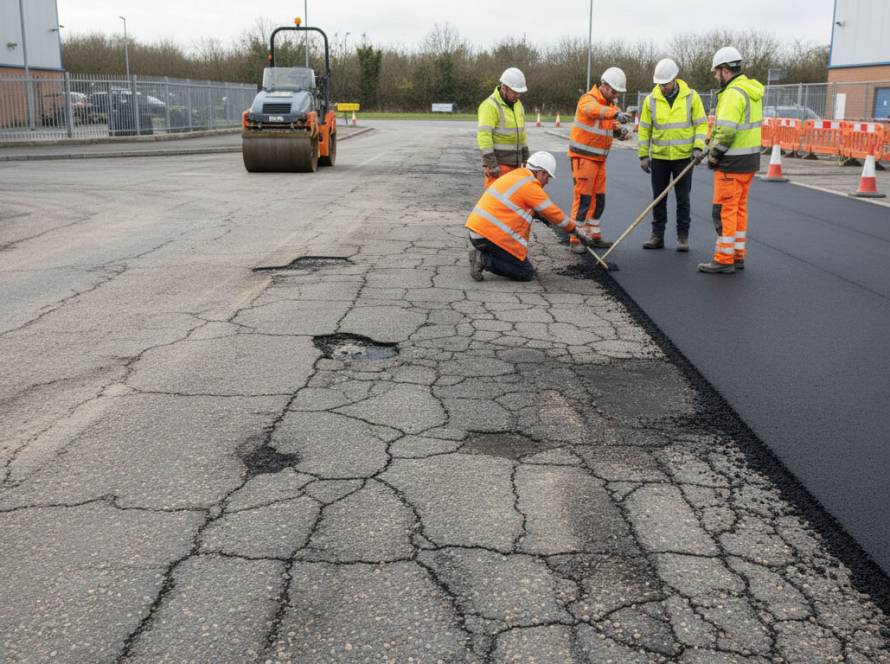
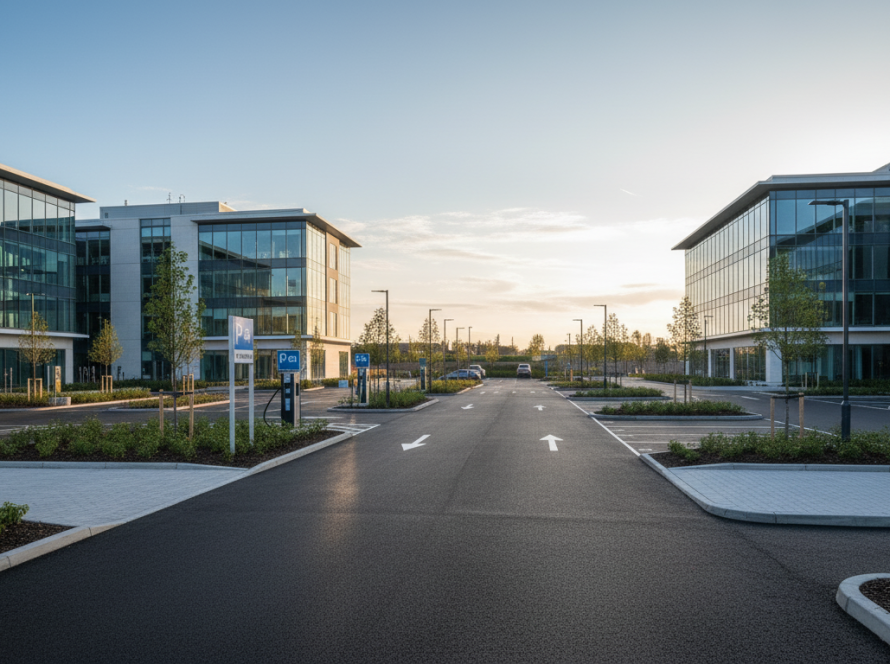
When cracks, potholes or uneven sections begin to appear on a road, many people naturally assume the visible surface is to blame. In reality, the tarmac or asphalt often reflects problems that have been developing underneath for months or even years. What appears to be a surface defect is frequently the final stage of a much deeper structural issue.
Every road depends on a carefully engineered foundation that supports the weight of vehicles, distributes loads evenly and prevents movement caused by changing weather conditions. If this hidden structure is compromised, even the highest-quality surfacing material will struggle to perform over time.
Understanding what happens beneath the surface helps property owners, commercial site managers and developers make informed decisions when investing in new roads, access routes and resurfacing projects. It also explains why professional preparation is one of the most important parts of any surfacing scheme.
Why the Layers Beneath the Road Matter
A road is built as a system rather than a single layer. Each component performs a specific function, with every layer relying on the one below it for strength and stability.
The natural ground forms the foundation upon which everything else is built. Above this sits the sub-base, which provides structural support and distributes vehicle loads. Additional base layers may be added depending on the expected traffic levels before the finished tarmac or asphalt surface is installed.
When each layer is properly designed and compacted, the finished road can withstand years of traffic with minimal deterioration. However, weaknesses within any of these layers can eventually affect the finished surface, regardless of how well the visible layer was installed.
Professional contractors understand that successful projects begin long before the surfacing materials arrive on site. Careful site investigation and preparation are essential to achieving long-term performance.
For larger developments, professional commercial road surfacing ensures that every structural layer is designed to suit the anticipated traffic and environmental conditions.
Poor Ground Preparation Creates Long-Term Problems
One of the most common causes of premature road failure is inadequate ground preparation.
Natural ground conditions vary considerably across the UK. Some soils provide excellent support, while others are prone to movement, settlement or water retention. If unsuitable ground is left untreated, it can gradually shift under repeated vehicle loading.
As this movement develops, stresses begin transferring into the upper construction layers. Eventually, the surface starts to crack because it is no longer being evenly supported from below.
Ground preparation often involves removing unstable material, improving weak ground and creating a stable formation before construction begins. Although these processes are invisible once the project is complete, they have a major influence on the lifespan of the finished road.
The Critical Role of the Sub-Base
The sub-base is arguably the most important structural element beneath the finished surface.
Its primary role is to spread traffic loads over a much wider area, preventing excessive pressure from reaching the natural ground. Without an effective sub-base, concentrated loads from cars, delivery vehicles or heavy goods vehicles quickly lead to settlement.
A properly constructed sub-base also helps maintain a consistent platform during changing weather conditions. Seasonal expansion, contraction and moisture movement are reduced when the correct materials are selected and compacted to specification.
If shortcuts are taken during installation, the road may initially appear perfectly smooth. However, as traffic increases, weak areas begin to compress unevenly, leading to depressions, cracking and surface deformation.
Water Is Often the Biggest Hidden Threat
Water is one of the most destructive forces affecting road construction.
Rainwater that cannot drain efficiently gradually penetrates through small surface imperfections. Once moisture reaches the lower layers, it weakens the supporting materials and reduces their ability to carry traffic loads.
Repeated wetting and drying cycles cause fine particles to move within the structure. Over time, voids develop beneath the surface, allowing sections of the road to flex whenever vehicles pass over them.
During colder periods, trapped water can freeze and expand, creating additional pressure within the pavement structure. As temperatures rise again, the weakened materials settle unevenly, accelerating deterioration.
Proper drainage design is therefore just as important as selecting quality surfacing materials.
Heavy Traffic Magnifies Hidden Weaknesses
Every vehicle passing over a road applies stress to its underlying structure.
Light domestic traffic places relatively modest demands on the pavement, but commercial vehicles generate significantly greater loads. Delivery lorries, refuse vehicles and construction traffic repeatedly compress the underlying layers.
If the foundation has been correctly designed, these forces are distributed safely throughout the pavement structure. Where preparation has been inadequate, however, repeated loading gradually enlarges small weaknesses until they become visible defects.
This explains why access roads serving industrial estates, retail parks and logistics facilities require more substantial construction than lightly used residential roads.
Early Warning Signs That Problems May Be Developing Underground
Roads rarely fail without warning. Small changes often indicate that movement has already started beneath the surface.
Hairline cracking may appear first, followed by wider cracks that continue to grow over time. Localised depressions may collect water after rainfall, while isolated areas begin to feel uneven under traffic.
Eventually, potholes develop as unsupported sections of surfacing break away from the weakened foundation below.
Addressing these symptoms promptly often prevents more extensive structural damage. Delaying repairs allows water to enter the pavement, accelerating deterioration throughout the lower layers.
Where isolated defects appear, timely pothole repairs can help prevent more widespread damage while maintaining safe access.
Why Surface Repairs Sometimes Fail
Many people are surprised when recently repaired roads begin deteriorating again after only a short period.
In many cases, the repair itself was carried out correctly. The underlying problem simply remained untreated.
Replacing damaged tarmac without addressing unstable foundations is similar to repainting a wall with structural cracks. The cosmetic improvement may initially appear successful, but the underlying movement continues until the visible damage returns.
Professional contractors therefore investigate the likely cause of failure before recommending the most appropriate repair strategy. In some situations, localised reconstruction beneath the surface provides a far more durable solution than repeated patch repairs.
Investing in Proper Construction Saves Money
Although comprehensive ground preparation increases initial construction costs, it often produces significant savings over the lifetime of the road.
A well-designed foundation reduces maintenance requirements, minimises disruption and extends resurfacing intervals. This lower whole-life cost frequently outweighs the additional investment made during construction.
Property owners also benefit from improved safety, better appearance and fewer unexpected repair bills.
Whether constructing a private access road, commercial estate or industrial facility, investing beneath the surface usually delivers the greatest long-term value.
Professional tarmac installation combines quality materials with correct ground preparation to maximise durability and long-term performance.
Building Roads That Last
Successful road construction depends on far more than the visible finish. The layers hidden beneath the surface determine whether a road performs reliably for decades or begins failing within only a few years.
Careful site assessment, appropriate ground improvement, correctly specified sub-base materials, effective drainage and professional installation all work together to create a stable pavement structure capable of carrying traffic safely over the long term.
When these hidden elements receive the attention they deserve, the finished surface remains smoother, stronger and significantly more resistant to cracking, settlement and pothole formation. Understanding what lies beneath the road is therefore essential for anyone planning new surfacing works or seeking to extend the lifespan of an existing access route.