Road surfaces naturally deteriorate over time as they are exposed to traffic, weather conditions, water ingress and the gradual ageing of construction materials. Minor defects can often be addressed with targeted repairs, helping to extend the life of the existing surface while keeping costs under control. However, there comes a point where repeated repairs no longer provide lasting value, and complete replacement becomes the more practical solution.
Understanding when that point has been reached is important for property owners, facilities managers and commercial site operators. Investing in repairs for a road that has already exceeded its serviceable lifespan can lead to increasing maintenance costs, recurring disruption and ongoing safety concerns.
Professional inspections allow contractors to assess not only the visible condition of the road but also the structural integrity beneath the surface before recommending the most appropriate course of action.
Signs That Road Repairs Are Still Effective
Many road defects develop gradually and can be successfully repaired when identified early.
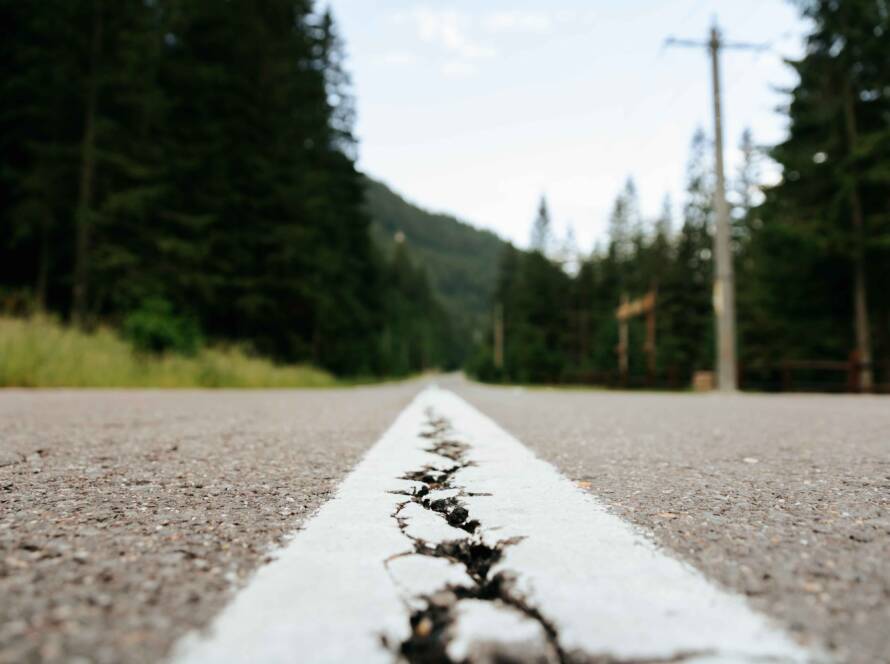
Small potholes, isolated cracking, edge deterioration and localised surface wear are all examples of defects that can often be repaired without replacing the entire carriageway. Prompt intervention prevents water from penetrating deeper into the structure, reducing the likelihood of more extensive damage developing beneath the surface.
Where the sub-base remains stable and drainage continues to perform effectively, repairing isolated defects can significantly extend the operational life of the road. Professional pothole repairs are often sufficient to restore safety while preventing further deterioration.
When Surface Damage Becomes Widespread
The balance begins to shift when damage is no longer isolated.
If cracking extends across large sections of the road, multiple potholes continue to appear after repairs or the surface has become uneven throughout, these are usually signs that the underlying structure is beginning to fail rather than just the wearing course.
Repeated patch repairs can temporarily improve appearance, but each additional repair creates further joints within the surface. These joints often become weak points where water can penetrate, accelerating future deterioration.
In these situations, replacing larger sections of the road frequently provides better long-term performance than continuing to repair isolated areas.
The Importance of the Underlying Structure
One of the biggest factors in deciding between repair and replacement cannot be seen from the surface alone.
Roads are constructed in layers, with the sub-base providing structural support for the upper surfacing materials. If this foundation becomes weakened through poor drainage, heavy loading or long-term water penetration, repairing only the top layer will not solve the underlying problem.
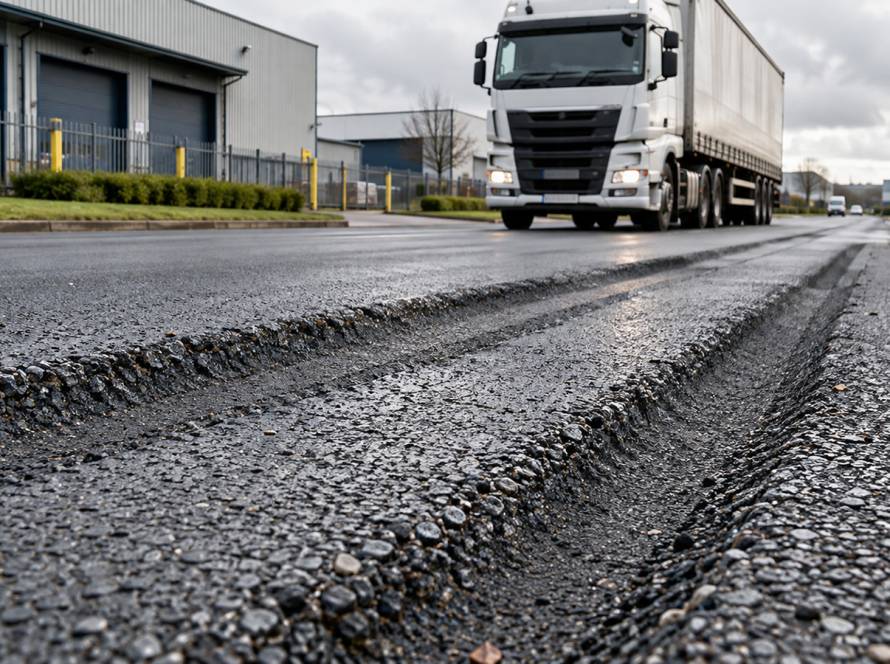
Common indicators of structural failure include persistent settlement, rutting caused by heavy vehicles, widespread depressions and areas where repairs repeatedly fail within a short period.
During a professional assessment, contractors will determine whether the damage is limited to the surface or whether deeper reconstruction is required before recommending suitable commercial road surfacing.
How Water Damage Accelerates Road Failure
Water is one of the most destructive forces affecting road surfaces throughout the UK.
Small cracks allow moisture to penetrate below the surface, gradually weakening the supporting layers. During colder weather, freeze-thaw cycles can expand these cracks further, causing rapid deterioration.
If drainage systems are blocked or poorly designed, standing water places additional pressure on the pavement structure. Over time this weakens the road from below, resulting in more frequent failures that surface repairs alone cannot prevent.
Where significant water-related damage has occurred, replacing affected sections often proves more economical than carrying out continual maintenance.
The Cost of Delaying Replacement
Many organisations understandably seek to maximise the lifespan of their existing roads before committing to replacement.
However, delaying necessary replacement can often increase overall expenditure.
As defects spread, maintenance becomes more frequent, emergency repairs become necessary and operational disruption increases. Vehicles may suffer damage, pedestrians face greater safety risks and businesses can experience interruptions due to deteriorating access routes.
Although replacement represents a larger initial investment, it often eliminates repeated maintenance costs while providing decades of reliable performance when installed correctly.
Safety Considerations
Road condition is not simply an aesthetic concern.
Uneven surfaces, loose material, deep potholes and severe cracking present genuine safety hazards for motorists, pedestrians and cyclists alike.
Commercial premises may also have legal responsibilities to maintain safe access routes for employees, visitors and delivery vehicles. Ignoring advanced deterioration may increase liability if accidents occur because known defects were left untreated.
Where safety is compromised across substantial areas of the road, full resurfacing or reconstruction is usually the most responsible solution.
Traffic Loading Can Change the Equation
Roads originally designed for lighter traffic often begin to fail more quickly when usage changes.
Industrial estates, distribution centres, construction sites and commercial developments frequently experience increasing numbers of heavy goods vehicles over time. Even if repairs restore the existing surface temporarily, the original pavement may no longer be capable of supporting modern traffic demands.
Upgrading the road through replacement allows engineers to strengthen the pavement structure, improve drainage and provide greater long-term durability for current and future use.
Modern machine lay tarmac techniques also deliver improved consistency, strength and surface finish compared with repeated patching.
Age Is Not the Only Consideration
A road’s age alone does not determine whether replacement is necessary.
Some well-constructed roads remain structurally sound after several decades because they were built with appropriate materials, proper drainage and adequate foundations. Others may require major reconstruction after a relatively short period if they were poorly installed or subjected to unexpected traffic volumes.
Professional condition surveys examine factors such as cracking patterns, deformation, drainage performance, structural movement and previous repair history rather than relying solely on the age of the surface.
Why Professional Assessment Matters
Choosing between repair and replacement requires more than simply looking at the visible damage.
Experienced surfacing contractors assess the entire pavement system, identifying whether defects originate from surface wear, structural weakness, drainage failure or ground movement.
A detailed inspection allows property owners to invest confidently, ensuring that maintenance budgets are directed towards solutions that genuinely extend the life of the asset rather than repeatedly treating symptoms.
Where only isolated defects exist, repairs may remain the most sensible option. Where structural deterioration has become widespread, full replacement generally provides the greatest long-term value.
Making the Right Long-Term Investment
Every road eventually reaches a stage where ongoing repairs become less effective than complete replacement. Recognising that point helps avoid escalating maintenance costs, improves safety and ensures continued reliability for everyone using the road.
Early intervention remains the most cost-effective strategy throughout a road’s lifespan. Regular inspections, prompt repairs and professional maintenance can significantly delay the need for replacement. However, once structural integrity has been compromised across large sections of the pavement, investing in high-quality tarmac installation often delivers lower lifetime costs than continuing with temporary repairs.
A thorough condition assessment enables property owners and commercial site managers to make informed decisions based on the true condition of the road rather than its appearance alone.