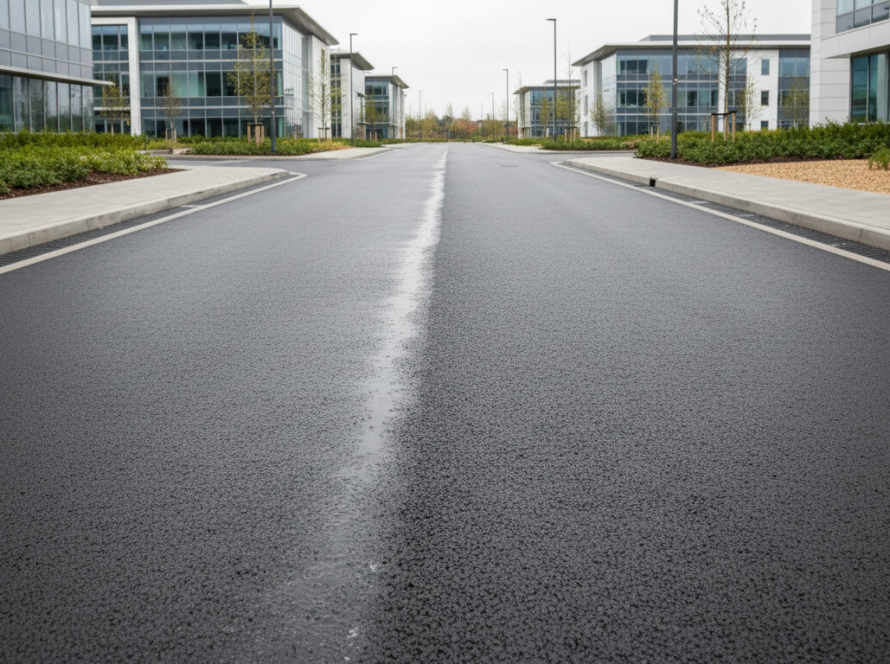
It is a common and frustrating issue across the UK: a newly surfaced road appears sound, only to begin deteriorating after a single period of heavy rainfall. For property owners and commercial site managers, this raises serious concerns about quality, safety, and long-term value. The reality is that road failure after rain is rarely caused by the weather alone. Instead, it is typically the result of underlying issues that compromise overall road surface performance UK standards.
Rain simply exposes weaknesses that already exist within the structure of the road. When design, preparation, or installation falls short, water becomes the catalyst that accelerates visible failure.
The Role of Water in Surface Failure
Water is one of the most damaging elements affecting road surfaces. While properly constructed roads are designed to manage and shed water effectively, poorly built surfaces allow water to penetrate and weaken the structure beneath.
When rainwater enters small cracks or poorly compacted areas, it begins to erode the sub-base. Over time, this reduces load-bearing capacity and leads to movement in the upper layers. In some cases, failure can occur almost immediately, especially if traffic is introduced before the surface has fully stabilised.
This is why professional tarmac installation must always account for drainage, compaction, and material integrity from the outset.
Inadequate Ground Preparation
Why the Foundation Matters
One of the most common reasons roads fail after rainfall is inadequate ground preparation. The subgrade and sub-base layers form the structural foundation of any road, and if these are not properly prepared, the entire surface becomes vulnerable.
If the ground beneath the surface is soft, uneven, or poorly compacted, it will not provide sufficient support. Rainwater exacerbates this problem by saturating the soil, reducing its strength and causing movement under load.
Signs of Poor Preparation
Early signs often include minor depressions, surface cracking, or water pooling. After a rainstorm, these issues can quickly escalate into potholes or widespread surface deformation.
Proper preparation involves excavation to the correct depth, installation of suitable sub-base materials, and thorough compaction. Without these steps, long-term road surface performance UK expectations cannot be met.
Insufficient Drainage Design
Water Has to Go Somewhere
Drainage is not an optional feature in road construction; it is a fundamental requirement. When water cannot escape efficiently, it accumulates on or beneath the surface, leading to rapid deterioration.
Poor drainage design may include inadequate gradients, lack of drainage channels, or blocked water paths. Even a well-laid surface can fail if water is allowed to sit or infiltrate.
Surface Water vs Subsurface Water
Surface water causes visible issues such as pooling and skid hazards, but subsurface water is often more damaging. It weakens the layers beneath the road, leading to structural failure that may only become apparent after rainfall.
In commercial settings, incorporating proper drainage within commercial surfacing projects is essential to ensure durability and compliance.
Poor Compaction During Installation
The Importance of Density
Compaction is critical in achieving a stable and durable road surface. If materials are not compacted to the correct density, voids remain within the structure. These voids allow water to penetrate easily, undermining the integrity of the road.
Rainwater entering these gaps can cause rapid weakening, particularly when combined with traffic loads. This often results in surface cracking or rutting shortly after installation.
Timing and Technique
Compaction must be carried out at the correct time and temperature, particularly for asphalt and tarmac surfaces. Rushing the process or using inadequate equipment leads to inconsistent results.
Professional machine lay tarmac ensures uniform compaction and significantly reduces the risk of early failure.
Low-Quality Materials
Not All Materials Perform Equally
The quality of materials used in road construction has a direct impact on performance. Lower-grade aggregates or improperly mixed asphalt can compromise durability and resistance to water ingress.
When exposed to rain, these materials may break down more quickly, leading to surface defects. This is especially problematic in areas with frequent or heavy rainfall.
Long-Term Cost Implications
While cheaper materials may reduce initial costs, they often result in higher maintenance and repair expenses over time. Investing in high-quality materials is essential for achieving consistent road surface performance UK standards.
Traffic Load and Early Use
Premature Traffic Exposure
Allowing traffic onto a newly laid surface too soon can significantly increase the risk of failure. Before the material has fully set and stabilised, it is more susceptible to deformation and damage.
When rain occurs during this vulnerable period, the combination of water and load can cause immediate issues such as rutting or displacement.
Matching Design to Usage
Roads must be designed to handle expected traffic loads. Underestimating these loads leads to surfaces that cannot cope under pressure, particularly when weakened by water.
For high-traffic areas, robust construction methods and materials are essential to prevent early deterioration.
Lack of Edge Support
Why Edges Matter
The edges of a road are often the weakest points, especially if they are not properly supported. Without adequate edge restraints, the surface can begin to spread and crack.
Rainwater can infiltrate these exposed areas more easily, accelerating the breakdown process.
Preventing Edge Failure
Proper edging and containment help maintain the integrity of the surface. This is particularly important for access roads and areas with limited structural support.
Maintenance Neglect
Small Issues Become Big Problems
Even well-constructed roads require ongoing maintenance. Small cracks or drainage issues can quickly escalate when exposed to rain.
Ignoring these early signs allows water to penetrate deeper into the structure, leading to more extensive damage.
Proactive Repairs
Addressing minor defects early can prevent costly repairs later. Services such as pothole repairs play a key role in maintaining road integrity and extending lifespan.
Environmental and Weather Considerations
The UK Climate Factor
The UK’s climate presents unique challenges for road construction. Frequent rainfall, temperature fluctuations, and freeze-thaw cycles all contribute to surface wear.
Roads must be designed with these conditions in mind. Failure to account for environmental factors often results in surfaces that cannot withstand typical weather patterns.
Seasonal Timing
The timing of installation also matters. Laying surfaces during unsuitable weather conditions can compromise quality and increase the risk of early failure.
Ensuring Long-Term Road Surface Performance
Achieving reliable road surface performance UK outcomes requires a comprehensive approach that addresses every stage of the process. From initial design and ground preparation to material selection and installation, each element must meet high standards.
Working with experienced contractors ensures that all aspects of the project are properly managed. Reviewing previous work through a portfolio of surfacing projects can provide valuable insight into quality and consistency.
Ultimately, roads that fail after one rainstorm are not victims of bad luck. They are the result of avoidable shortcomings in planning, execution, or maintenance.
Conclusion
Rain does not cause road failure; it reveals it. When a road deteriorates after a single storm, it is a clear indication that something has gone wrong beneath the surface. Whether due to poor preparation, inadequate drainage, or substandard materials, these issues can be prevented with the right approach.
For property owners and site managers, understanding these risks is essential. Investing in proper construction and ongoing maintenance is the only way to ensure that roads remain safe, functional, and durable in all weather conditions.