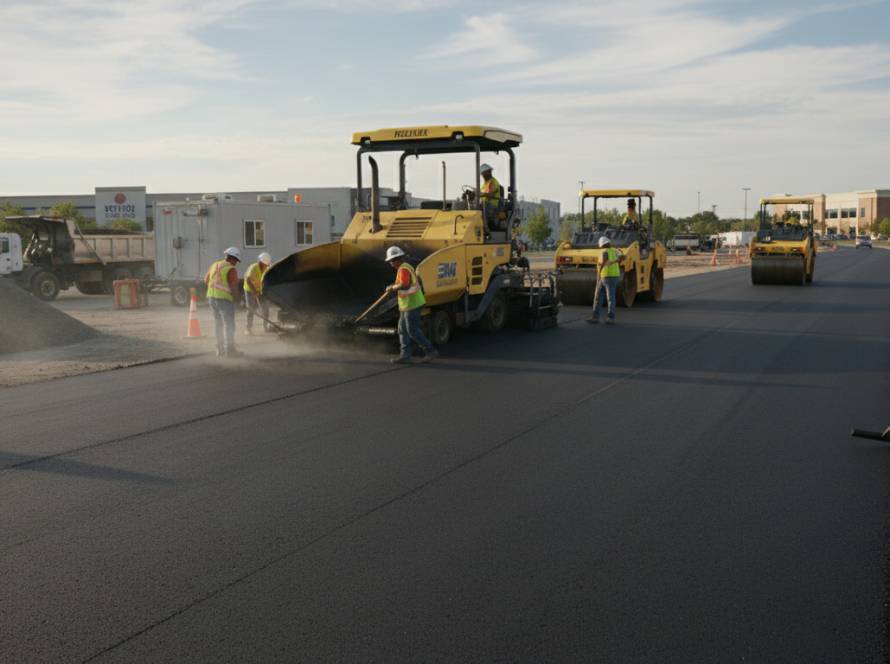
Resurfacing a driveway, private road, car park, service yard, or commercial access route is a significant investment. A new surface can improve safety, appearance, drainage, access, and long-term usability, but the quality of the final result depends heavily on what is checked before work begins. Many surface problems are not caused by the visible layer alone. They often begin below ground level, around the edges, within drainage routes, or in areas where traffic movement has not been properly considered.
Before arranging resurfacing, property owners and site managers should take time to understand the condition of the existing area. This does not mean carrying out a technical survey yourself, but it does mean knowing what questions to ask and what warning signs to look for. A professional contractor can then assess the site properly and recommend the right preparation, materials, depth, and installation method.
For both residential and commercial settings, the aim is the same: to create a surface that is suitable for the way the area is actually used. A private driveway used by cars has different requirements from a commercial access road used by delivery vehicles, refuse lorries, forklifts, or turning HGVs. The more accurately the site is assessed before resurfacing, the less likely it is that the new surface will crack, pond, rut, or break down prematurely.
Check the Existing Surface Condition
The first thing to review is the condition of the surface already in place. Cracks, potholes, loose material, sinking areas, standing water, and uneven patches all provide clues about what may be happening beneath the surface. While some defects are only surface-level wear, others can indicate deeper issues with the sub-base, drainage, or ground movement.
Small cracks may appear harmless, but they can allow water to enter the structure below. Over time, this weakens the supporting layers and can lead to further deterioration, especially during colder weather when water expands and contracts. Potholes are another important warning sign because they often develop where the surface has already lost strength. Simply covering them without proper repair can leave the same weak point underneath the new layer.
A worn surface may still be suitable for an overlay if the underlying structure remains stable. However, if the area is badly distorted, heavily cracked, or moving under traffic, full preparation may be needed before resurfacing. This is where professional assessment becomes essential. Experienced contractors can determine whether the existing surface can support new material or whether more extensive work is required through proper tarmac installation.
Check the Sub-Base and Ground Stability
The sub-base is one of the most important parts of any resurfacing project. It sits beneath the visible surface and provides the strength needed to support traffic. If the sub-base is weak, uneven, contaminated, or too shallow, the finished surface may look good at first but fail much sooner than expected.
Signs of poor sub-base performance can include dips, soft areas, repeated cracking, rutting, or sections that move under load. On commercial sites, these issues are often most noticeable where vehicles stop, turn, reverse, or load goods. On residential properties, weak areas may appear where vehicles regularly park or where water has been sitting for long periods.
Before resurfacing, the contractor should assess whether the existing foundation is suitable for the intended use. A surface used by light vehicles will not need the same construction as a road or yard that carries heavy commercial traffic. If the sub-base is not checked properly, the new surface may simply copy the defects of the old one.
Ground stability is also affected by soil type, previous excavation, tree roots, poor drainage, and historic repairs. A reliable resurfacing plan should account for these conditions rather than focusing only on the visible top layer. Where the ground is unstable, preparation may involve excavation, reinforcement, improved drainage, or reconstruction of the supporting layers.
Check Drainage and Water Movement
Drainage should be considered before any resurfacing work begins. Water is one of the main causes of surface deterioration, especially when it is allowed to sit, collect at edges, flow towards buildings, or enter cracks and joints. A new surface should not simply look smooth; it should be shaped and installed so water moves away effectively.
Property owners should look for areas where puddles form after rain. Even shallow standing water can indicate poor falls, blocked drainage, low spots, or surface deformation. If water is already pooling on the existing surface, resurfacing without correcting the levels may recreate the same problem.
It is also important to check where water currently flows. On sloped sites, water may run quickly across the surface and cause erosion at edges or collection points. On flatter sites, water may struggle to drain unless channels, gullies, or falls are correctly designed. Around buildings, garages, warehouses, and entrances, drainage must be carefully managed to prevent water from being directed towards thresholds.
Commercial sites often need particular attention because larger paved areas collect more surface water. Loading bays, service yards, access roads, and car parks should be assessed as a complete drainage system, not as isolated patches of surfacing. Professional commercial surfacing should take account of water flow, vehicle use, and long-term maintenance requirements.
Check Traffic Type and Load Requirements
A surface should be designed around the traffic it needs to carry. Before resurfacing, property owners should think carefully about who uses the area, how often it is used, and what type of vehicles travel across it. This is especially important for commercial and shared spaces where traffic patterns can be more demanding than they first appear.
Cars, vans, delivery vehicles, refuse lorries, emergency vehicles, agricultural machinery, and HGVs all place different levels of stress on a surface. Heavy vehicles do not only create downward pressure. They also create turning stress, braking force, and edge pressure, particularly in tight corners, loading areas, and turning heads.
If a surface is too thin or the supporting layers are not suitable for the traffic load, failure can happen quickly. Rutting may form where wheels follow the same line each day. Cracks may appear where vehicles turn sharply. Depressions may form where heavy vehicles park or load repeatedly.
For domestic properties, it is still worth considering future use. A driveway that currently carries one car may later need to support larger vehicles, delivery vans, or building works. For commercial sites, resurfacing should be planned with operational needs in mind, including delivery schedules, staff parking, visitor access, and emergency routes.
Check Edges, Kerbs, and Restraints
Edges are often overlooked, but they play a major role in surface durability. A resurfaced area needs proper restraint to prevent movement, spreading, cracking, and edge breakdown. Where edges are unsupported, the surface can weaken over time, especially when vehicles drive close to the boundary.
Before resurfacing, check whether existing kerbs, edgings, walls, channels, or adjoining surfaces are stable. Broken kerbs, loose blocks, crumbling concrete, or missing restraints should be addressed before the new surface is installed. If these details are ignored, the finished surface may begin to fail from the outside in.
Edge strength is particularly important on narrow access roads, private lanes, rural tracks, and commercial yards where vehicles may regularly track near the sides. It also matters around drainage channels, inspection covers, thresholds, and transitions between different materials.
Good edge detailing helps the new surface remain compacted and contained. It also improves appearance, reduces maintenance issues, and helps protect the investment over the long term. On sites where the surface joins existing roads, paths, concrete slabs, or block paving, the transition should be planned carefully so there are no weak points or trip hazards.
Check Levels, Access, and Practical Site Constraints
Before resurfacing begins, the contractor needs to understand site levels and access restrictions. Levels affect drainage, surface thickness, tie-ins, door thresholds, gates, kerbs, and neighbouring surfaces. If the finished height is not planned correctly, the new surface may sit too high, create water problems, restrict access, or cause awkward transitions.
Doorways, garage entrances, warehouse thresholds, drains, manholes, and service covers should all be reviewed before work starts. These features may need adjusting so they sit correctly within the finished surface. If they are left too low or too high, they can become trip hazards, collection points for water, or weak areas under vehicle movement.
Access for machinery is another practical issue. Some resurfacing projects can be completed efficiently using larger equipment, while confined areas may require smaller machinery or more manual preparation. The available working space can influence installation method, project duration, and how materials are delivered to the site.
On commercial premises, access planning is especially important because resurfacing may need to be phased around business operations. Customers, staff, deliveries, and emergency access may still need to be managed safely while work is taking place. Contractors offering machine lay tarmac can often deliver efficient results on suitable sites, but the method must match the access conditions and layout.
Check Whether Repairs Are Needed Before Resurfacing
Resurfacing is not always the same as repairing. A new layer can improve the appearance and performance of a worn area, but it should not be used to hide problems that need proper attention first. Before resurfacing, any structural defects, potholes, failed joints, drainage faults, or unstable areas should be assessed and dealt with correctly.
Potholes are a common example. If a pothole is simply covered over, the weakness beneath may remain. The new material can then sink, crack, or break away in the same location. Proper preparation may involve cutting out the failed area, reinstating the base, and compacting new material before the final surface is applied.
The same principle applies to cracks and sunken patches. If the cause is movement, water damage, or sub-base failure, resurfacing alone may not be enough. A professional contractor should identify whether localised repairs are sufficient or whether the wider area needs reconstruction.
Early repair work can also reduce long-term costs. Addressing defects before resurfacing helps prevent avoidable failure and protects the new surface from inherited problems. Where isolated damage is present, professional pothole repairs may be needed before larger resurfacing work is carried out.
Why These Checks Matter Before Work Begins
The success of resurfacing depends on preparation, suitability, and detail. A finished surface may be the part people see, but its performance is shaped by the condition of the layers beneath, the way water is managed, the strength of the edges, and the demands placed on it by vehicles and daily use.
For property owners, these checks help create realistic expectations. They make it easier to understand why one site may need a simple overlay while another requires excavation, drainage improvement, or deeper construction. They also help avoid the false economy of choosing the quickest option when the site clearly needs more preparation.
For commercial site managers, pre-resurfacing checks are part of risk management. Poor surfaces can affect safety, access, delivery movement, customer experience, and operational efficiency. A well-planned resurfacing project should reduce disruption while delivering a surface that is suitable for the way the site functions.
Professional advice is valuable because every site has different conditions. Two surfaces may look similar from above but require very different preparation once drainage, sub-base condition, traffic load, and access are considered. Working with an experienced surfacing contractor helps ensure these factors are assessed before decisions are made.
Choosing the Right Resurfacing Approach
Once the site has been checked, the resurfacing approach can be matched to the condition and purpose of the area. Some projects may only need localised repairs and a new surface course. Others may require deeper reconstruction, improved drainage, stronger edging, or a more robust specification for heavy traffic.
The right approach should balance performance, practicality, and long-term value. A domestic driveway may prioritise neat appearance, reliable drainage, and everyday durability. A commercial access road may need stronger construction, phased working, clear traffic management, and materials suitable for repeated vehicle loading. A service yard may need particular attention to turning areas, braking zones, and drainage channels.
This is why resurfacing should not be treated as a one-size-fits-all job. The best results come from understanding the site before work begins and then specifying the surface accordingly. Property owners who take time to check the existing condition, drainage, traffic use, edges, levels, access, and repair needs are far better placed to make informed decisions.
A properly planned resurfacing project should leave you with a surface that performs well, looks appropriate for the setting, and supports the way the property is used. By carrying out these checks early, you reduce the risk of hidden problems, unexpected costs, and premature failure.