Cracking along the centre of a road is a relatively common form of surface deterioration. It can appear as a narrow, almost straight crack following the length of the carriageway, or it may develop into a wider and more irregular damaged area as the surface ages.
For property owners, estate managers and commercial site operators, centre line cracking can be particularly frustrating because repairing the visible crack does not always solve the underlying problem. The cause may relate to how the road was originally constructed, how separate sections of material were joined, the condition of the layers beneath the surface or the effect of repeated vehicle loading.
Understanding road surface centre line cracking UK property owners encounter is therefore important before deciding on an appropriate repair. A professional assessment should consider the entire pavement construction rather than treating every centre crack as an isolated surface defect.
The Centre Line Can Be a Construction Joint
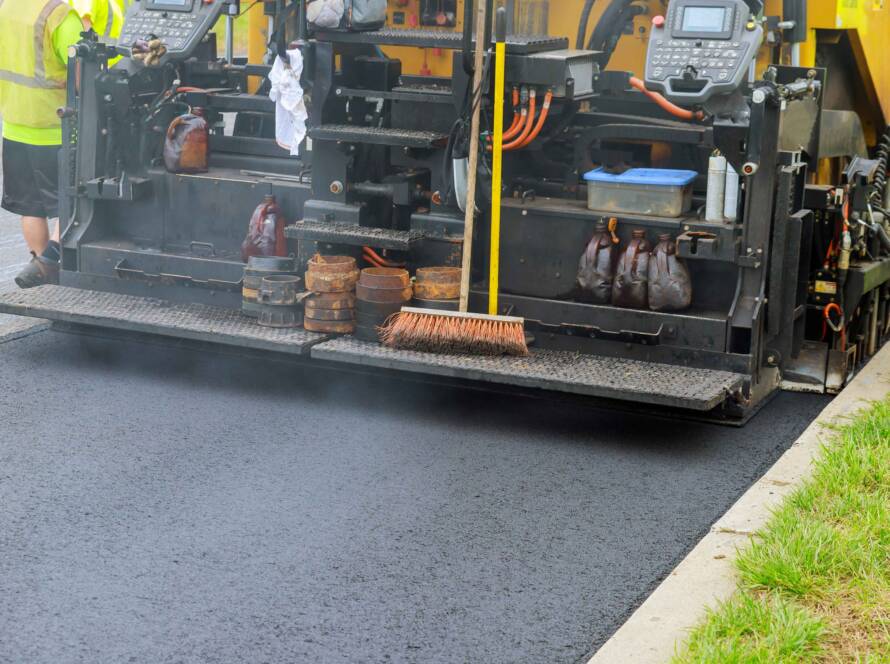
Many roads and access routes cannot be surfaced across their complete width in a single continuous operation. Instead, one section may be laid first before the adjoining section is installed.
The point where these sections meet creates a longitudinal joint. When properly constructed, compacted and sealed, this joint should form a strong connection between the two areas. However, it can remain a comparatively vulnerable part of the finished road.
If there is insufficient bonding between the adjoining sections, a visible line can gradually develop. Small movements, traffic loads and water penetration may then enlarge the separation.
This is one reason professional tarmac installation and road surfacing services need to consider joint construction as carefully as the appearance of the finished surface. A smooth road can initially look satisfactory while weaknesses at a longitudinal joint remain hidden until the surface has been subjected to repeated use and changing weather conditions.
Poor Compaction Can Create a Weak Centre Joint
Compaction is essential when asphalt or tarmac is laid. The material needs to be compacted correctly while it remains at an appropriate working temperature so that the finished layer achieves the required density and stability.
At a centre joint, achieving consistent compaction can be more difficult than across the main body of the road. If the edge of the first section has cooled significantly before the adjoining material is placed, creating a dense and well-bonded joint becomes more challenging.
A poorly compacted joint can contain additional voids. These small spaces make it easier for moisture and air to enter the surface structure, accelerating deterioration over time.
For larger sites, machine lay tarmac can provide controlled and consistent placement where site conditions allow. The quality of the finished road still depends on preparation, suitable materials, correct temperatures, compaction and attention to joints throughout the installation.
Water Can Accelerate Centre Line Deterioration
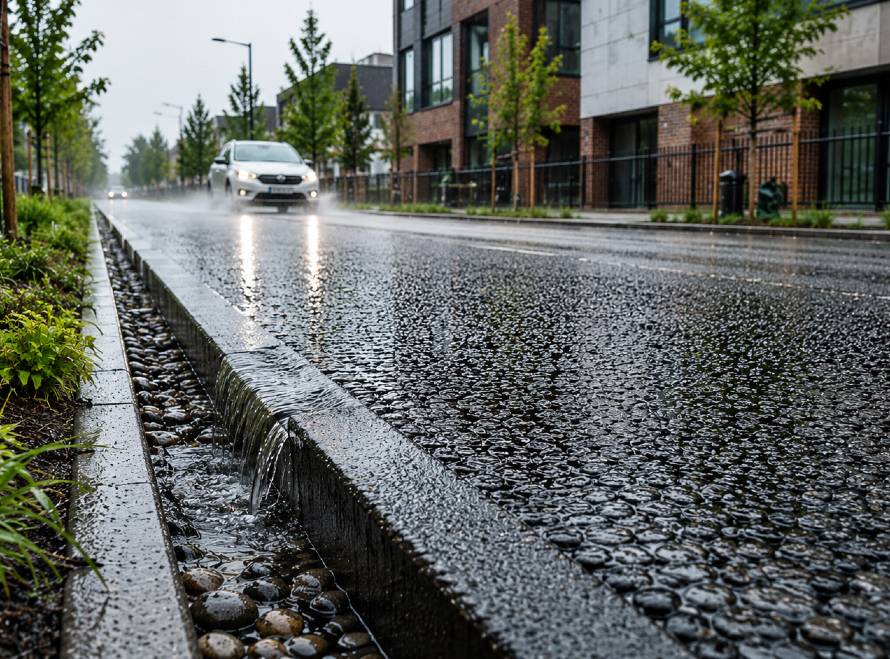
Water is one of the most important factors affecting the long-term performance of a road surface. A small centre line crack may initially appear cosmetic, but once water can penetrate through it, deterioration can become progressively more serious.
Moisture can reach the lower layers of the road and affect materials that provide structural support. If those layers become weakened or displaced, movement may occur under passing traffic.
The surface above then has to accommodate movement it was not designed to withstand. Existing cracks may widen and additional cracking can develop around them.
This means the visible centre line is sometimes only part of the problem. Simply filling a crack without investigating why it formed may provide a temporary improvement while leaving moisture-related deterioration beneath the surface unresolved.
Good drainage and correctly constructed falls are therefore important elements of effective commercial road surfacing, particularly on busy access roads, industrial estates and other sites where surface failure can disrupt normal operations.
Movement in the Sub-Base Can Reflect Through the Surface
A road surface relies heavily on the layers beneath it. The visible asphalt or tarmac is only the upper part of a wider construction designed to distribute vehicle loads and provide stability.
If the underlying ground or sub-base has not been prepared correctly, localised movement can occur. Differences in compaction, unsuitable materials or weakened areas can eventually become visible at surface level.
Where the centre of a road corresponds with a joint or difference in the underlying construction, movement can produce a longitudinal crack above it. This is sometimes described as reflective cracking because movement or separation within a lower layer is reflected through the material above.
In these situations, surface-only repairs may repeatedly fail because the structural cause remains in place. The affected area may need to be opened so that the condition of the lower layers can be examined and corrected before a new surface is installed.
Heavy Vehicles Increase Stress on Weak Areas
Commercial access roads frequently carry vehicles that place substantially greater loads on the surface than ordinary cars. Delivery vehicles, refuse lorries, construction traffic and heavy goods vehicles can all contribute to repeated loading.
A properly designed road should accommodate the expected traffic. However, where a centre joint is already weak, regular heavy loading can accelerate separation.
Vehicle movement can also create different types of stress depending on the layout of the site. Braking areas, junctions and turning zones can experience forces that differ from those found on straight sections of road.
This is why road construction should be designed around actual site use. A lightly trafficked private access route and a commercial service road carrying heavy vehicles every day do not necessarily require the same construction approach.
Temperature Changes Can Affect Existing Cracks
Road surfacing materials are exposed to continual changes in temperature. Materials expand and contract as environmental conditions change, and a properly constructed surface is designed to accommodate normal movement.
Problems arise when a weak joint or existing crack concentrates that movement into one narrow area.
Once a centre line begins to separate, seasonal temperature changes can contribute to further opening and closing of the crack. Water can then enter during wet conditions, increasing the potential for deterioration beneath the road.
The interaction between moisture, temperature and traffic explains why a relatively small crack can become progressively more noticeable if it is left untreated.
Why Simply Filling the Crack May Not Be Enough
Crack sealing can be appropriate in certain situations, particularly when damage is limited and the surrounding road remains structurally sound. The objective is often to prevent water entering the pavement and slow further deterioration.
However, filling should not automatically be treated as a permanent solution.
If the crack has developed because of inadequate compaction, movement in the sub-base or substantial deterioration around a construction joint, sealing the surface does not correct those underlying defects.
Where deterioration has progressed further, more substantial repairs may be required. Localised damaged areas can sometimes be addressed through professional pothole and road repairs, while widespread structural problems may justify resurfacing or reconstruction.
The appropriate method depends on the condition of both the visible surface and the supporting construction below it.
When Centre Line Cracking Indicates a Wider Problem
The pattern surrounding a centre crack can provide useful information. A single narrow crack along an otherwise stable road may indicate a joint-related issue. Multiple cracks, deformation, depressions or loose material around the centre line can suggest more extensive deterioration.
Changes in surface level are particularly important. If one side of the joint begins to settle relative to the other, there may be movement beneath the surfacing rather than simple separation at the top layer.
Recurring repairs are another warning sign. If the same centre line has been sealed several times and continues to reopen, further investigation is usually appropriate.
An assessment should consider drainage, traffic patterns, the extent of cracking and the condition of the surrounding material before determining the most suitable repair.
Preventing Centre Line Cracking During Installation
Reducing the likelihood of longitudinal cracking begins before the final surface is laid. Ground conditions need to be assessed and prepared so that the road has a stable foundation.
The sub-base should be appropriate for the intended use and compacted consistently. Surface materials should then be laid and compacted under suitable conditions, with careful attention given to joints between adjoining sections.
Drainage must also be incorporated into the overall construction. Water should be directed away from the road rather than being allowed to collect along joints, edges or low areas.
Professional road surfacing services should therefore treat preparation, drainage, material placement and compaction as interconnected parts of the same project rather than separate stages with little influence on one another.
Choosing the Correct Repair for Centre Line Cracking
The correct repair depends on why the crack has developed and how far deterioration has progressed.
Where the road remains stable and the cracking is relatively minor, sealing may help prevent moisture penetration and extend the useful life of the existing surface. More substantial joint deterioration may require the affected material to be removed and replaced.
If investigation identifies instability beneath the road, repairs may need to extend into the sub-base. Installing fresh surfacing over an unstable foundation is unlikely to provide a reliable long-term result.
For property owners and site managers, the key consideration is therefore not simply how to cover the visible crack. The aim should be to understand whether the damage is confined to the surface or is evidence of a deeper construction problem.
Road surface centre line cracking UK sites experience can develop for several interconnected reasons, including construction joints, insufficient compaction, water penetration, underlying movement and repeated vehicle loading. Identifying which of these factors is responsible makes it possible to select a repair that addresses the cause rather than repeatedly treating the symptom.