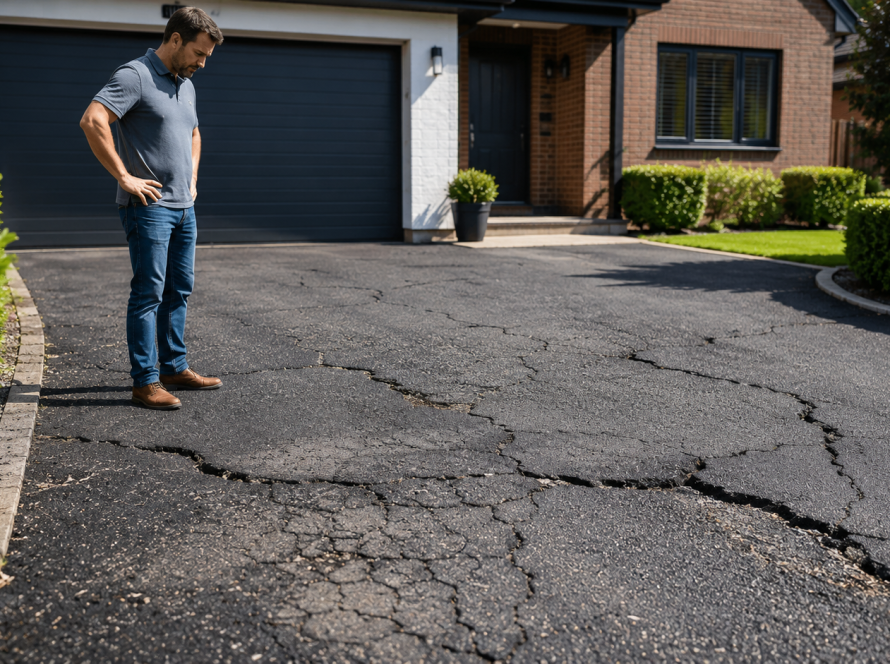
A pothole repair should restore the damaged area so that it sits level with the surrounding road and provides a stable surface for passing traffic. In practice, however, some repairs gradually sink below the existing carriageway. What initially appears to be a successful repair can develop into a noticeable depression, creating an uneven surface and potentially allowing further deterioration around the repaired area.
A sinking repair is rarely just an issue with the visible material at road level. The condition of the layers underneath the repair has a major influence on how well it performs. If damaged, loose or poorly compacted material remains below the new surface, the repair may not have sufficient support to withstand repeated vehicle loading.
Understanding this is important for property owners and commercial site managers responsible for private roads, car parks, access routes and service areas. Effective pothole repairs need to address the condition of the damaged area rather than simply filling the visible hole.
The Importance of What Lies Beneath the Pothole
The surface of a road is only one part of its construction. The materials beneath it provide the support needed to distribute traffic loads and maintain a stable running surface. When these underlying materials deteriorate, repairing only the uppermost section can leave the original weakness in place.
A pothole itself is often evidence that the road structure has already experienced some form of deterioration. Water, repeated traffic, movement and loss of material can all contribute to weakening around and beneath the damaged area. Once a hole has formed, its edges and base may contain loose or unstable material.
If new material is placed directly onto this weak foundation, it can initially appear level because the repair material has filled the available space. As vehicles continue to pass over it, however, movement can occur underneath. The new material then follows that movement and settles lower than the surrounding road.
This is why professional repair work needs to consider the depth and condition of the defect rather than treating every pothole as a shallow surface problem.
Poor Compaction Can Cause a Repair to Settle
Compaction is one of the most important factors affecting the finished level and long-term stability of a pothole repair. Repair material needs to be compacted sufficiently so that it forms a dense and stable section of pavement capable of handling traffic.
If material is inadequately compacted during installation, small voids can remain within the repaired area. Vehicle loading can then continue the compaction process after the road has reopened. Instead of remaining at its installed level, the repair becomes progressively denser and its surface drops.
This can produce the familiar appearance of a pothole repair that has sunk into the carriageway.
The depth of the repair also matters. Deeper repairs may require careful placement and compaction rather than treating the entire depth as a single mass of material. The objective is to create consistent support through the repaired section, rather than a firm-looking surface sitting above material that can still move.
The same principles are important across larger tarmac installation and road surfacing projects, where preparation and compaction contribute directly to the stability of the completed surface.
Weak Material Beneath the Repair
Even well-compacted repair material can sink if the material underneath it is unstable. This is one of the reasons that simply adding more material to an existing depression does not necessarily provide a lasting solution.
Loose aggregate, softened foundation material or an otherwise weakened base can compress when subjected to vehicle loads. The repaired surface may be dense and properly installed, but it still depends on the layers below it for support.
The problem can become particularly noticeable on roads carrying heavier vehicles. Delivery vehicles, refuse vehicles, construction traffic and commercial fleets can place considerable loading on relatively small areas of the surface. Where the underlying structure has lost strength, repeated loading can cause further settlement.
In these circumstances, a repair may need to extend deeper than the visible pothole. Removing unstable material and rebuilding the affected section provides a more suitable foundation for the finished surface.
Water Can Contribute to Continued Deterioration
Water is an important consideration whenever repeated potholes or sinking repairs occur. If water continues to reach weakened layers beneath the surface, repairing the visible damage without addressing the underlying conditions may result in further problems.
Water can enter through cracks, failed joints and deteriorated areas of surfacing. Poor drainage can also leave water standing on the carriageway for extended periods. Once moisture reaches vulnerable underlying material, the support available to the surface can be reduced.
A repaired pothole does not automatically remove the route through which water entered the pavement. If nearby cracking or drainage problems remain, moisture may continue to affect the area after the repair has been completed.
This is particularly relevant on commercial access roads and private sites where drainage arrangements may have changed over time. Surface levels can alter following repeated repairs, surrounding ground can settle and drainage channels can become less effective. A localised pothole can therefore sometimes be part of a wider surface or drainage issue.
Why Filling the Depression Again May Not Solve It
When a pothole repair sinks, an obvious response is to add another layer of material until the area is level again. While this may improve the surface temporarily, it does not necessarily address the reason for the settlement.
If the underlying layers are still moving, the additional material is being placed over the same unstable foundation. Further settlement can occur, potentially leaving another depression in exactly the same location.
Repeated patching can also make it more difficult to understand the original construction of the affected area. Several layers of repair material may eventually sit above a weak section that has never been properly reconstructed.
For isolated defects where the surrounding road remains structurally sound, a properly prepared local repair may be sufficient. Where defects repeatedly return or repaired areas continue to sink, a more detailed assessment of the affected section can help determine whether deeper reconstruction or wider commercial road surfacing work is appropriate.
Heavy and Turning Traffic Can Expose Weak Repairs
Not every part of a road experiences the same loading. Areas where vehicles brake, accelerate, turn or remain stationary can be subjected to different stresses from straightforward sections of carriageway.
This is particularly relevant around commercial entrances, loading areas, junctions, service yards and turning points. A repair in one of these locations may experience repeated concentrated loading, especially where heavy goods vehicles use the same wheel path throughout the day.
If the repair or its underlying foundation is marginal, these loads can expose the weakness relatively quickly. Settlement may develop in the wheel track while the surrounding surface remains comparatively level.
The expected use of the road therefore matters when deciding how a damaged section should be repaired. A method suitable for a lightly used private road may not necessarily provide the same performance on a busy commercial access route.
The Edges of the Repair Also Matter
A pothole repair needs to integrate effectively with the existing road around it. The condition of the edges can influence both water resistance and the stability of the completed repair.
If loose or deteriorated material remains around the perimeter, the new repair is effectively connected to a weak boundary. Traffic and weather can continue to break down these edges, gradually enlarging the affected area.
Water may also find a route between the existing road and the repaired section if the perimeter deteriorates. Over time, this can contribute to further weakening below the surface.
Preparing the damaged area therefore involves more than removing loose material from the centre of the pothole. The surrounding edges need to provide a suitable boundary for the repair so that the new material can form a stable section within the existing pavement.
When the Problem Is Larger Than One Pothole
A single isolated pothole does not necessarily mean that an entire road requires resurfacing. However, a pattern of sinking repairs, repeated potholes and widespread cracking can indicate that deterioration extends beyond individual surface defects.
Site managers should pay attention to whether problems repeatedly develop in the same locations. Areas that hold standing water, wheel tracks that continue to deform and sections where previous repairs repeatedly fail can provide useful indications about the condition of the road.
Where defects are widespread, continuing to repair each pothole independently can become inefficient. It may be more practical to investigate whether a larger section of surfacing requires attention.
For roads and commercial areas where substantial sections need renewal, machine-laid tarmac can form part of a wider surfacing approach where site conditions and project requirements make it suitable. The appropriate method depends on the existing construction, traffic requirements, access arrangements and extent of deterioration.
What Property and Site Managers Should Look For
A sinking pothole repair is useful evidence about how the road is behaving. The depth of settlement, speed at which it develops and condition of the surrounding surface can all help indicate whether the issue is limited to the repair itself or involves deeper layers.
A repair that remains stable for a significant period before gradually deteriorating may be experiencing different conditions from one that sinks shortly after installation. Likewise, several failures concentrated around a drainage problem or heavily trafficked entrance deserve closer attention than a single isolated defect.
The objective should be to understand the cause of recurring deterioration rather than repeatedly restoring only the visible surface level.
Professional road surfacing services can assess the wider condition of an affected area and determine the extent of preparation needed before new material is installed. This can be particularly important on commercial sites where repeated repairs create disruption as well as ongoing maintenance costs.
Achieving a More Stable Pothole Repair
The long-term performance of a pothole repair depends on creating a stable connection between the new material and the existing road structure. That begins with identifying and removing unsuitable material, establishing a sound base and compacting the repair correctly.
The surrounding road also needs consideration. Cracks, drainage issues and adjacent deterioration can continue to influence a repair even when the pothole itself has been properly filled.
A repair that sinks below the road surface should therefore not automatically be treated as a simple shortage of surface material. Settlement can indicate inadequate compaction, weak underlying layers, continued water ingress or traffic loading that the repaired section is not adequately supported to withstand.
For property owners and site managers, recognising these factors makes it easier to distinguish between a straightforward surface defect and a problem requiring more substantial attention. A durable repair is not simply about restoring the correct road level on the day the work is completed. It is about providing sufficient preparation, support and compaction for that level to remain stable under the conditions the road experiences.