Tarmac surfaces are designed to provide a continuous, durable layer capable of handling vehicle movements, changing weather conditions and repeated loading. Manholes interrupt that continuity. Instead of the surfacing being supported by a consistent construction beneath it, the material must meet a rigid chamber, frame and cover that behave differently from the surrounding road structure.
This change in construction makes the area around a manhole particularly vulnerable. The problem is not necessarily the tarmac itself. In many cases, deterioration begins because the materials immediately surrounding the chamber have settled, moved or were inadequately compacted during installation.
Once movement starts, relatively small defects can develop into cracking, depressions and broken edges. Water can then penetrate the surface and accelerate the deterioration.
Professional tarmac installation and road surfacing services therefore need to treat manholes and other ironwork as individual details within the wider surfacing project rather than simply laying material around them.
Compaction Around Manholes Can Be Difficult
Compaction is one of the most important factors affecting the long-term performance of a tarmac surface. Asphalt and tarmac materials need to be compacted correctly so that they form a dense, stable layer capable of resisting traffic loads.
Around a manhole, achieving consistent compaction becomes more difficult.
Large rollers and other compaction equipment cannot always operate directly against the manhole frame. This creates a relatively narrow area where smaller equipment or alternative compaction methods may be required. If this section receives less compaction than the surrounding surface, it can become a weak point.
Poorly compacted material may initially appear satisfactory. The problem can emerge after the surface has been opened to traffic. Repeated wheel loading gradually compresses the weaker material, causing the surface to settle.
This is why depressions frequently appear around manholes even when the surrounding tarmac remains comparatively level.
Where access and project conditions allow, professional machine-laid tarmac can help achieve a consistent surface, but careful attention is still required around chambers, covers and other fixed features.
Weak Backfill Can Cause Settlement
A durable surface depends on much more than the visible layer of tarmac. The construction beneath the surface provides the structural support needed to carry vehicles and maintain a consistent finished level.
Manhole chambers are normally surrounded by excavated and reinstated material. If this material is not placed and compacted correctly, gradual settlement can occur.
The tarmac above follows that movement.
This often produces a visible ring or depression around the manhole. In more severe situations, cracking develops where the settled material meets the more stable surrounding construction.
The difference may initially be only a few millimetres, but repeated vehicle movements can increase the damage. Vehicle tyres repeatedly strike the edge of the depression, placing additional forces on an already vulnerable section of surfacing.
For this reason, repairing only the visible surface without addressing instability beneath it may provide only a temporary improvement.
Manhole Frames and Tarmac Behave Differently
Another important factor is the difference between the rigid manhole structure and the surrounding flexible surfacing.
Tarmac has a degree of flexibility. It responds to loading and temperature changes differently from concrete chambers and metal frames. A manhole frame, by comparison, is a rigid component.
Where these materials meet, stresses can concentrate along the joint.
If the surrounding construction has been properly prepared and compacted, these stresses can normally be managed. However, when there is movement beneath the surface or inadequate support around the frame, cracking is much more likely to develop.
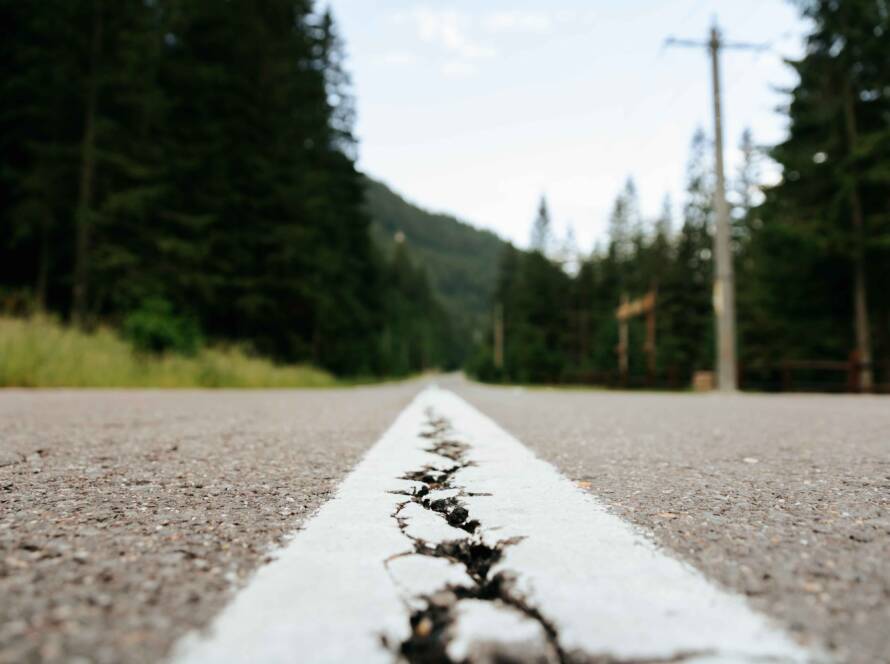
The first visible sign is often a narrow crack immediately alongside the manhole frame. Although it can appear insignificant, that crack creates an entry point for water.
As deterioration progresses, the edges may begin to crumble and pieces of surfacing can eventually break away.
Water Makes Existing Weaknesses Worse
Drainage plays a major role in almost every type of road surface deterioration. Water entering beneath a tarmac surface can weaken supporting materials and contribute to movement.
Manholes naturally create joints and interfaces where water may find a route beneath the surface if those areas are not properly constructed and sealed.
A small crack around the frame can allow rainfall to penetrate. Once beneath the tarmac, water can affect the supporting layers, particularly where the surrounding material is already poorly compacted.
During colder conditions, moisture within cracks can also contribute to further deterioration through repeated weathering.
The result can become a cycle. Movement creates cracking, cracking allows water penetration, and water penetration encourages additional movement and surface breakdown.
Good drainage and appropriate surface falls are therefore important considerations during commercial road surfacing projects, especially on sites containing multiple drainage chambers and utility covers.
Traffic Loading Concentrates Damage
Traffic does not affect every part of a road equally. Vehicle routes, turning areas, entrances and loading zones can experience significantly greater stresses than lightly used sections.
A manhole positioned directly within a wheel path can therefore deteriorate more quickly than one located outside the main traffic line.
Heavy commercial vehicles increase this effect. Their axle loads place considerable pressure on the surface and underlying construction. If there is even slight movement around a chamber, repeated loading can gradually enlarge the affected area.
Turning movements can be particularly demanding because tyres apply horizontal forces as well as vertical loading. A manhole situated within a junction, service yard or turning area may consequently require particularly careful construction.
This is one reason commercial surfacing should be designed around how the site is actually used rather than treating every square metre as though it experiences identical conditions.
Incorrect Manhole Levels Can Lead to Early Failure
The finished height of the manhole cover is another critical detail.
Ideally, the cover should sit appropriately relative to the surrounding finished surface. If it is too low, vehicle wheels repeatedly drop onto the cover before climbing back onto the tarmac. If it is too high, tyres strike the raised edge.
Both situations introduce impact loading.
Over thousands of vehicle movements, these repeated impacts can damage the surrounding surfacing and place stress on the frame itself.
The effect is particularly noticeable on access roads and commercial sites where vehicles regularly follow the same route. A relatively small difference in level can become increasingly problematic under constant traffic.
Accurate level setting before the final surface is laid is therefore important. Trying to compensate for an incorrectly positioned frame purely by varying the thickness of the surrounding tarmac can create additional weaknesses.
Why Cracks Around Manholes Should Not Be Ignored
Early deterioration around a manhole may initially look cosmetic, but defects in this location can progress quickly.
A narrow crack can become a wider opening. The edges of the tarmac may then begin to loosen, allowing water and debris into the construction. Continued traffic gradually removes weakened material and the defect can develop into a pothole-like failure around the cover.
At that stage, the problem can affect ride quality and potentially create a hazard for vehicles, cyclists or pedestrians.
Prompt inspection allows the underlying cause to be considered before simply covering the damaged area. Where deterioration has already developed significantly, professional pothole repairs and localised reinstatement may be necessary to restore the affected surface.
Why Surface Patching Alone May Not Solve the Problem
One of the most common mistakes when dealing with failed tarmac around a manhole is treating only the visible damage.
If the surface has failed because the supporting material has settled, adding new tarmac over the depression does not necessarily correct the structural problem. The new material may simply move again as the underlying construction continues to settle.
A more durable repair generally requires identifying the depth and extent of the failure.
Checking the Supporting Construction
The affected material may need to be removed so the condition around the chamber can be assessed. Loose or inadequately compacted material can then be addressed before the surface is reinstated.
The manhole frame should also be checked for stability and appropriate finished level.
This approach is more involved than applying a thin patch, but it deals with the cause of the deterioration rather than simply improving its appearance.
Good Installation Reduces the Risk of Failure
Manholes will always create a potential interruption within a tarmac surface, but premature failure is not inevitable.
Careful preparation, suitable supporting materials, proper compaction and accurate frame levels all contribute to a more durable result. Drainage should also be considered so that water is directed away effectively rather than being allowed to collect around chambers and covers.
The surfacing itself must then be laid and compacted correctly against the frame while maintaining the required finished levels.
Experienced road surfacing contractors consider these details as part of the complete construction process. The objective is to create consistent support around the manhole so that the chamber and surrounding road surface can withstand normal site traffic without excessive movement.
Manholes Require Particular Attention on Commercial Sites
The issue becomes especially important on industrial estates, business premises, car parks, service yards and commercial access roads.
These environments may contain numerous inspection chambers, drainage covers and utility access points. They can also experience repeated movements from delivery vehicles, refuse vehicles and other heavy traffic.
A weakness around one chamber may therefore become noticeable considerably sooner than similar construction on a lightly used residential surface.
When resurfacing an existing commercial site, the condition and levels of existing ironwork should be assessed as part of the wider project. Chambers that have already moved or settled may need attention before the new surface is installed.
Covering an existing weakness with a fresh surface does not remove the underlying problem.
Durable Tarmac Depends on What Happens Below the Surface
When tarmac fails around a manhole before deterioration appears elsewhere, the visible damage is often evidence of a problem beneath or immediately alongside the surface.
Restricted compaction, weak backfill, movement around the chamber, incorrect frame levels, water penetration and concentrated traffic loading can all contribute. Frequently, several of these factors occur together.
The most effective approach is therefore to consider the complete construction around the manhole rather than viewing the defect as an isolated patch of damaged tarmac.
Correct preparation and installation help create consistent support, while appropriate drainage and accurate levels reduce unnecessary stresses. Where damage has already occurred, investigating the underlying cause before reinstatement can reduce the likelihood of the same failure returning.
For property owners and commercial site managers, paying attention to early cracking or settlement around manholes can also help prevent a relatively small defect from developing into a larger and more disruptive repair.