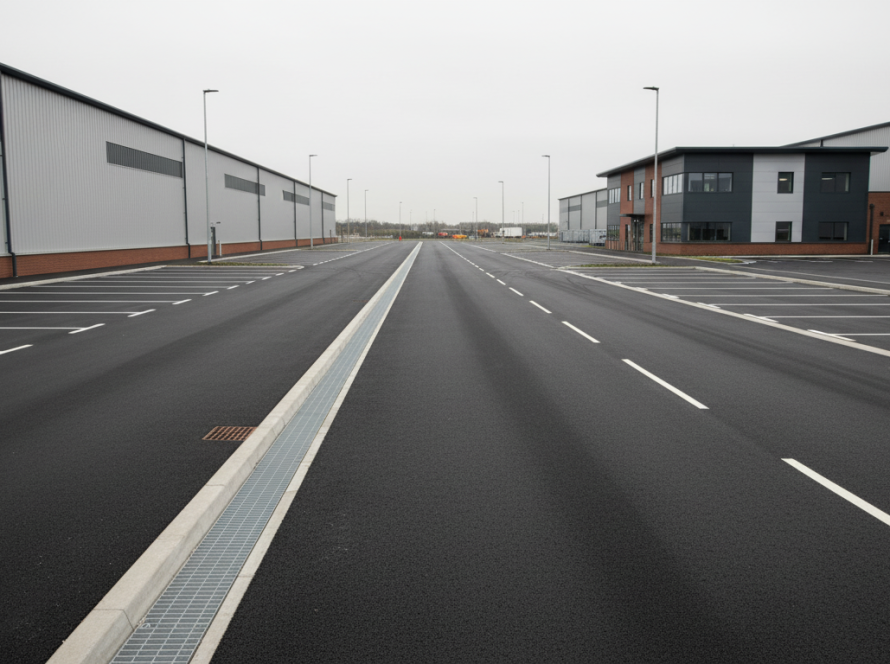
Business parks and commercial estates rely on their internal road networks far more than many property owners initially realise. These access routes support daily vehicle movements, delivery traffic, service vehicles, visitors, and in many cases heavy goods vehicles. Unlike residential streets, these roads are often under constant load throughout the working day, with peak pressure concentrated around entrances, junctions, parking areas, and service yards.
Business park road surfacing in the UK must therefore be approached as a long-term infrastructure investment rather than a cosmetic improvement. The surface needs to provide strength, durability, and consistency while maintaining a professional appearance that reflects well on the businesses operating on site. Poor surfacing choices or rushed installation often result in premature deterioration, increased maintenance costs, and avoidable disruption to tenants.
Why Commercial Estates Require a Different Surfacing Approach
Roads within business parks differ significantly from public highways and private domestic driveways. They are usually privately owned and maintained, which places full responsibility for safety and condition on the property owner or managing agent. This responsibility includes ensuring surfaces remain compliant, accessible, and fit for purpose throughout their lifespan.
Commercial estates often experience a mix of traffic types. Cars, vans, articulated lorries, refuse vehicles, and emergency access all place different stresses on the surface. This combination means that standard domestic-grade construction is rarely sufficient. Professional commercial surfacing and road surfacing services are designed specifically to address these demands, taking into account load-bearing requirements, turning stress, and long-term wear.
Site Assessment and Planning for Business Park Road Surfacing
Every business park presents unique challenges. Some estates were developed in phases over many years, leading to inconsistent road construction and varying levels of deterioration. Others may be modern developments with tight access routes, landscaped boundaries, and active businesses operating throughout the day.
A thorough site assessment is essential before any surfacing work begins. This assessment considers existing surface condition, underlying structure, drainage performance, traffic flow, and future usage expectations. Planning must also account for access management, ensuring that tenants can continue operating safely while works are carried out. For many sites, phased surfacing is the most practical solution, allowing sections to be completed without closing the entire estate.
Sub-Base and Structural Requirements for Commercial Roads
The long-term performance of business park road surfacing in the UK depends heavily on what lies beneath the surface. The sub-base must be capable of distributing heavy loads evenly and resisting movement over time. Inadequate sub-base construction is one of the most common causes of early surface failure on commercial estates.
Where existing roads show signs of deformation, cracking, or rutting, remedial work to the sub-base may be required before resurfacing. Simply overlaying a new surface without addressing underlying issues often leads to recurring problems. Professional contractors experienced in tarmac installation for road surfacing will assess whether full reconstruction, partial strengthening, or overlay solutions are most appropriate for the site.
Choosing the Right Surfacing Materials
Material selection plays a key role in the durability and appearance of business park roads. Asphalt and tarmac remain the most commonly used materials for commercial estates due to their strength, flexibility, and cost-effectiveness. These materials perform well under heavy traffic and can be tailored to suit different areas within the site.
High-stress zones such as entrances, junctions, and turning areas may require thicker surface courses or specialist asphalt mixes to resist deformation. Straight access roads with consistent traffic patterns can often use standard commercial-grade materials without compromising performance. The goal is to balance structural strength with efficient use of materials, ensuring long-term value rather than unnecessary overspecification.
Drainage Considerations for Business Parks and Estates
Effective drainage is critical to the lifespan of commercial road surfaces. Standing water accelerates surface deterioration, increases the risk of potholes, and creates safety hazards for vehicles and pedestrians. Business parks often feature large impermeable areas, which can place significant strain on drainage systems during periods of heavy rainfall.
Road surfacing works should integrate with existing drainage infrastructure, ensuring that surface falls direct water towards channels, gullies, or soakaways. Where drainage issues are already present, addressing them during resurfacing works can prevent ongoing maintenance problems. Proper drainage design also helps protect adjacent landscaping and building foundations from water damage.
Installation Methods and Minimising Disruption
One of the key challenges of business park road surfacing is managing disruption. Unlike residential projects, commercial estates cannot simply be closed for extended periods. Businesses rely on uninterrupted access for staff, customers, and deliveries.
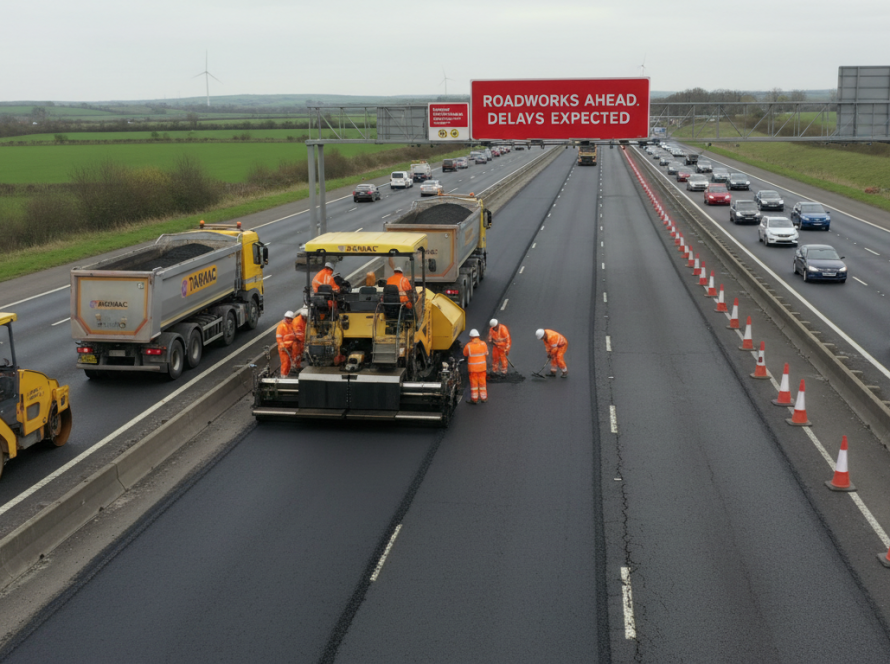
Modern installation techniques, including machine-laid tarmac, allow large areas to be surfaced efficiently and to a consistent standard. Machine laying improves compaction and surface regularity, reducing the risk of weak points and extending service life. Combined with careful scheduling and clear communication, this approach helps minimise downtime and maintain safe access throughout the project.
Safety and Compliance on Commercial Estates
Health and safety considerations are central to road surfacing for business parks. Uneven surfaces, potholes, and poor drainage all increase the risk of accidents and potential liability claims. Property owners have a duty of care to ensure that roads are safe for all users, including pedestrians crossing car parks and service areas.
Clear line markings, appropriate surface textures, and well-defined access routes contribute to overall site safety. Addressing defects promptly through planned maintenance or targeted pothole repairs can prevent minor issues from escalating into costly repairs or safety incidents.
Long-Term Maintenance and Asset Management
Business park road surfacing should be viewed as part of a broader asset management strategy. Even the highest-quality surfaces require maintenance over time. Regular inspections allow early identification of wear, drainage issues, or structural movement, enabling proactive intervention.
Planned maintenance extends the lifespan of the surface and spreads costs more predictably. This approach is particularly valuable for multi-tenant estates, where unexpected repair works can cause significant disruption and dissatisfaction. By investing in professional installation and ongoing care, property owners can protect both the functionality and appearance of their commercial environments.
Enhancing the Professional Appearance of Business Parks
The condition of internal roads has a direct impact on how a business park is perceived. Well-maintained surfaces contribute to a positive first impression for visitors, clients, and prospective tenants. Conversely, cracked or uneven roads can undermine the overall image of the estate, regardless of the quality of the buildings themselves.
Consistent surfacing, clean edges, and properly defined access routes create a cohesive and professional appearance. When combined with landscaping and clear signage, high-quality road surfacing supports the reputation and long-term value of the entire site.
Investing in Durable Business Park Road Surfacing
Business park road surfacing in the UK requires careful planning, technical expertise, and an understanding of commercial operating environments. By focusing on structural integrity, appropriate materials, effective drainage, and efficient installation, property owners can achieve surfaces that perform reliably under heavy use.
A considered approach not only reduces long-term maintenance costs but also supports safety, accessibility, and professional presentation across the estate. For business parks and commercial developments, high-quality road surfacing is a practical investment that delivers ongoing operational and reputational benefits.