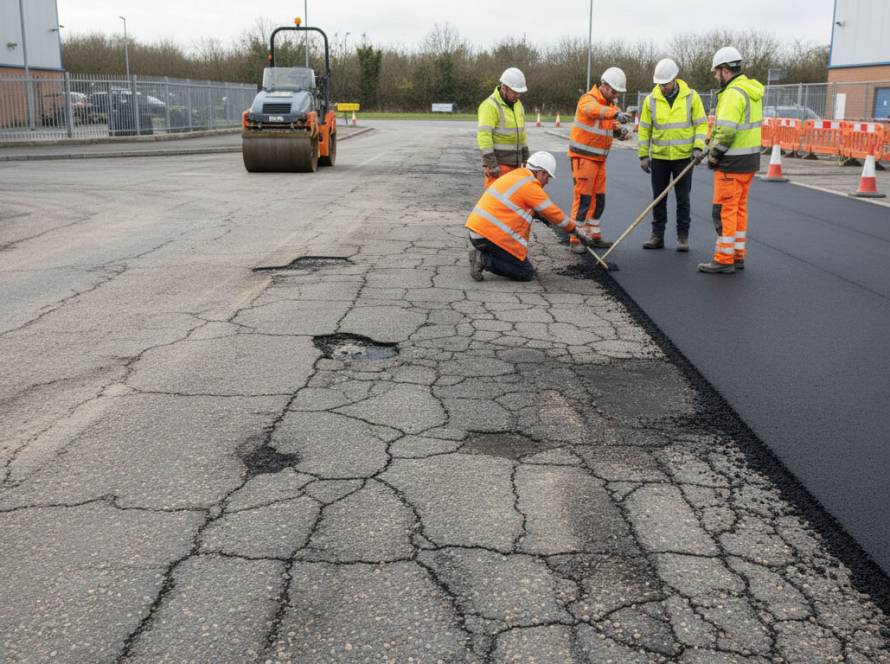
Compaction is one of the most critical stages in any road surfacing project, yet it is often misunderstood by property owners and site managers. In simple terms, compaction is the process of compressing the laid asphalt or tarmac to remove air voids and ensure the material forms a dense, stable surface. In the context of road surfacing compaction UK standards, this process directly affects how long a surface will last, how well it handles traffic loads, and how resistant it is to weather damage.
When compaction is carried out correctly, the finished surface becomes structurally sound and evenly bonded. Poor or inconsistent compaction, on the other hand, leaves weaknesses within the surface that may not be immediately visible but will almost certainly lead to premature deterioration. Understanding the role compaction plays allows clients to appreciate why professional installation methods are essential rather than optional.
What Compaction Achieves Beneath the Surface
Compaction does far more than simply smooth the top layer of a road. Its primary function is to increase the density of the surfacing material so it behaves as a single, unified structure. By reducing air pockets within the asphalt, compaction limits the amount of water that can penetrate the surface. In the UK climate, where rainfall is frequent, this is particularly important for protecting the sub-base and preventing freeze-thaw damage during colder months.
Another key outcome of proper compaction is improved load distribution. Vehicles exert repeated pressure on the surface, and without sufficient compaction, that pressure concentrates on weak points. Over time, these areas begin to deform, leading to ruts, cracks, and surface movement. Effective road surfacing compaction UK practices ensure that traffic loads are spread evenly across the structure, reducing stress and extending service life.
The Relationship Between Compaction and Surface Longevity
Surface longevity is closely tied to how well compaction is carried out during installation. Even high-quality materials will fail early if they are not compacted correctly. The reason lies in the bond between aggregate particles. Compaction forces these particles together, allowing the bitumen binder to fully coat and lock them in place.
A well-compacted surface resists movement under traffic and maintains its shape over time. This is particularly important for access roads, commercial yards, and shared driveways where turning vehicles and heavy loads are common. Professional contractors experienced in tarmac installation understand how to achieve the correct density for different applications, ensuring the surface performs as intended rather than degrading prematurely.
Compaction Timing and Temperature Control
Timing plays a significant role in successful compaction. Asphalt must be compacted while it remains within a specific temperature range. If compaction begins too early, the material may still be too fluid, causing displacement rather than densification. If it starts too late, the asphalt cools and stiffens, making it impossible to achieve the required density.
In road surfacing compaction UK projects, experienced teams monitor material temperature closely and coordinate rolling patterns to match site conditions. This level of control is difficult to achieve without specialist equipment and trained operatives. For larger or more demanding projects, machine lay tarmac is often used to maintain consistent material thickness and temperature, allowing compaction to be carried out efficiently and evenly.
How Compaction Methods Vary by Project Type
Not all road surfacing projects require the same compaction approach. Residential access roads, private lanes, and commercial service areas each present different challenges. Light-use surfaces may require fewer passes with compaction equipment, while high-traffic areas demand more intensive rolling to meet performance expectations.
In commercial environments, such as business parks or industrial estates, compaction must account for frequent HGV movements and static loading. Here, the goal is to create a surface capable of resisting deformation over time. Contractors specialising in commercial surfacing tailor their compaction techniques to suit these demands, ensuring compliance with industry standards and long-term durability.
The Impact of Poor Compaction on Road Performance
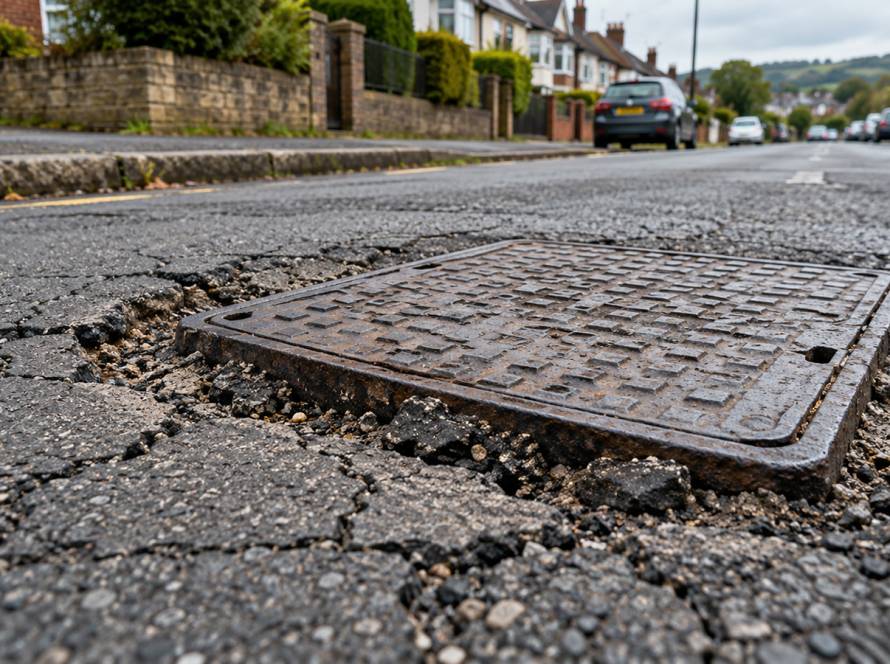
When compaction is inadequate, problems often appear sooner than expected. The surface may look acceptable initially, but underlying weaknesses begin to show as traffic and weather take their toll. Common symptoms include early cracking, surface fretting, and visible depressions in wheel paths.
Water ingress is another major consequence of poor compaction. Gaps within the surface allow moisture to reach the lower layers, weakening the structure from beneath. Over time, this can lead to potholes and widespread surface failure, requiring remedial work or even full resurfacing. Many reactive repairs addressed through pothole repairs can be traced back to insufficient compaction during the original installation.
Compaction and Compliance with UK Standards
UK road surfacing standards place a strong emphasis on compaction because of its proven impact on performance and safety. Contractors are expected to achieve specified density levels to ensure surfaces meet design requirements. These standards are particularly relevant for developments where access roads must remain serviceable and safe for a range of users.
By adhering to established road surfacing compaction UK guidelines, professional contractors reduce the risk of future liability and maintenance costs for property owners. Compliance is not just about meeting technical benchmarks; it is about delivering a surface that performs reliably in real-world conditions.
Why Professional Expertise Makes the Difference
Compaction is not a task that can be effectively improvised. It requires a clear understanding of material behaviour, site conditions, and equipment operation. Professional surfacing teams bring this expertise to every project, adjusting techniques based on weather, access constraints, and intended use.
For clients, this means greater confidence in the finished surface. A professionally compacted road is smoother, stronger, and far more resilient than one installed without proper control. Over the lifespan of the surface, this translates into fewer repairs, reduced disruption, and better value for money.
Considering Compaction at the Planning Stage
Effective compaction should be considered from the earliest planning stages of a road surfacing project. Decisions around material selection, layer thickness, and installation method all influence how compaction will be carried out. By engaging experienced contractors early, property owners and site managers can ensure these factors are aligned from the outset.
Proper planning also allows for realistic scheduling, ensuring compaction is completed under suitable conditions rather than rushed to meet deadlines. In the long term, this approach supports better outcomes and reduces the likelihood of premature surface failure.
Compaction as the Foundation of a Reliable Surface
Road surfacing compaction UK practices form the foundation of any successful installation. While it may not be the most visible aspect of a project, its importance cannot be overstated. A well-compacted surface delivers strength, stability, and longevity, protecting the investment made in new surfacing works.
For anyone responsible for managing access roads, private lanes, or commercial surfaces, understanding the role of compaction helps set realistic expectations and highlights the value of professional workmanship. It is this attention to detail during installation that ultimately determines how a road performs for years to come.