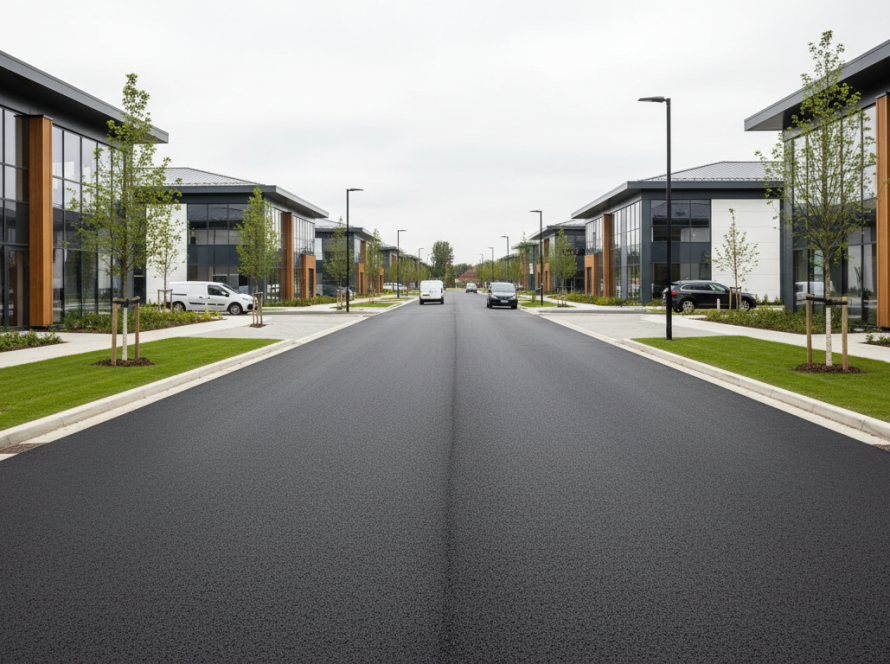
Utility trenches are a necessary part of modern infrastructure. They allow essential services such as water, gas, electricity, and telecommunications to be installed beneath road surfaces. While these installations are vital, they can significantly influence the structural integrity and long-term performance of a road.
In the context of utility trenches road lifespan UK considerations, the issue is not simply the presence of trenches, but how they are planned, constructed, and reinstated. Poorly managed trench work often leads to early deterioration, uneven surfaces, and recurring maintenance issues, all of which reduce the expected lifespan of the road.
For property owners and commercial site managers, understanding how these trenches interact with road construction helps in making informed decisions about installation standards and long-term maintenance planning.
How Utility Trenches Disrupt Road Structure
Roads are designed as layered systems, with each layer serving a specific purpose. The sub-base provides foundational support, the base layer distributes loads, and the surface layer delivers durability and skid resistance. When a trench is cut into this structure, the continuity of these layers is broken.
This disruption creates a weak point within the road. Even if the trench is backfilled and resurfaced, it rarely matches the original structural integrity unless reinstated to a high standard. Differences in compaction, material quality, and bonding between old and new surfaces can all contribute to premature failure.
Over time, traffic loading exacerbates these weaknesses. Heavy vehicles, in particular, place repeated stress on reinstated trenches, often leading to depressions, cracking, and eventual pothole formation. This is why professional approaches to tarmac installation are critical when dealing with reinstated surfaces.
The Role of Backfilling and Compaction
One of the most important factors affecting utility trenches road lifespan UK outcomes is the quality of backfilling and compaction. When trenches are filled, the material used must be appropriate for the road’s intended use, and it must be compacted in layers to prevent settlement.
Inadequate compaction is a common cause of trench failure. If voids remain within the backfill material, the surface above can sink over time. This creates uneven road profiles, which not only affect usability but also accelerate wear on surrounding areas.
Proper compaction techniques ensure that the reinstated section performs similarly to the original structure. This is particularly important in high-traffic environments such as commercial estates, where durability is essential. Engaging experienced contractors who specialise in commercial surfacing helps ensure that reinstatement meets the required standards.
Water Ingress and Drainage Issues
Utility trenches can also introduce drainage challenges. When a trench is cut and refilled, it may create pathways for water to penetrate the road structure. This is especially problematic if the reinstatement does not fully seal the surface or if the materials used are more permeable than the surrounding layers.
Water ingress weakens the sub-base and base layers, reducing their load-bearing capacity. In colder conditions, trapped water can freeze and expand, leading to cracking and surface deformation. Over time, this cycle of water penetration and temperature fluctuation significantly shortens road lifespan.
Effective drainage design and proper sealing of reinstated trenches are therefore essential. Without these measures, even a well-constructed road can experience premature deterioration due to moisture-related damage.
Differential Settlement and Surface Irregularities
Another key issue associated with utility trenches is differential settlement. This occurs when the reinstated trench settles at a different rate than the surrounding road. The result is an uneven surface that can create dips or ridges along the trench line.
These irregularities are more than just cosmetic concerns. They can affect vehicle handling, increase wear and tear on tyres and suspension systems, and create safety hazards for both drivers and pedestrians.
From a maintenance perspective, differential settlement often leads to repeated repairs. Addressing these issues early through proper construction methods is far more cost-effective than ongoing patchwork solutions. Where problems have already developed, targeted pothole repairs can help restore surface integrity, although they do not replace the need for proper initial reinstatement.
The Importance of Material Compatibility
Material selection plays a significant role in determining how well a reinstated trench performs over time. Using materials that are incompatible with the existing road structure can lead to bonding issues and uneven wear.
For example, if the reinstated surface has different thermal properties or flexibility compared to the surrounding material, it may expand and contract at a different rate. This can result in cracking along the trench edges, which then allows water to enter and further degrade the structure.
Ensuring compatibility between old and new materials is a fundamental aspect of professional road surfacing. Techniques such as machine lay tarmac help achieve a consistent finish and improve bonding between layers, reducing the risk of long-term issues.
Traffic Load and Long-Term Performance
Traffic loading is a critical factor in assessing utility trenches road lifespan UK outcomes. Roads that experience frequent heavy vehicle use are particularly vulnerable to trench-related failures.
Each time a vehicle passes over a reinstated trench, it applies stress to that section of the road. If the trench has not been properly constructed, these repeated loads can quickly lead to deformation and cracking. Over time, the damage can spread beyond the trench itself, affecting adjacent areas of the road.
Designing trench reinstatement with expected traffic loads in mind is essential. This includes selecting appropriate materials, ensuring sufficient compaction, and applying adequate surface thickness. Without these considerations, even minor trenches can become major maintenance liabilities.
Best Practices for Minimising Impact
Reducing the negative impact of utility trenches on road lifespan requires a combination of careful planning, skilled execution, and ongoing maintenance. Coordination between utility providers and surfacing contractors is particularly important to ensure that trench work does not compromise the overall road structure.
High-quality reinstatement techniques focus on restoring the road to its original condition as closely as possible. This involves precise excavation, proper layering of materials, thorough compaction, and seamless integration with the existing surface.
Regular inspections also play a key role. Identifying early signs of settlement or cracking allows for timely intervention, preventing minor issues from developing into more serious problems.
Long-Term Cost Implications
From a financial perspective, poorly managed utility trenches can lead to significant long-term costs. Frequent repairs, reduced road lifespan, and potential safety risks all contribute to increased expenditure over time.
Investing in high-quality reinstatement at the outset is often more economical than dealing with repeated maintenance. For commercial property owners and site managers, this approach supports operational efficiency and helps maintain a professional appearance for the site.
In many cases, working with experienced surfacing specialists ensures that both initial installation and subsequent maintenance are carried out to a high standard, protecting the road asset for years to come.
Conclusion
Utility trenches are an unavoidable aspect of modern infrastructure, but their impact on road lifespan should not be underestimated. When poorly executed, they introduce structural weaknesses, drainage issues, and long-term maintenance challenges.
By focusing on proper planning, material selection, compaction, and professional installation methods, it is possible to minimise these risks. For UK property owners and commercial site managers, understanding these factors is key to maintaining durable, safe, and cost-effective road surfaces.