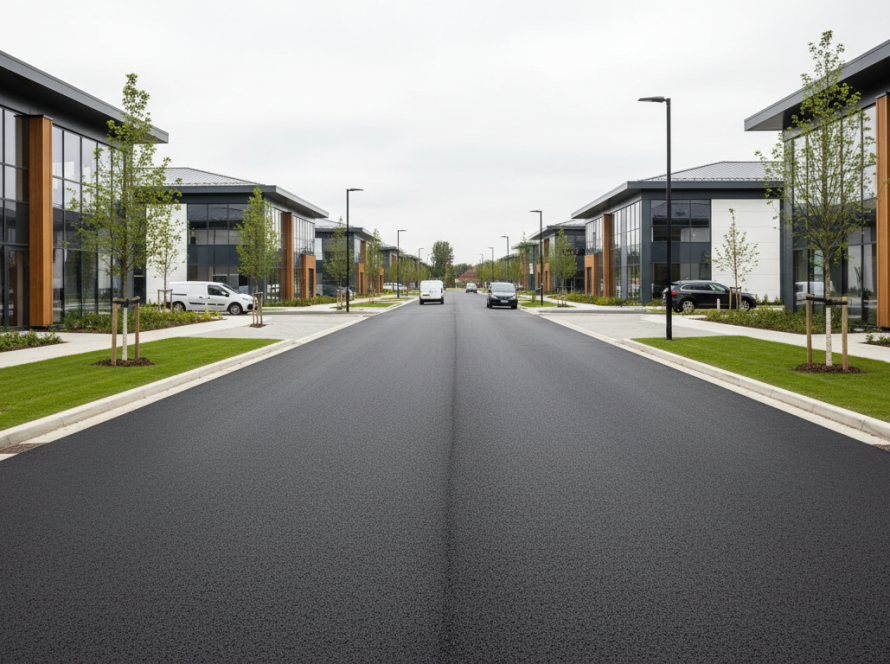
In the UK, weather is rarely predictable. Extended periods of rainfall, sudden downpours and persistent damp conditions are part of everyday project planning. For property owners and commercial site managers, understanding the road surfacing rain impact UK projects face is essential when scheduling works, budgeting for improvements and ensuring long-term durability.
Road surfacing is not simply about laying material over an existing area. It is a structured construction process involving excavation, sub-base preparation, drainage management, binder application and surface compaction. Each stage can be affected by water. When heavy rain is introduced at the wrong point in the process, it can compromise strength, stability and surface lifespan.
Professional planning reduces these risks significantly, but weather awareness remains a critical factor in achieving a reliable finished surface.
Why Rain Affects Road Surfacing Performance
Water influences road construction in several ways. While completed and properly compacted surfaces are designed to shed water efficiently, surfaces under construction are far more vulnerable.
Moisture and the Sub-Base
The sub-base provides structural support for the finished surface. It is typically formed using well-compacted aggregate designed to distribute load evenly. Excess moisture in the sub-base weakens its load-bearing capacity. When ground conditions become saturated, compaction quality can be reduced and movement may occur beneath the surface.
If surfacing is installed over a wet or unstable sub-base, early deformation can follow. This may appear as rutting, settlement or cracking within months of completion. That is why experienced contractors carefully assess ground conditions before proceeding with any stage of commercial surfacing and road surfacing.
Adhesion and Surface Layers
Bituminous materials such as tarmac rely on heat and proper bonding to create a cohesive surface. Heavy rain during installation can interfere with adhesion between layers. Surface water can cool hot materials too quickly, affecting compaction and leading to reduced density.
Poor bonding increases the risk of surface defects, including fretting, cracking and premature wear under traffic.
Compaction and Structural Integrity
Compaction is one of the most critical stages in any road surfacing project. Without correct compaction, even high-quality materials will fail to perform as intended. When rainfall occurs during or immediately after laying, moisture can reduce the effectiveness of compaction equipment.
Lower density means increased permeability, allowing water to penetrate the surface more easily in future. Over time, this accelerates deterioration, particularly during freeze-thaw cycles common in UK winters.
Drainage Planning in Wet Conditions
The UK climate demands that drainage is not treated as an afterthought. Managing water effectively is central to reducing the road surfacing rain impact UK sites encounter.
Surface Water Control
Well-designed road surfaces incorporate appropriate falls and gradients to direct water away efficiently. During heavy rain, standing water on unfinished surfaces can indicate insufficient levels or blocked drainage paths. Addressing this immediately prevents long-term performance issues.
Proper installation techniques, including precision grading and consistent layer thickness, are fundamental parts of professional tarmac installation.
Sub-Surface Drainage
In areas prone to saturation, additional drainage measures may be required. Perforated pipes, soakaways or improved edge drainage can help manage groundwater and reduce pressure beneath the surface layers.
Without adequate sub-surface drainage, water can accumulate beneath the pavement structure, softening the formation layer and contributing to structural failure over time.
Project Delays and Scheduling Challenges
Heavy rainfall does not simply affect material performance. It also impacts scheduling and logistics.
Site Access and Equipment Movement
Construction vehicles require stable ground conditions. Persistent rain can soften surrounding land, making it difficult for plant machinery to access the working area safely. Delays may occur while ground stabilisation measures are implemented.
For commercial properties where access roads must remain operational, careful phasing is essential. In such cases, temporary surfacing or staged works may be introduced to maintain operational continuity.
Temperature and Curing Considerations
Rain often coincides with lower temperatures. Bituminous materials require suitable ambient and ground temperatures to cure effectively. Attempting to lay surfacing in cold, wet conditions increases the likelihood of inadequate bonding and reduced durability.
Professional contractors will postpone works when conditions fall outside acceptable parameters rather than risk compromised results.
Long-Term Consequences of Poor Weather Management
Failing to account for heavy rainfall during road surfacing works can lead to recurring maintenance issues.
Surface Cracking and Water Ingress
When initial installation is compromised by moisture, micro-voids may remain within the surface. These allow water to penetrate more easily. Over time, repeated saturation weakens the internal structure and contributes to cracking.
Cracks allow further water ingress, accelerating the deterioration cycle.
Pothole Formation
One of the most visible outcomes of unmanaged water damage is pothole formation. Water entering small defects expands during freezing conditions, breaking apart the surrounding material. Traffic then exacerbates the damage.
Addressing early defects promptly through professional pothole repairs prevents wider structural issues from developing.
Reduced Surface Lifespan
Ultimately, inadequate weather planning shortens the life expectancy of the road surface. What should last many years may require early intervention, increasing overall lifecycle costs for the property owner.
How Professional Contractors Mitigate Rain Risks
Experienced surfacing specialists adopt several practical measures to manage the road surfacing rain impact UK projects face.
Pre-Construction Planning
Weather forecasting plays a central role in project scheduling. Contractors monitor short-term and medium-term forecasts to identify suitable working windows. Flexible scheduling allows works to proceed during optimal conditions rather than fixed calendar dates.
Moisture Testing and Ground Assessment
Before surfacing begins, ground moisture levels are assessed. If saturation is detected, additional drying time or stabilisation may be required. Proceeding only when conditions are suitable protects long-term performance.
Protective Measures During Installation
Where light showers occur unexpectedly, protective sheeting and temporary drainage channels may be used to shield exposed layers. However, heavy rain typically requires suspension of works until conditions improve.
Professional use of machine lay tarmac ensures consistent depth and compaction, reducing vulnerability to weather-related inconsistencies.
Planning Road Surfacing in the UK Climate
For property owners considering resurfacing works, timing can influence both project cost and quality.
Spring and summer often provide more favourable conditions, although rainfall remains possible year-round. Autumn projects require careful planning due to increased precipitation and falling temperatures. Winter installations are generally limited to urgent repair situations unless weather conditions are unusually stable.
When planning upgrades or new access roads, discussing weather contingencies early ensures realistic expectations regarding scheduling and completion.
Balancing Urgency with Quality
Certain situations require urgent intervention despite poor weather. Safety concerns, structural failures or access restrictions may necessitate immediate action. In such cases, temporary repairs can restore functionality while permanent resurfacing is scheduled under suitable conditions.
Balancing urgency with quality protects both safety and long-term value. Attempting full resurfacing during sustained heavy rain often results in avoidable future costs.
Protecting Investment Through Informed Decisions
Road surfacing represents a significant investment for commercial premises, business parks, agricultural facilities and private estates. Understanding the road surfacing rain impact UK conditions create allows property owners to make informed decisions.
Professional assessment, appropriate scheduling and effective drainage planning reduce the risk of early surface deterioration. By recognising the influence of heavy rainfall on each stage of construction, site managers can ensure that works are completed under conditions that support durability and compliance.
In a climate where rain is an unavoidable factor, proactive planning and experienced installation are the most reliable safeguards against premature surface failure.