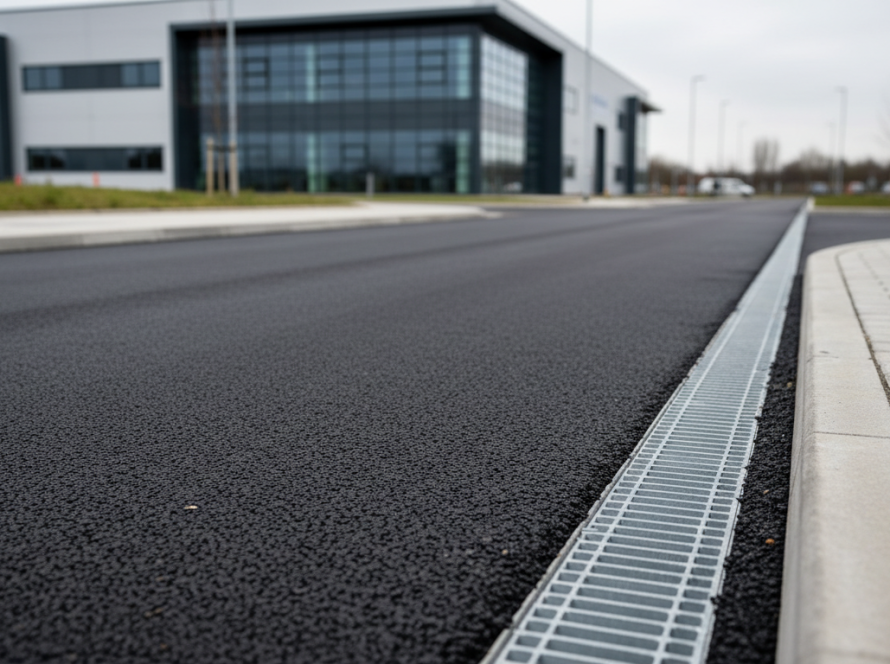
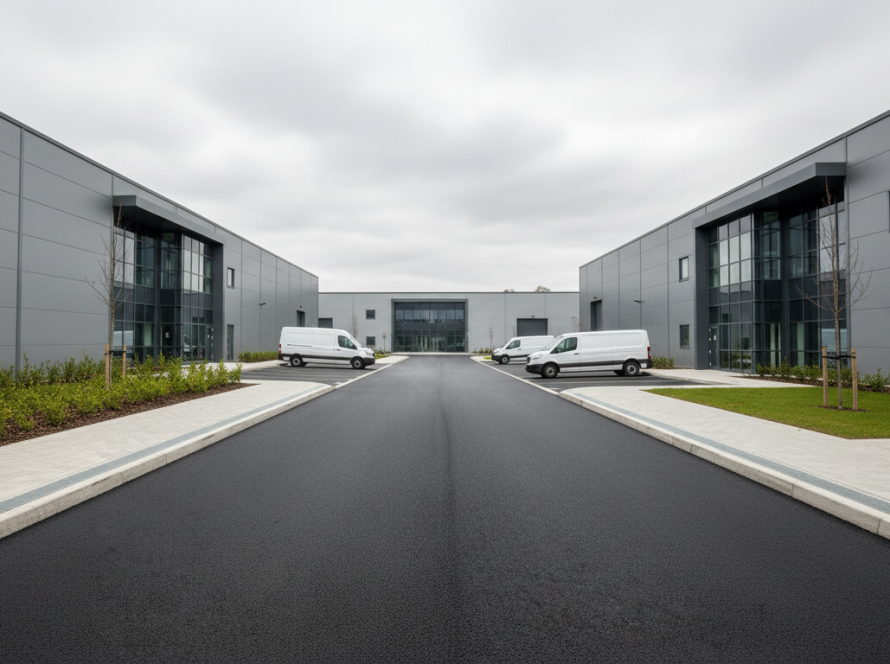
Road surfacing upgrades UK projects play a critical role in successful redevelopment schemes. Whether refurbishing an ageing industrial estate, modernising a retail park, or converting brownfield land into residential use, the condition and specification of the road network directly influence safety, access, and long-term value.
In many redevelopment settings, existing road infrastructure was installed decades ago. Traffic volumes may have increased, vehicle weights may have changed, and original construction standards may no longer meet modern requirements. Surface wear, structural fatigue, drainage issues, and outdated layouts are common findings during pre-construction assessments.
Upgrading the road surface is not simply about visual improvement. It is about creating a durable, compliant, and functional access network that supports the new purpose of the site.
Assessing Existing Road Infrastructure
Structural Integrity of the Current Surface
Before undertaking road surfacing upgrades UK site managers must understand what lies beneath the visible layer. Surface cracking, rutting, potholes, and patchwork repairs often indicate deeper structural weaknesses within the sub-base or binder course.
A professional assessment typically examines the depth of existing construction, load-bearing performance, and drainage provision. In some cases, a surface overlay may be suitable. In others, full reconstruction is required to meet modern standards and anticipated traffic demands.
Ignoring underlying structural defects during redevelopment can result in recurring maintenance problems that undermine the wider investment.
Drainage and Water Management
Older sites frequently suffer from poor drainage design. Blocked gullies, insufficient falls, and inadequate channel capacity can lead to standing water, which accelerates surface deterioration.
Redevelopment offers an opportunity to correct these shortcomings. Upgraded drainage systems integrated within commercial road surfacing schemes improve resilience, reduce maintenance costs, and protect surrounding buildings from water-related damage.
Effective water management is particularly important in mixed-use schemes, where pedestrian safety and vehicle traction must both be considered.
Matching Surface Design to New Site Demands
Changes in Traffic Volume and Load
Redevelopment projects often alter the type and frequency of traffic using the site. A former light industrial yard may become a logistics hub with regular HGV movements. A disused commercial property may be converted into residential apartments with private vehicles and service access requirements.
Road surfacing upgrades UK specifications must reflect these changes. Thickness design, aggregate grading, and binder selection all need to accommodate anticipated load categories. Installing a surface designed for light traffic in a heavy-use environment leads to premature deformation and cracking.
Modern surfacing design ensures the upgraded road can withstand both current and future demands.
Improving Traffic Flow and Layout
Redevelopment frequently involves reconfiguring access points, junctions, and turning areas. Updated layouts improve safety, visibility, and operational efficiency.
During resurfacing works, kerb lines may be adjusted, radii improved, and access widths expanded. These changes require precise construction techniques to ensure structural integrity across new and existing sections.
The use of professional machine lay tarmac allows for consistent surface levels and smooth transitions, particularly across widened carriageways or newly formed junctions.
Overlay Versus Full Reconstruction
When an Overlay Is Appropriate
In some redevelopment scenarios, the existing road structure remains fundamentally sound. Surface wear may be limited to the upper layer, with no significant sub-base failure. In such cases, a carefully designed overlay can restore performance and extend lifespan.
Overlay solutions involve preparing the existing surface, addressing localised defects, and applying a new asphalt layer to improve durability and appearance. This approach is typically faster and more cost-effective than full reconstruction, making it attractive where budgets are tightly managed.
However, overlays are only suitable where structural assessments confirm adequate support beneath.
When Full Reconstruction Is Necessary
Where underlying layers are compromised, road surfacing upgrades UK projects may require excavation and complete rebuild. This is common in older industrial estates where repeated patch repairs have masked progressive failure.
Full reconstruction allows contractors to install a new sub-base, binder course, and surface layer designed to modern standards. Although more disruptive initially, it provides a long-term solution aligned with the redevelopment’s lifespan expectations.
Choosing the correct approach requires technical evaluation rather than aesthetic judgement alone.
Minimising Disruption During Redevelopment
Phased Surfacing Works
Redevelopment sites are often active environments, with construction teams, deliveries, and tenants operating simultaneously. Closing the entire road network is rarely practical.
Phased surfacing works allow sections to be completed sequentially, maintaining safe access throughout the programme. Careful planning ensures that completed areas are protected while adjacent works continue.
This staged approach reduces disruption and helps maintain operational continuity, particularly on business parks and commercial estates.
Coordination with Other Trades
Road surfacing typically occurs towards the latter stages of redevelopment. However, coordination with groundworkers, drainage contractors, utility providers, and landscaping teams is essential.
Installing the final surface before underground services are complete can result in costly rework. Clear sequencing ensures that surfacing upgrades occur at the correct stage, avoiding unnecessary excavation of newly laid materials.
Professional planning reduces risk and protects project budgets.
Enhancing Aesthetic and Perceived Value
First Impressions Matter
While structural performance is critical, visual presentation also carries weight. Redevelopment projects aim to improve site perception and attract tenants, customers, or buyers.
A clean, well-laid surface with defined markings and consistent levels creates a professional impression. Faded, cracked, or patchy roadways undermine the overall appearance of even high-quality building refurbishments.
Road surfacing upgrades UK schemes therefore contribute directly to the commercial appeal of redeveloped properties.
Surface Finishes and Detailing
Modern asphalt finishes provide a smooth, uniform appearance suitable for a wide range of commercial and residential environments. In certain schemes, contrasting materials or edge detailing may be incorporated to enhance visual distinction between pedestrian and vehicle areas.
Where access roads connect to residential driveways or shared spaces, integrating finishes such as those seen in resin driveways can create cohesive transitions while maintaining structural durability.
Attention to detail ensures the upgraded road network complements the overall redevelopment vision.
Compliance with Modern Standards
Health and Safety Requirements
Redevelopment provides an opportunity to align road infrastructure with current health and safety standards. Improved skid resistance, appropriate camber for drainage, and clearly defined access routes reduce accident risk.
In commercial environments, safe segregation between pedestrian pathways and vehicle lanes is particularly important. Proper surfacing design supports compliance with workplace safety obligations.
Environmental Considerations
Modern surfacing practices also consider environmental impact. Efficient drainage systems reduce runoff issues, and updated materials may offer improved durability, reducing the need for frequent repairs.
By investing in high-quality road surfacing upgrades UK property owners contribute to longer-lasting infrastructure with lower lifecycle maintenance demands.
Long-Term Maintenance Planning
Preventative Maintenance
Following redevelopment, maintaining the new surface is essential to protect investment. Regular inspections allow early identification of minor defects before they escalate.
Prompt intervention through targeted repairs, such as professional pothole repairs, prevents water ingress and structural weakening. Preventative maintenance is significantly more cost-effective than reactive reconstruction.
Protecting Structural Integrity
Heavy vehicle movements, particularly during the final stages of redevelopment, can stress newly laid surfaces. Managing construction traffic and allowing adequate curing time ensures the upgraded road achieves its intended lifespan.
Clear usage guidelines and weight management policies further extend durability in commercial settings.
The Strategic Importance of Road Surfacing Upgrades UK
Road surfacing upgrades UK redevelopment projects represent more than routine maintenance. They are strategic investments that support safety, operational efficiency, aesthetic improvement, and regulatory compliance.
By addressing structural weaknesses, improving drainage, updating layouts, and installing modern surfacing systems, property owners enhance both immediate usability and long-term asset value.
Professional assessment and careful planning ensure that surfacing works align with the broader redevelopment objectives. When executed correctly, upgraded road infrastructure provides a stable foundation for the site’s next phase of use.