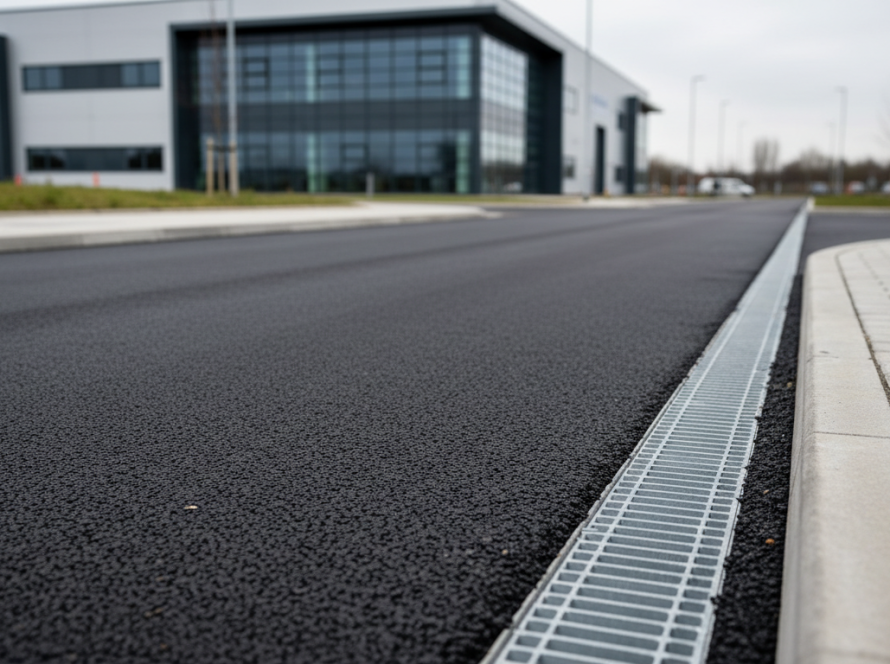
Road surfacing quality control UK processes are fundamental to delivering durable, compliant and safe roadways across commercial and private developments. For property owners and commercial site managers, the performance of a newly installed surface is not simply about appearance on completion day. It is about how that surface performs under traffic, weather exposure and long-term loading.
Quality control during installation ensures that every stage of the process, from sub-base preparation to final compaction, meets the required specification. When standards slip, defects such as premature cracking, rutting, surface fretting and drainage failure can appear far sooner than expected. In many cases, these problems can be traced back to installation errors rather than material quality alone.
A structured approach to inspection, testing and supervision reduces risk. It also protects investment by ensuring the finished surface aligns with design expectations and industry standards.
Pre-Installation Quality Checks
Effective quality control begins well before any surfacing material is laid. The groundwork phase sets the structural foundation for the entire project.
Sub-Base Assessment and Verification
The condition and specification of the sub-base directly influence load-bearing performance. Before surfacing begins, contractors should confirm that the sub-base depth, material type and compaction levels match the design requirements.
In commercial environments, particularly where heavier vehicles are expected, sub-base quality becomes even more critical. Weak or inconsistently compacted sub-bases can lead to differential settlement, which eventually reflects through to the surface layer.
A thorough inspection at this stage prevents costly remedial works later. Many professional contractors integrate this stage within their wider commercial surfacing and road surfacing services to ensure structural reliability from the ground up.
Drainage and Falls
Before installation begins, drainage design must be confirmed on site. This includes checking gradients, crossfalls and the positioning of drainage channels or gullies. If water cannot disperse effectively, surface water will accumulate and accelerate deterioration.
Quality control at this stage focuses on confirming that the prepared formation reflects the planned falls. Minor inaccuracies in levels can lead to persistent ponding once the surface is complete.
Material Control During Delivery
Once installation begins, the focus shifts to the surfacing material itself. Whether using asphalt or tarmac, consistency and temperature control are essential.
Temperature Monitoring
Bituminous materials must be laid within specific temperature ranges to ensure proper compaction and bonding. If materials arrive too cool, they may not compact sufficiently. If overheated, binder performance can be compromised.
On professional sites, temperature checks are routinely carried out on delivery and during laying. This ensures that compaction can be achieved effectively and that the surface achieves its intended density.
Temperature control is especially important in machine-laid applications. Using specialist equipment such as machine lay tarmac allows for consistent output and improved control over uniformity across larger areas.
Material Specification Compliance
Quality control also involves confirming that the delivered material matches the agreed specification. This includes binder content, aggregate size and mix design. Deviations can affect skid resistance, durability and load-bearing capacity.
Clear documentation and batch tracking provide transparency, particularly on commercial projects where compliance records may be required for auditing or warranty purposes.
Installation Stage Monitoring
The installation phase presents the greatest opportunity for quality assurance, as workmanship plays a significant role in long-term performance.
Layer Thickness Control
Correct layer thickness is essential. If a surface course is laid too thin, it may fail prematurely under traffic stress. If excessively thick without proper compaction, internal voids can remain, weakening the structure.
Regular depth checks during laying ensure consistency. These checks confirm that the installed thickness aligns with the design specification across the full carriageway width.
Compaction Standards
Compaction is one of the most critical aspects of road surfacing quality control UK practice. Proper rolling eliminates air voids, increases density and strengthens the bond between aggregates and binder.
Inadequate compaction often leads to early surface deformation or fretting. Conversely, over-compaction can damage the aggregate structure. Experienced operatives follow a structured rolling pattern to achieve uniform results.
Professional tarmac installation and road surfacing services incorporate defined compaction procedures to balance strength and finish quality.
Joint Construction and Edges
Longitudinal and transverse joints require particular attention. Poorly formed joints are common points of water ingress and cracking. Quality control at this stage ensures clean vertical faces, correct bonding agents and proper compaction at the joint interface.
Edges must also be secure and supported. Without adequate edge restraint, surfaces may spread or crack under repeated loading, particularly on access roads with turning movements.
Surface Finish and Line Checks
Once compaction is complete, visual and technical inspections assess finish quality.
Surface Evenness
Surface regularity impacts both safety and comfort. Uneven surfaces may lead to water retention or vehicle instability. Straightedges or laser-guided systems are often used to confirm compliance with tolerances.
In commercial settings, smoothness also affects operational efficiency, particularly in areas used by forklifts or delivery vehicles.
Texture and Grip
Aggregate exposure and surface texture contribute to skid resistance. Excessive binder at the surface can create a flushed appearance, reducing grip. Insufficient binder may cause early fretting.
A balanced finish ensures safe vehicle traction while maintaining durability. This balance forms a key part of road surfacing quality control UK processes.
Post-Installation Inspection and Testing
Quality control does not end when machinery leaves site. Post-installation checks confirm performance standards have been met.
Density Testing
Core samples may be taken to measure achieved density and confirm compliance with specification. These tests provide objective verification that compaction targets have been reached.
Density testing is particularly relevant on commercial access roads, business parks and construction site infrastructure where loading demands are higher.
Drainage Verification
After installation, water testing or visual inspection during rainfall can confirm effective drainage. Ensuring that surface water flows correctly prevents long-term structural damage.
If minor issues are identified early, corrective measures can be taken before more significant deterioration occurs.
Documentation and Compliance
Professional contractors maintain detailed records throughout installation. This includes delivery tickets, temperature logs, compaction records and inspection reports.
For site managers, this documentation provides assurance that installation followed recognised standards. It also supports future maintenance planning and potential warranty claims.
Clear documentation distinguishes structured quality control from informal installation practices. When road surfacing quality control UK procedures are followed thoroughly, the risk of unexpected repair costs reduces significantly.
The Cost of Poor Quality Control
When quality control is neglected, the consequences often emerge within the first few years of use. Early pothole formation, cracking and rutting are common outcomes of poor installation practice.
Reactive repairs, such as pothole repairs, can address localised failures, but repeated intervention becomes disruptive and costly. In many cases, comprehensive resurfacing may eventually be required far sooner than anticipated.
For commercial premises, surface failure can also introduce safety risks and reputational concerns. Delivery vehicles, staff traffic and visitors all rely on safe, stable access routes.
Long-Term Performance Through Professional Oversight
Road surfacing quality control UK standards exist to ensure consistency and durability across a wide range of environments, from private estates to high-traffic commercial access roads.
By prioritising structured inspection at every stage, contractors can deliver surfaces that withstand environmental exposure, traffic loading and daily operational demands. For property owners and site managers, selecting a contractor with defined quality control procedures is not simply about compliance. It is about protecting long-term asset value.
Reliable installation begins with preparation, continues through material verification and compaction monitoring, and concludes with documented testing and inspection. When each of these elements is managed carefully, the result is a surface that performs as designed for many years.