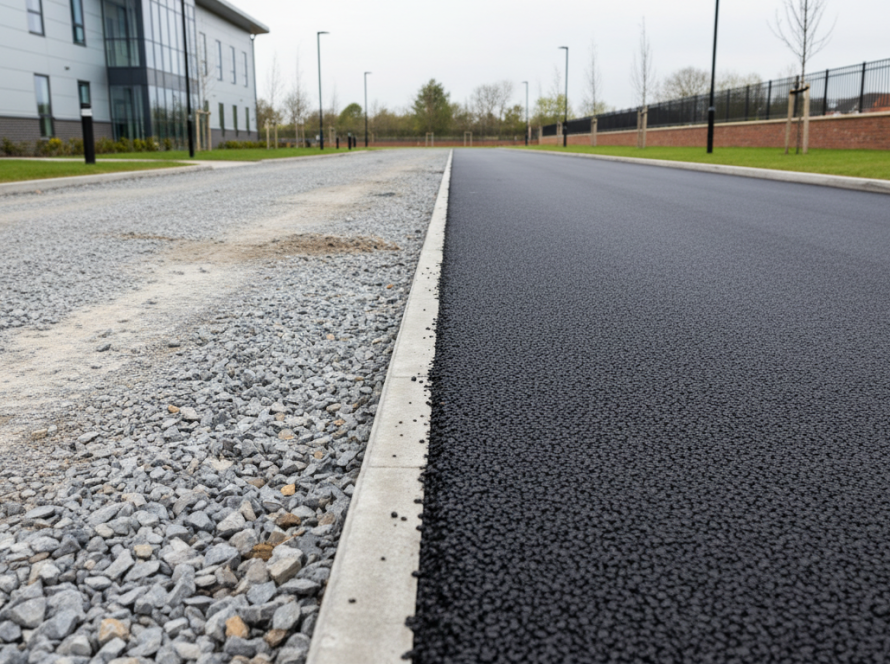
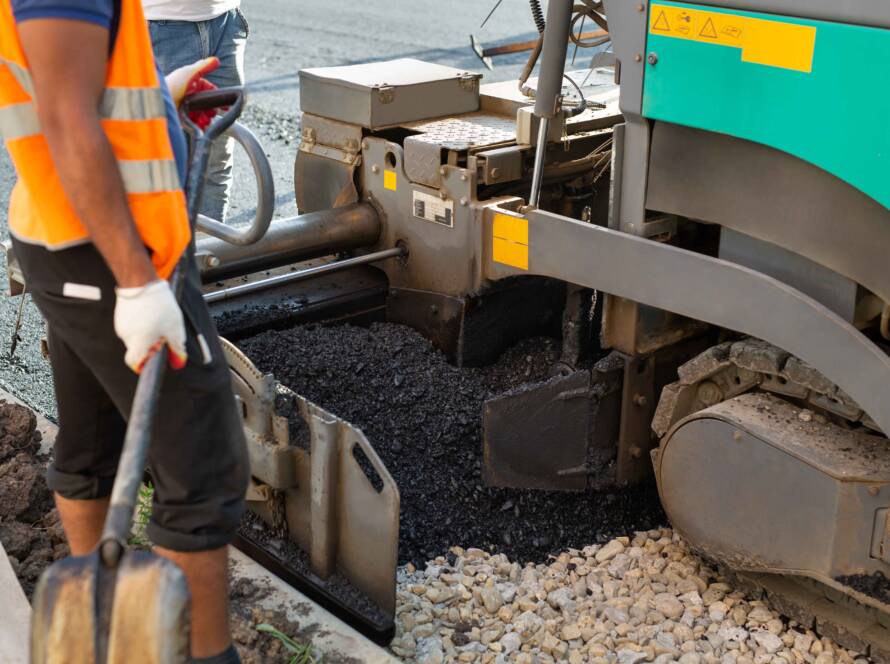
Effective water management is one of the most important factors in the success and longevity of any surfacing project. In the UK, where rainfall is frequent and weather conditions can change quickly, proper road surfacing drainage UK planning plays a critical role in maintaining safe, durable surfaces.
Many surface failures that appear to be caused by traffic or poor materials are actually linked to drainage problems. When water is not directed away from the surface correctly, it can weaken the foundation layers, cause cracking, and significantly reduce the lifespan of the road.
For property owners, commercial site managers, and developers, understanding how drainage interacts with road surfacing helps ensure that installations remain reliable for many years. Drainage is not simply an additional feature added at the end of a project. It must be considered from the earliest design stage through to the final surface installation.
Why Drainage Matters in Road Surfacing
Water is one of the most damaging forces affecting paved surfaces. Even well-installed asphalt or tarmac can deteriorate quickly if water is allowed to collect on the surface or penetrate the layers below.
Road surfaces are designed to shed water efficiently. This means rainfall must flow away from the surface and into designated drainage points rather than remaining on the roadway. When drainage is properly integrated into a project, the surface stays stable, traffic movement remains safe, and the structural layers beneath the surface remain protected.
Poor drainage leads to standing water, softening of the sub-base, and eventually surface deformation. These problems often appear gradually, but once they develop they can require extensive repairs. Professional planning ensures that water management works alongside the surfacing materials and structural design.
Many contractors providing commercial road surfacing prioritise drainage planning because it directly affects both performance and long-term maintenance requirements.
How Water Damages Road Surfaces
Surface Water Accumulation
When water remains on the surface of a road, it creates several problems. Standing water increases the risk of skidding for vehicles and accelerates the breakdown of the surfacing material. Over time, repeated saturation weakens the surface layer and encourages cracking.
Small cracks allow water to seep into deeper layers of the road structure. Once water penetrates these layers, it can begin affecting the sub-base and foundation materials.
Sub-Base Saturation
The sub-base is the structural layer that supports the road surface. It distributes vehicle loads and provides stability for the surface material. If this layer becomes saturated with water, its load-bearing capacity is reduced.
This is particularly problematic in areas with heavy vehicle traffic such as commercial estates, construction access roads, or service yards. Vehicles passing over a weakened base layer can cause surface depressions and eventual structural failure.
Proper drainage channels and surface gradients prevent water from reaching this layer, helping maintain stability across the entire structure.
Freeze-Thaw Damage
In colder periods, trapped water can freeze within the surface layers of a road. When water freezes, it expands. This expansion places pressure on the surrounding materials and can cause cracks to widen.
Once temperatures rise and the ice melts, the weakened areas allow more water infiltration. Repeated freeze-thaw cycles accelerate deterioration, especially on poorly drained surfaces.
Although freeze-thaw damage varies depending on local climate conditions, well-designed drainage significantly reduces the risk.
Surface Design and Water Flow
A well-designed road surface does not appear completely flat. Instead, it is carefully shaped to guide water away from the driving area.
One of the most common design techniques is crossfall, which introduces a slight slope from the centre of the road toward the edges. This gentle gradient allows water to run off naturally without affecting vehicle stability.
Another method is longitudinal drainage, where the surface slopes gradually along the length of the road. This directs water toward designated drainage outlets or channels.
These subtle design features are essential for managing rainfall efficiently. When surfaces are installed using professional techniques such as machine lay tarmac, contractors can maintain consistent gradients that ensure proper water flow.
Surface shaping may seem minor during installation, but it plays a major role in preventing long-term water damage.
Drainage Components in Road Surfacing
Channel Drains
Channel drains are commonly installed along the edges of roads or in areas where water is expected to accumulate. These linear drainage systems capture water flowing off the surface and direct it toward underground drainage infrastructure.
They are particularly useful in areas where surface gradients alone cannot remove water effectively. Examples include loading bays, access points, and junction areas where traffic patterns influence surface design.
Gullies and Drainage Points
Gullies act as collection points for surface water. Positioned strategically along roads or in low areas, they collect runoff and transport it into underground drainage networks.
The positioning of gullies is an important part of drainage planning. If they are placed incorrectly or spaced too far apart, water may accumulate between them and remain on the road surface.
Regular maintenance is also essential. Blocked gullies can quickly negate the benefits of a well-designed drainage system.
Edge Drainage Systems
In some installations, drainage solutions are installed along the edges of the road structure to intercept water before it reaches the sub-base. These systems are particularly useful for roads built on sloping terrain or areas with high groundwater levels.
Edge drainage reduces the risk of water infiltration and helps maintain the stability of the foundation layers beneath the road.
The Role of Ground Preparation
Drainage effectiveness begins long before the surface layer is installed. Ground preparation is a critical stage in any surfacing project because it determines how water behaves beneath the road structure.
During preparation, contractors assess soil conditions, water flow patterns, and existing drainage infrastructure. If the ground is prone to retaining water, additional measures may be required to ensure long-term stability.
A properly prepared base allows water to move away from the structure rather than collecting beneath it. This preparation stage often determines whether a road surface remains durable or begins to deteriorate prematurely.
Many issues later addressed through pothole repairs can be traced back to drainage problems within the base layers of the road.
Drainage Considerations for Commercial Access Roads
Commercial sites often place greater demands on road surfaces than residential environments. Heavy vehicles, frequent turning movements, and continuous traffic create additional stress on the road structure.
When water is present within the surface or base layers, this stress increases significantly. Even minor drainage issues can lead to surface deformation when heavy vehicles repeatedly travel over the same areas.
Access roads for warehouses, business parks, and logistics facilities require careful planning to ensure water flows away from high-traffic areas. Surface gradients, drainage channels, and sub-base design must all work together to manage rainfall effectively.
Contractors specialising in tarmac installation typically assess drainage requirements alongside traffic load calculations to ensure the road can withstand daily operational demands.
Maintenance and Drainage Performance
Even well-designed drainage systems require periodic maintenance to remain effective. Leaves, debris, and sediment can accumulate within gullies and drainage channels, restricting water flow.
Routine inspection allows property managers to identify potential issues before they affect the road surface. Clearing blocked drainage points is often a simple task but can prevent significant structural damage if carried out regularly.
Surface inspections are equally important. Cracks, depressions, or uneven areas can alter the way water flows across the road. Addressing these issues early helps maintain proper drainage patterns.
Maintenance strategies often involve both surface repairs and drainage system upkeep, ensuring the entire road structure continues functioning as intended.
Planning Drainage in New Surfacing Projects
Drainage planning should always be integrated into the early stages of road design. Waiting until surfacing work begins often limits the options available for effective water management.
Professional contractors assess several factors during planning, including site gradients, surrounding land levels, existing drainage infrastructure, and anticipated traffic loads. These assessments allow them to design drainage systems that work naturally with the landscape.
For property developers and site managers, involving experienced surfacing professionals early in the planning process ensures drainage is addressed before construction begins.
Many examples of successful installations can be seen in completed projects displayed within the company’s surfacing project portfolio, where drainage design plays a key role in long-term surface performance.
Long-Term Benefits of Proper Drainage
Investing in effective drainage during road surfacing projects delivers long-term benefits that extend beyond surface durability.
Proper drainage reduces maintenance costs by preventing structural damage. It improves safety by eliminating standing water and reducing the risk of skidding. It also ensures the road remains structurally sound even during periods of heavy rainfall.
For commercial environments, reliable road surfaces contribute to smoother operations, improved vehicle access, and reduced disruption caused by repairs.
Drainage may not always be the most visible element of a road surfacing project, but it is one of the most important. When properly designed and maintained, it protects the entire road structure and ensures that the surface continues performing effectively for many years.