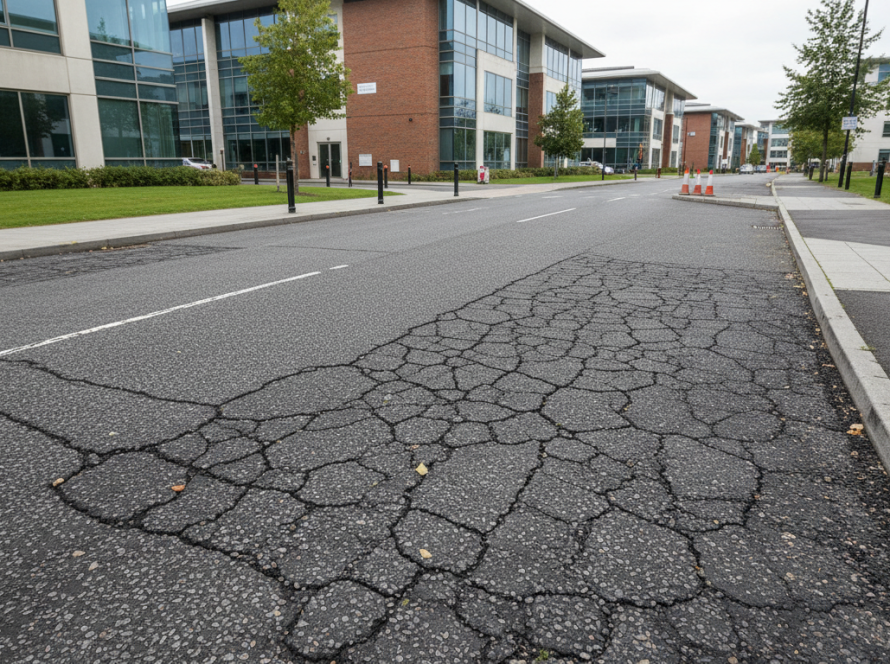
Autumn is a demanding season for commercial road infrastructure across the United Kingdom. As temperatures begin to drop and rainfall becomes more frequent, the condition of access roads, service yards, and estate roads can deteriorate rapidly if they are not properly prepared. Commercial roads often support regular traffic from delivery vehicles, staff vehicles, service fleets, and occasionally heavy goods vehicles, which means that any weaknesses in the surface or drainage system quickly become apparent when wet weather arrives.
Rainwater is one of the most significant contributors to premature surface deterioration. When water is allowed to penetrate the upper layers of a road surface, it can weaken the structure beneath and accelerate cracking, rutting, and pothole formation. Preparing commercial roads before the autumn rainfall period helps reduce the likelihood of these issues and supports safer, more reliable access for businesses throughout the season.
Professional preparation involves assessing drainage performance, inspecting surface condition, ensuring the integrity of the sub-base, and addressing minor damage before it develops into more significant problems.
Understanding How Water Affects Road Surfaces
Water itself is not always the immediate cause of road damage, but it plays a critical role in weakening the structural layers that support the road. When rainwater sits on the surface or seeps into small cracks, it gradually erodes the binding materials that hold aggregates together.
On commercial roads, where traffic loads are often heavier than on residential streets, this process can happen surprisingly quickly. Vehicles passing over damp or saturated surfaces place additional stress on weakened areas. Over time, the repeated load leads to depressions, cracking, and eventual surface failure.
One of the most common causes of this type of deterioration is poor drainage management. If water cannot drain away efficiently, it collects on the road surface or filters into the lower layers of the construction.
This is why many commercial sites rely on properly designed commercial road surfacing systems that prioritise both structural strength and effective water management.
Inspecting Commercial Road Surfaces Before the Wet Season
Preparing roads for autumn rainfall begins with a comprehensive inspection. Even small signs of damage should be addressed before the onset of consistent wet weather.
Surface cracks are often the first indication that a road requires maintenance. While these cracks may appear minor during dry periods, they provide a direct entry point for rainwater once autumn storms arrive. Over time, water infiltration can expand these cracks and destabilise the underlying layers.
Surface depressions and early rutting should also be examined carefully. These areas can hold water after rainfall, increasing the risk of further structural damage. Standing water not only weakens the road but also creates hazards for vehicles and pedestrians.
In addition, edges and joints along the road should be checked for separation or breakdown. Weak edges can allow water to penetrate the base layers more easily, particularly if drainage channels are nearby.
Professional contractors often carry out these inspections as part of routine site maintenance, ensuring that commercial roads remain reliable throughout the year.
The Role of Drainage in Protecting Road Surfaces
Drainage is one of the most critical factors in maintaining the durability of commercial roads during autumn. Even a well-constructed surface can deteriorate quickly if water is unable to escape effectively.
Effective drainage design allows rainwater to move away from the surface as quickly as possible. This typically involves a combination of road camber, surface grading, drainage channels, and appropriate sub-base construction.
When drainage systems become blocked or poorly maintained, water can accumulate on the road surface and gradually infiltrate the structure below. Over time, this moisture weakens the base materials and leads to premature surface damage.
Modern surfacing projects often integrate drainage planning directly into the installation process. High-quality tarmac installation work ensures that water flow is carefully considered during construction, helping prevent pooling and structural deterioration during wet conditions.
Maintaining these drainage pathways is equally important. Leaves, debris, and sediment can block drainage channels during autumn, reducing their effectiveness and allowing water to remain on the road surface for longer periods.
Strengthening Surface Layers Before Rainfall Increases
Another key part of autumn preparation involves strengthening the existing road surface. Over time, even well-built roads can experience minor wear that gradually reduces their resilience.
Applying an overlay or resurfacing layer can significantly improve the road’s ability to withstand wet conditions. This process restores the surface texture, seals small cracks, and improves load distribution across the structure.
In commercial environments, resurfacing work is often carried out using specialised equipment that allows for consistent material placement and compaction. Techniques such as machine lay tarmac provide uniform thickness and strong compaction, which helps create a smooth and durable surface capable of handling seasonal weather changes.
By strengthening the top layer before heavy rainfall begins, site managers can reduce the risk of water infiltration and maintain reliable access throughout the autumn months.
Addressing Minor Damage Before It Escalates
Small defects on commercial roads may seem insignificant during dry weather, but they can quickly worsen when exposed to sustained rainfall.
Minor potholes, loose aggregates, and early cracking should be repaired promptly. These defects often expand when water enters the damaged area and traffic continues to pass over it. As moisture penetrates the surface, it weakens the surrounding material and allows the damage to spread.
Timely maintenance helps prevent this cycle from progressing. Professional contractors frequently carry out targeted repairs such as pothole repairs to restore structural integrity and prevent larger sections of road from failing.
By resolving these issues early, commercial property owners can avoid more disruptive resurfacing work later in the season.
The Importance of Sub-Base Stability
While the visible surface of a road receives most attention, the structural layers beneath play an equally important role in resisting rainfall damage.
The sub-base acts as the foundation of the road, distributing loads and providing stability for the upper layers. If this layer becomes saturated due to poor drainage or prolonged rainfall, it can lose its load-bearing capacity.
When a weakened sub-base is subjected to heavy vehicle traffic, the surface above may begin to crack, sink, or deform. These issues often appear as rutting or uneven sections across the roadway.
Preparing for autumn therefore involves evaluating not just the surface condition but also the stability of the underlying layers. In some cases, strengthening the sub-base or improving drainage may be necessary to ensure long-term performance.
Planning Maintenance Around Business Operations
One of the challenges associated with preparing commercial roads is ensuring that maintenance work does not disrupt daily operations. Many sites rely on continuous vehicle access for deliveries, staff transport, and operational logistics.
Careful project planning allows surfacing work to be scheduled in phases or during quieter periods. By coordinating with site managers, contractors can minimise downtime while still completing essential maintenance before the heaviest rainfall arrives.
For businesses with large estates or extensive access roads, a phased approach can also spread the work over multiple areas while maintaining traffic flow across the site.
Long-Term Benefits of Seasonal Preparation
Preparing commercial roads for autumn rainfall provides benefits that extend well beyond the immediate season. By addressing potential issues early, property owners can significantly reduce the likelihood of major structural repairs during winter.
Well-maintained road surfaces are also safer for vehicles and pedestrians. Reduced standing water, smoother surfaces, and improved drainage help lower the risk of accidents and vehicle damage.
From a financial perspective, proactive preparation is far more cost-effective than reactive repair. Preventing water infiltration and structural failure helps extend the lifespan of the road, reducing long-term maintenance costs and preserving the overall quality of the site infrastructure.
Many commercial property owners choose to work with experienced contractors who understand the specific challenges posed by the UK climate. Through proper inspection, maintenance, and surfacing expertise, commercial roads can remain reliable and durable even during the wettest months of the year.