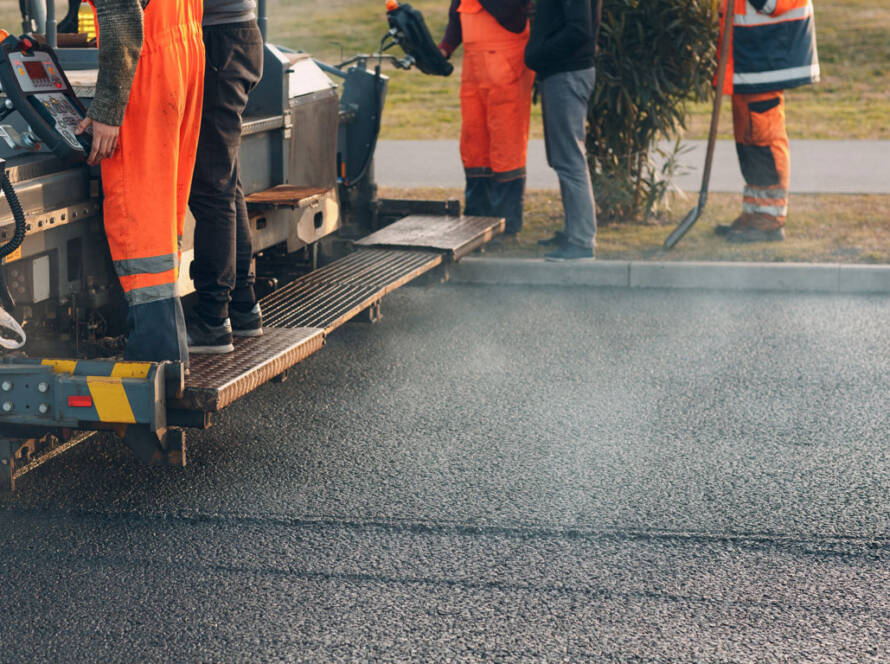
Industrial estate road surfacing UK projects differ significantly from residential or light commercial surfacing works. Roads within logistics parks, distribution hubs, and manufacturing estates are subjected to constant heavy vehicle movements, including articulated lorries, delivery fleets, forklifts, and plant machinery. These conditions create sustained pressure on the surface structure and demand a design that prioritises durability, load-bearing capacity, and long-term stability.
Unlike domestic access roads, industrial estates rarely experience uniform traffic flow. Vehicles brake sharply at junctions, pivot tightly in yard areas, and queue at loading bays. These stress points must be considered from the earliest planning stage. A surface that appears visually sound can quickly deteriorate if it has not been designed specifically for heavy-duty commercial use.
Professional planning and installation through experienced contractors specialising in commercial surfacing and road surfacing services ensures that each layer of the road structure is designed to handle operational demands rather than simply provide a finished appearance.
Traffic Load and Structural Design
Assessing Heavy Goods Vehicle Impact
Industrial estates are typically built around HGV access. A fully laden articulated lorry can weigh up to 44 tonnes, and repeated trafficking of this weight concentrates stress into wheel tracks and turning circles. Over time, insufficient structural depth can result in rutting, cracking, and surface deformation.
Proper industrial estate road surfacing UK design begins with a traffic assessment that evaluates frequency, axle loads, turning patterns, and braking zones. These factors determine the thickness of the sub-base, binder course, and surface course required.
The Role of Sub-Base Construction
The sub-base forms the structural backbone of any commercial road. In industrial settings, it must provide consistent load distribution and resist settlement. Poor ground conditions, common on redeveloped or brownfield sites, require careful preparation and compaction before surfacing begins.
Where the sub-base is compromised, surface failures tend to appear prematurely. Cracking and depressions are rarely surface-level problems alone; they often originate from insufficient ground preparation beneath the asphalt layers.
Choosing the Right Surfacing Material
Tarmac for Heavy-Duty Performance
Tarmac remains one of the most widely used materials for industrial estate road surfacing UK because of its flexibility, strength, and ability to withstand repeated loading. When installed at appropriate depths, it offers a resilient surface that accommodates minor ground movement without immediate cracking.
Specialist tarmac installation road surfacing services ensure correct temperature control, compaction, and layering. Each of these factors influences the finished road’s performance and lifespan.
Machine-Laid Precision for Larger Sites
Industrial estates typically involve large surface areas where consistency is critical. Variations in thickness or compaction can lead to weak spots that fail under pressure. For this reason, machine lay tarmac is commonly used to achieve uniform coverage and structural integrity across extensive road networks and service yards.
Machine laying also improves efficiency, helping to maintain programme schedules while ensuring consistent density throughout the surface.
Drainage Considerations in Industrial Environments
Managing Surface Water Effectively
Industrial estates often include expansive impermeable areas, from roads to parking bays and loading yards. Without effective drainage, surface water can accumulate, increasing the risk of aquaplaning and accelerating deterioration.
Properly designed falls and channel systems ensure that water moves away from trafficked areas quickly. Standing water not only affects safety but also seeps into surface layers, weakening the bond between materials over time.
Integrating Drainage into Surface Design
Drainage cannot be an afterthought. It must be integrated into the structural design at the planning stage. Channel drains, gullies, and interceptors are often required to manage runoff in compliance with environmental standards.
Industrial estate road surfacing UK schemes that ignore drainage planning often experience edge breakdown and surface fatigue far sooner than expected.
High-Stress Areas Within Industrial Estates
Loading Bays and Turning Circles
Loading bays represent some of the highest stress zones within an estate. Vehicles frequently brake, reverse, and pivot while stationary loads concentrate weight in confined areas. Surfaces in these locations require enhanced thickness and compaction.
Reinforced asphalt layers or adjusted mix specifications may be used to accommodate this stress. Without these measures, rutting and depressions can appear quickly.
Junctions and Access Points
Entrance roads and internal junctions also experience concentrated wear. HGVs turning sharply exert lateral forces that challenge surface integrity. Designing these areas with appropriate reinforcement ensures the road remains structurally sound despite repeated manoeuvres.
Where deterioration has already begun, timely intervention through professional pothole repairs can prevent minor defects from expanding into more extensive structural issues.
Minimising Disruption During Installation
Industrial estates rarely have the luxury of complete shutdowns. Distribution schedules, shift patterns, and tenant access requirements mean that surfacing works must be carefully phased.
Effective project planning allows contractors to sequence works in sections, maintaining operational access wherever possible. Clear communication between site managers and surfacing teams is essential to avoid unnecessary delays or safety risks.
Working within live environments requires strict health and safety protocols, controlled vehicle movements, and coordination with estate management teams.
Longevity and Lifecycle Planning
Designing for Long-Term Performance
Industrial estate road surfacing UK projects should be viewed as long-term infrastructure investments rather than short-term surface upgrades. A properly constructed road can deliver many years of service with routine inspection and maintenance.
Lifecycle planning involves considering future traffic growth, potential changes in tenancy, and evolving operational demands. Estates that anticipate expansion or increased HGV traffic should design road structures accordingly from the outset.
Preventative Maintenance Strategies
Regular inspection helps identify early signs of surface fatigue, such as minor cracking or drainage blockages. Addressing these issues promptly prevents deeper structural problems.
Planned maintenance programmes reduce the likelihood of emergency repairs, which can disrupt operations and increase long-term costs.
Compliance and Safety Considerations
Industrial estates must comply with UK health and safety standards, particularly in environments involving frequent heavy vehicle interaction with staff and visitors. Surface grip, line marking clarity, and visibility all contribute to safe site operation.
A well-constructed surface improves vehicle stability and braking performance, particularly in wet conditions. This is especially important in high-traffic estates where pedestrian walkways intersect with service roads.
Clear demarcation of traffic routes, combined with a smooth and even surface, supports safe and efficient vehicle movement throughout the site.
Environmental and Sustainability Factors
Modern industrial estate developments increasingly prioritise sustainability. Responsible sourcing of aggregates, efficient installation methods, and long-lasting materials all contribute to reduced environmental impact.
Durable surfacing reduces the frequency of replacement works, minimising material consumption and disruption. Efficient drainage design also prevents contamination risks by directing runoff appropriately.
Estate managers seeking to enhance sustainability credentials should consider surface lifespan, recyclability of materials, and integration with wider site infrastructure planning.
The Importance of Professional Expertise
Industrial estate road surfacing UK requires more than standard installation practices. Each site presents unique challenges related to ground conditions, traffic intensity, drainage requirements, and operational constraints.
Experienced surfacing contractors understand how to balance structural integrity with practical installation timelines. By combining thorough planning, appropriate material selection, and precision installation methods, they deliver road networks capable of supporting demanding commercial environments.
Property owners and estate managers who invest in professionally designed and installed surfacing benefit from improved reliability, reduced maintenance costs, and enhanced safety across their sites.
Industrial estates are critical infrastructure assets. Ensuring that access roads, junctions, and service yards are constructed to withstand continuous heavy use is fundamental to maintaining smooth operations and protecting long-term investment.