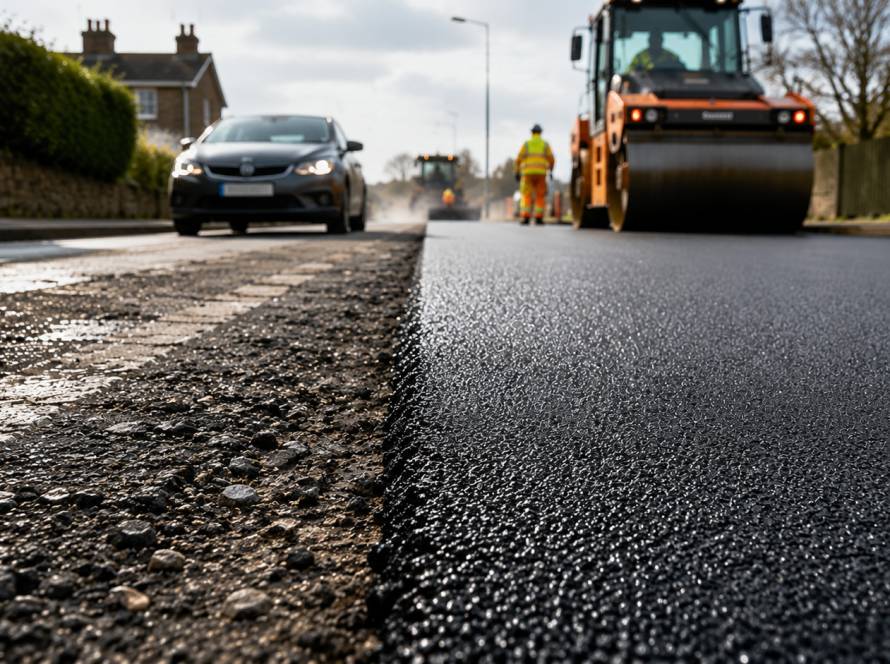
Potholes are more than an inconvenience. On private roads, commercial estates, car parks, access routes and industrial sites, they can affect vehicle safety, drainage and the overall condition of the surrounding surface. When a pothole is repaired, most property owners and site managers reasonably expect the problem to be resolved for a significant period.
However, not every repair provides the same level of durability. A pothole that appears again within months is often a sign that the visible damage was treated without addressing the underlying cause. Long-lasting pothole repairs depend on preparation, drainage, material selection and correct installation rather than simply filling the hole and compacting the surface.
Understanding why pothole repairs sometimes fail can help property owners and commercial managers make better maintenance decisions and avoid repeatedly paying to repair the same section of surfacing.
A Pothole Is Often a Symptom of a Larger Problem
A pothole normally develops because the road surface has weakened sufficiently for material to break away under traffic. The damage may begin with a small crack, an area of poor drainage or movement within the layers beneath the surface.
Once water enters through cracks or joints, it can penetrate the asphalt or tarmac and reach the supporting layers below. Traffic then places repeated pressure on the weakened area. Eventually, sections of material loosen and are displaced, creating the recognisable depression associated with a pothole.
This means that simply filling the visible cavity does not necessarily resolve the reason it appeared. If moisture remains beneath the repair, the surrounding material is unstable or the sub-base has deteriorated, the new patch can begin failing around its edges.
A durable repair therefore starts with understanding the condition around and beneath the pothole rather than treating the hole in isolation.
Poor Preparation Can Cause Early Failure
Preparation is one of the most important parts of any pothole repair. The damaged material around the pothole must be assessed carefully because apparently solid edges may already be cracked or weakened.
If loose material is left in place, the new repair material has an unreliable surface to bond against. The patch may initially appear firm, but movement can develop as vehicles pass over it.
Professional preparation generally involves removing unstable surfacing until a sound edge and suitable base are reached. This provides a more reliable area into which the replacement material can be installed and compacted.
The same principles apply to larger tarmac installation and road surfacing services, where the quality of the finished surface depends heavily on what happens before the final layer is installed.
A repair that looks neat immediately after completion is not necessarily a good repair. Its long-term performance depends considerably on the condition of the material underneath it.
Water Is One of the Biggest Threats to a Repair
Water is closely connected with many forms of road surface deterioration. When water is allowed to remain on the surface or penetrate through cracks, it can weaken both the surfacing material and the supporting structure below.
Drainage problems are particularly important around potholes because the damaged area may already sit within a natural low point. Filling the depression can improve the appearance of the road, but if the surrounding levels still direct water towards the repair, deterioration may continue.
Standing water also increases the likelihood that moisture will enter through the perimeter of the patch. Once this happens, repeated loading from cars, vans, delivery vehicles or heavy goods vehicles can accelerate breakdown.
Before carrying out a permanent repair, it is therefore sensible to consider where rainwater goes during wet weather. On larger commercial sites, drainage performance should be considered as part of the overall commercial surfacing and road surfacing strategy rather than as a separate issue.
Where drainage is contributing to repeated potholes, repairing the surface without improving water management may provide only temporary relief.
The Condition of the Sub-Base Matters
The visible tarmac or asphalt is only part of the road structure. Beneath it sits a supporting foundation that helps distribute traffic loads and keeps the surface stable.
If this sub-base has become saturated, contaminated or poorly compacted, replacing only the upper layer may not be sufficient. Vehicles passing over the repaired area can cause continued movement underneath, eventually creating cracking, settlement or another depression.
This issue can be particularly noticeable on roads carrying delivery vehicles, refuse lorries, agricultural machinery or other heavy traffic. The loads involved place much greater stress on weak areas than ordinary cars.
Where deeper structural deterioration is identified, a more substantial repair may involve excavating the damaged section, rebuilding the supporting layers and then reinstating the surface. Although this requires more work than a shallow patch, it can provide substantially better long-term performance when the underlying structure is the real source of the problem.
Repair Depth Influences Durability
Not all potholes require the same type of repair. A shallow area of localised surface damage may be suitable for a comparatively simple treatment, while deeper deterioration can require reconstruction through several layers.
Problems occur when every pothole is approached in exactly the same way.
A repair that is too shallow may not remove all the damaged material. Weak surfacing can remain underneath or around the new patch, allowing deterioration to continue.
The correct depth needs to reflect the actual condition of the road. On some sites, this becomes clear only after the damaged section has been opened and inspected.
For extensive areas where numerous repairs are developing, it may also be worth assessing whether isolated patching is still economical or whether wider resurfacing would provide a more practical solution.
Compaction Is Essential for a Strong Repair
Once suitable repair material has been placed, it must be compacted correctly. Compaction reduces air voids, improves density and helps the material form a stable surface capable of resisting traffic loads.
Poorly compacted material can remain relatively soft or open, making it more vulnerable to water and vehicle movement. Settlement may then occur, leaving the repaired section lower than the surrounding road.
Correct compaction becomes particularly important where heavier vehicles regularly use the area. Commercial entrances, loading yards and estate roads experience repeated loads that can quickly expose weaknesses in a poorly installed patch.
For larger surfacing projects, machine lay tarmac can help provide consistent placement and compaction across wider areas. Localised pothole repairs require a different working method, but the underlying principle remains the same: the material needs to be installed and compacted correctly if it is expected to perform.
The Edges of the Repair Are Vulnerable
The joint between old surfacing and new repair material is one of the most critical areas of a pothole repair.
If the edges are irregular, contaminated or already deteriorating, it can be difficult to achieve a reliable connection. Traffic then creates movement at the joint, while rainwater may find a route beneath the new material.
Over time, this can produce cracking around the perimeter. Small pieces may begin breaking away, gradually enlarging the damaged area until the patch itself starts to fail.
Creating sound, stable edges before installing the replacement material helps reduce this risk. Proper sealing and compaction around the perimeter are equally important.
This is one reason why a carefully prepared repair can look more substantial than the original pothole. Removing additional weakened material around the damage often produces a stronger repair than attempting to preserve failing edges.
Traffic Can Affect How Long a Repair Lasts
The amount and type of traffic using a road should influence the repair method.
A patch on a lightly used private access road experiences very different stresses from one at the entrance to a distribution site. Frequent braking, acceleration and turning can place significant lateral forces on the surface, particularly where heavy vehicles are involved.
Turning areas can be especially demanding because tyres apply twisting forces rather than simply travelling straight across the repair. If the existing surface or underlying layers are already weak, these forces can accelerate deterioration.
A suitable repair therefore needs to reflect how the area is actually used. Material selection, repair depth and preparation should all take expected traffic loading into account.
Site managers experiencing repeated potholes in the same high-traffic locations may benefit from considering whether the wider construction is appropriate for the vehicles currently using the route.
Temporary Repairs and Permanent Repairs Are Different
Sometimes a pothole needs to be made safe quickly. Temporary repairs can be useful when immediate action is required, particularly where weather conditions, site operations or access restrictions prevent more extensive work.
The important point is that a temporary repair should not automatically be judged by the same expectations as a properly prepared permanent repair.
A short-term patch may help remove an immediate hazard, but it may not involve rebuilding damaged supporting layers or correcting surrounding drainage issues.
Where a road is important for everyday site access, it is sensible to distinguish between emergency maintenance and planned permanent repairs. This helps avoid situations where a temporary measure remains in place until it deteriorates again.
Repeated Potholes Can Indicate Wider Surface Deterioration
One isolated pothole does not necessarily mean an entire road needs resurfacing. Several potholes appearing across the same area, however, can indicate that the surface is approaching the end of its useful condition.
Other warning signs may include extensive cracking, uneven levels, loose aggregate, depressions and water collecting across the road. Where these issues occur together, repeated local repairs may become less economical.
At this stage, professional assessment can determine whether continued patching remains sensible or whether resurfacing part or all of the area would provide better value.
Reviewing completed surfacing projects can also help property owners understand how different road conditions are addressed, from localised repairs through to larger resurfacing schemes.
The appropriate approach depends on the condition of the existing surface, the supporting structure, drainage and the traffic using the site.
A Lasting Repair Depends on Treating the Cause
The durability of a pothole repair depends on much more than the material used to fill the visible hole. Preparation, drainage, base condition, repair depth, compaction and traffic loading all influence how successfully the repair performs.
When potholes repeatedly return, the most useful question is often not how quickly they can be filled again, but why the surface is continuing to fail in that location.
A properly assessed repair removes unstable material, deals with any structural weakness that needs attention and creates a sound connection between the existing surface and the new material. Where drainage or wider deterioration is involved, those issues also need to form part of the solution.
For property owners and commercial site managers, addressing the cause rather than repeatedly treating the symptom can reduce disruption, improve road safety and provide a more dependable surface over the longer term.