A well-designed car park does far more than provide spaces for vehicles. It influences how safely traffic moves, how pedestrians navigate the site, how effectively rainwater drains away, and how long the surface remains in good condition. Whether serving a retail park, office development, school, industrial estate or residential complex, every element of the layout contributes to both safety and long-term performance.
Unfortunately, many car parks develop problems not because of poor materials, but because of a fundamental design oversight made before construction even begins. This single mistake often leads to standing water, damaged surfacing, vehicle collisions, pedestrian hazards and expensive maintenance.
Understanding the most common car park design mistakes in the UK can help property owners avoid significant future costs while creating a safer environment for everyone using the site.
The Most Dangerous Design Mistake: Ignoring Drainage and Surface Water Management
The biggest and arguably most dangerous mistake is failing to design effective drainage from the outset.
Many people assume that asphalt or tarmac simply allows rainwater to run away naturally. In reality, even a high-quality surface cannot perform correctly if gradients, drainage channels and water collection points have not been properly planned.
When water has nowhere to go, it begins causing problems almost immediately. During heavy rainfall, puddles develop across parking bays and driving lanes. During colder weather, these areas can freeze, creating hazardous conditions for both pedestrians and vehicles.
Standing water also accelerates deterioration beneath the surface, weakening the foundation and increasing the likelihood of cracking and potholes.
Professional planning before installation is therefore just as important as the surfacing materials themselves.
How Poor Drainage Creates Safety Risks
Water affects far more than appearance.
Drivers approaching a flooded section of a car park often cannot judge the depth of the water or identify hidden defects beneath it. Potholes become concealed, increasing the risk of vehicle damage.
Pedestrians face equally serious dangers. Wet surfaces reduce grip, particularly on sloping areas, while icy patches during winter can lead to slips and falls.
Over time, persistent moisture also weakens painted markings, making parking bays, pedestrian crossings and directional arrows less visible.
These issues combine to increase accident risk while creating ongoing maintenance liabilities for site owners.
The Hidden Cost of Water Damage
Poor drainage rarely remains a minor issue.
As water penetrates beneath the surface, repeated traffic loading causes movement within the underlying layers. Small cracks gradually become larger structural failures, eventually leading to expensive resurfacing work.
Business owners often underestimate how rapidly these repairs escalate.
Instead of carrying out occasional preventative maintenance, neglected drainage problems frequently require extensive reconstruction of affected areas.
Investing in professional planning from the beginning is considerably more cost-effective than continually repairing avoidable damage.
Why Surface Gradients Are Critical
Effective drainage depends on carefully engineered gradients.
Although a car park may appear level, professional surfacing contractors design subtle slopes that direct water towards drainage channels or gullies without creating uncomfortable driving conditions.
If these gradients are incorrect, water naturally settles in low points.
Even a difference of a few millimetres across a large parking area can determine whether rainwater drains efficiently or remains trapped for days after rainfall.
Experienced contractors calculate these gradients before any surfacing begins, ensuring water flows exactly as intended.
The Importance of Proper Surface Construction
Drainage alone cannot compensate for inadequate construction.
Every successful car park begins with a properly prepared sub-base capable of supporting expected traffic loads. Commercial sites accommodating delivery vehicles require significantly stronger foundations than residential parking areas.
Poor preparation allows movement beneath the surface, causing depressions that eventually collect water regardless of how well drainage has been designed.
Professional installation combines correct excavation, high-quality aggregates, effective compaction and accurately laid surfacing materials to create a durable finished surface.
Businesses looking for reliable long-term performance should consider experienced specialists in commercial road surfacing who understand how design, drainage and construction work together.
Traffic Flow Is Part of Safe Design
Drainage may be the largest technical issue, but traffic movement also plays an important role.
Poorly positioned entrances, confusing one-way systems and narrow turning areas increase the likelihood of vehicle collisions.
Modern car park layouts should allow drivers to move naturally through the site with clear visibility and adequate space for manoeuvring.
Where larger commercial vehicles regularly access the site, turning circles and loading areas require additional consideration to prevent excessive stress on the surface.
Combining intelligent layout planning with durable surfacing significantly improves both safety and longevity.
Surface Materials Also Make a Difference
Choosing the correct surfacing material affects durability, grip and maintenance requirements.
Professionally installed tarmac remains one of the most popular options across the UK because it provides excellent strength, flexibility and cost-effectiveness for both commercial and residential applications.
High-quality installation ensures consistent compaction and a smooth, durable finish capable of handling daily traffic for many years.
Property owners planning new parking areas or resurfacing existing ones often benefit from professional tarmac installation carried out using modern equipment and proven construction methods.
Regular Maintenance Prevents Major Problems
Even the best-designed car park requires periodic inspection.
Small cracks should be repaired before water penetrates the lower layers. Drainage channels need regular clearing to prevent blockages, particularly during autumn when leaves accumulate.
Surface markings also require occasional renewal to maintain visibility and ensure compliance with current safety standards.
Routine maintenance is considerably less disruptive than emergency repairs and helps maximise the lifespan of the original investment.
Where isolated defects have already appeared, prompt pothole repairs can prevent further structural deterioration.
Choosing the Right Contractor
Successful car park construction depends on far more than simply laying asphalt.
Experienced contractors assess existing ground conditions, anticipated traffic volumes, drainage requirements and long-term maintenance considerations before recommending the most suitable solution.
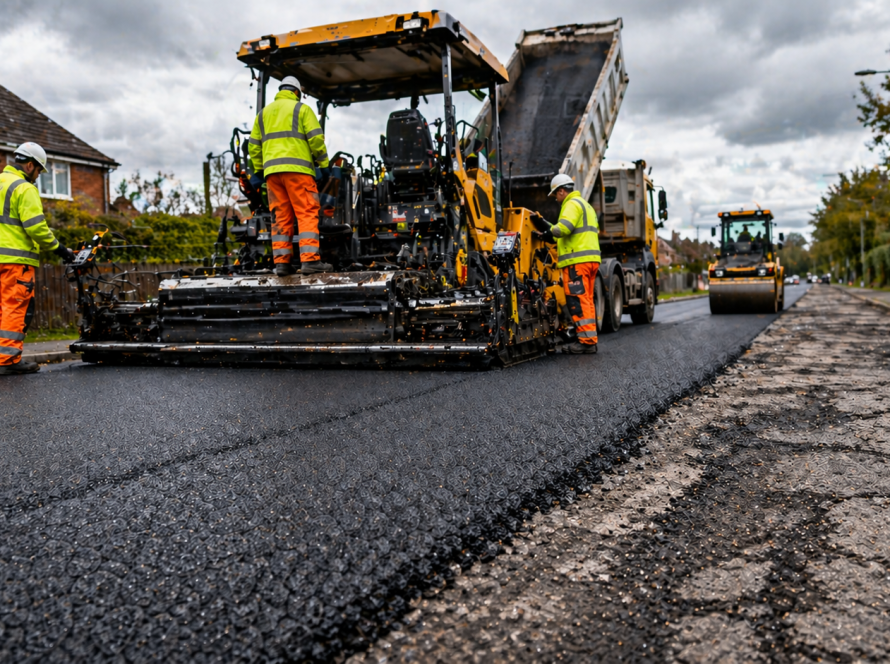
Modern machinery also plays an important role in achieving consistent surface levels and correct compaction throughout the project.
Using specialist machine lay tarmac techniques helps produce smoother, more durable surfaces with improved structural performance compared with smaller hand-laid installations on larger projects.
Reviewing previous completed projects through a contractor’s project portfolio can also provide reassurance regarding workmanship and experience.
Creating Safer Car Parks for the Future
The UK’s most dangerous car park design mistake is not choosing the wrong surface material or installing too few parking spaces. It is overlooking effective drainage and proper design during the planning stage.
When water cannot drain efficiently, the resulting damage affects safety, durability and long-term maintenance costs. Combined with inadequate foundations or poor traffic layout, these issues can shorten the lifespan of an otherwise substantial investment.
By prioritising professional design, correct gradients, quality construction and ongoing maintenance, property owners can create car parks that remain safe, attractive and reliable for many years while reducing the likelihood of expensive future repairs.