Sloped and uneven ground presents a unique set of challenges in road construction and long-term maintenance. Unlike flat surfaces, gradients naturally influence how water flows, how vehicles apply pressure, and how materials behave over time. This is where the concept of road camber becomes essential.
Camber refers to the slight cross slope built into a road surface, designed to direct water away from the centre and towards the edges. In sloped environments, camber must be carefully balanced with the natural gradient to prevent water pooling, erosion, and premature surface failure.
For property owners and commercial site managers across the UK, understanding how camber interacts with sloped road surfacing is key to ensuring durability, safety, and compliance with best practice construction standards.
What Is Road Camber and Why It Matters
Road camber is not simply a design preference; it is a functional necessity. Without it, even a well-constructed road can suffer from standing water, reduced traction, and structural degradation.
On a flat road, camber ensures water disperses evenly to both sides. On a sloped road, however, the natural incline already encourages water movement in one direction. If camber is not properly integrated into the design, water can accumulate unevenly, leading to concentrated wear and eventual failure.
This is particularly important in the UK climate, where frequent rainfall places constant stress on road surfaces. A properly designed camber system works alongside drainage infrastructure to manage water efficiently and protect the integrity of the surface.
The Relationship Between Camber and Surface Longevity
Water Management and Drainage Control
Water is one of the most significant causes of road deterioration. When water penetrates the surface layer and reaches the sub-base, it weakens the structure and accelerates damage.
Camber plays a direct role in preventing this by ensuring that water is quickly shed from the surface. On sloped roads, this becomes even more critical because water can travel with greater force, increasing the risk of erosion or surface stripping.
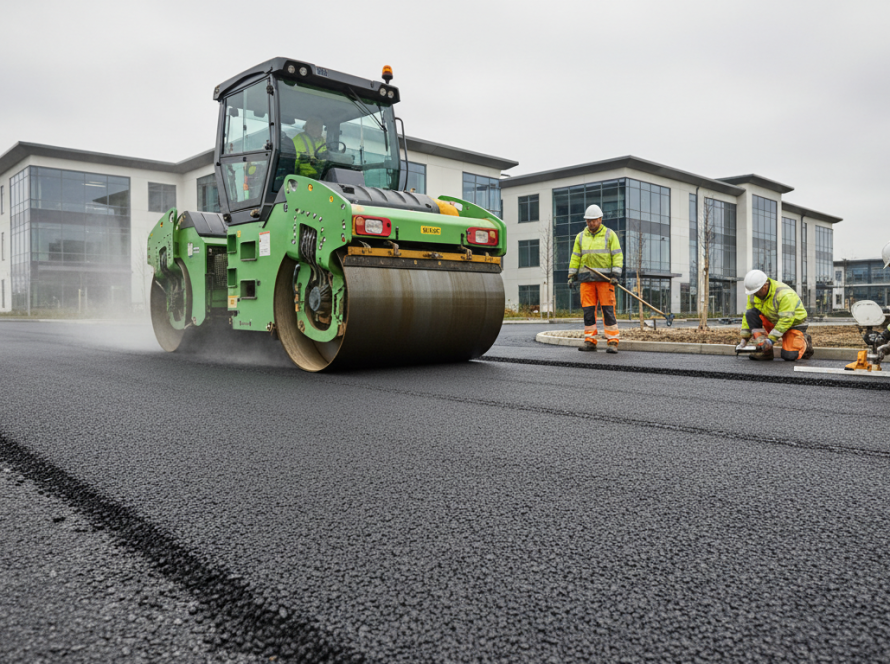
Effective sloped road surfacing UK projects rely on a combination of camber design and professional installation methods such as tarmac installation to ensure that surfaces remain sealed, compact, and resistant to water ingress.
Load Distribution and Structural Stability
Vehicles travelling on sloped surfaces do not distribute weight evenly. Instead, forces are often concentrated on one side of the road. Without proper camber, this uneven loading can lead to rutting, cracking, and deformation over time.
Camber helps counteract these forces by creating a balanced surface profile that supports vehicle movement more evenly. This is especially important for commercial access roads, where heavy vehicles frequently use the same routes.
When combined with expert commercial road surfacing, camber contributes to a more stable and resilient surface capable of withstanding long-term use.
Designing Camber for Sloped and Uneven Ground
Assessing the Natural Gradient
Every site is different, and the starting point for any sloped road project is a thorough assessment of the natural terrain. The gradient of the land will influence how camber is applied and how water will behave across the surface.
In some cases, the natural slope may already provide sufficient drainage, but this does not eliminate the need for camber. Instead, camber must be adjusted to complement the existing gradient rather than conflict with it.
This requires careful planning and an understanding of how water will move during heavy rainfall, as well as how the surface will respond to traffic over time.
Integrating Camber with Drainage Systems
Camber alone is not enough to manage water effectively. It must work in conjunction with drainage systems such as channels, gullies, and edge drainage solutions.
On sloped roads, poorly integrated drainage can result in water being directed to unintended areas, causing localised damage or flooding. Proper design ensures that water is guided safely away from the surface and into designated drainage points.
Professional contractors often incorporate advanced techniques such as machine lay tarmac to achieve consistent gradients and precise camber alignment, ensuring that the finished surface performs as intended.
Common Issues Caused by Poor Camber Design
Water Pooling and Surface Erosion
One of the most immediate signs of poor camber is water pooling on the surface. On sloped roads, this can quickly lead to erosion, particularly at the edges where water may collect and undermine the structure.
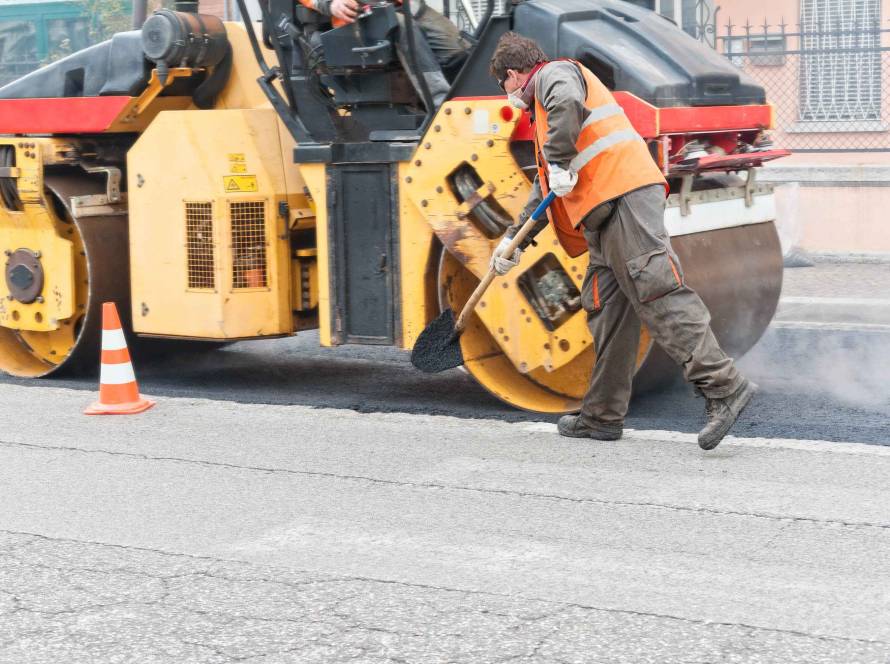
Over time, this erosion can spread, resulting in potholes, cracks, and general surface degradation. Addressing these issues often requires reactive maintenance such as pothole repairs, which can be costly and disruptive.
Uneven Wear and Premature Failure
Without proper camber, certain areas of the road will experience more stress than others. This leads to uneven wear patterns, with some sections deteriorating much faster than the rest.
In commercial environments, this can create safety hazards and increase long-term maintenance costs. A well-designed camber profile helps ensure that wear is distributed more evenly, extending the lifespan of the surface.
The Role of Materials in Cambered Surfaces
Choosing the Right Surface Material
Not all surfacing materials perform equally well on slopes. Materials must be selected based on their ability to maintain integrity under both gravitational forces and water exposure.
Tarmac is commonly used in sloped road surfacing UK projects due to its flexibility, durability, and ability to form a smooth, continuous surface. When installed correctly, it works effectively with camber to provide reliable drainage and long-term performance.
Compaction and Surface Finish
Proper compaction is essential to ensure that the camber remains consistent across the entire surface. Any inconsistencies can lead to weak points where water may accumulate or penetrate the surface.
The finishing process also plays a role in how effectively the camber performs. A smooth, well-laid surface encourages water to flow freely, while a poorly finished surface may trap water and reduce drainage efficiency.
Maintenance Considerations for Cambered Roads
Regular Inspections and Preventative Care
Even the best-designed cambered roads require ongoing maintenance to remain effective. Regular inspections help identify early signs of wear, drainage issues, or structural weaknesses.
Addressing minor issues early can prevent more significant problems from developing, preserving both the surface and the underlying structure.
Adapting to Environmental Changes
Over time, environmental factors such as ground movement, vegetation growth, and changing weather patterns can affect how a road performs. Camber may need to be adjusted or reinforced to maintain optimal drainage and stability.
Working with experienced surfacing professionals ensures that any necessary adjustments are carried out correctly, maintaining the road’s performance over the long term.
Why Professional Installation Is Essential
Camber design is not something that can be improvised on-site. It requires precise planning, accurate execution, and a thorough understanding of how different factors interact.
Professional contractors bring the expertise needed to assess site conditions, design appropriate camber profiles, and deliver high-quality installations that stand the test of time. By using proven methods and specialist equipment, they ensure that every aspect of the surface works together to achieve durability and reliability.
For UK property owners and site managers, investing in professional surfacing is not just about initial appearance. It is about ensuring that the road continues to perform effectively for years to come, even under challenging conditions.
Conclusion
Road camber is a fundamental element in the success of any sloped road surfacing project. It plays a critical role in managing water, distributing loads, and preventing premature surface failure.
When properly designed and implemented, camber works seamlessly with the natural gradient and drainage systems to create a durable, safe, and long-lasting road. In contrast, poor camber design can lead to a range of issues that compromise both performance and longevity.
Understanding the importance of camber allows property owners and commercial site managers to make informed decisions and ensure that their road surfacing investments deliver lasting value.