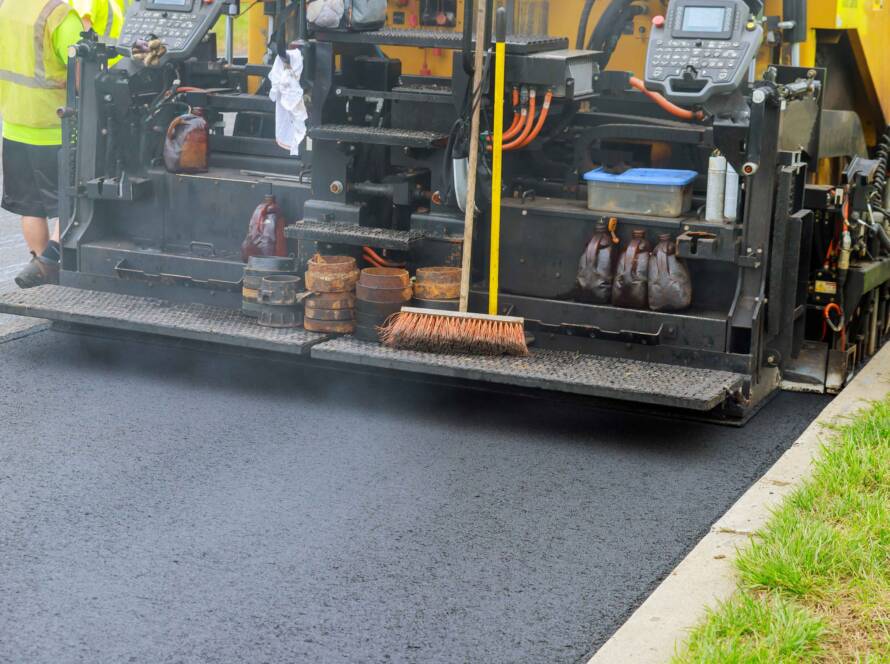
Road surfacing has evolved significantly over the past few decades. What was once a largely manual process is now supported by advanced machinery designed to improve accuracy, efficiency, and durability. For property owners, developers, and commercial site managers across the UK, the equipment used during installation can have a direct impact on the quality and lifespan of the finished surface.
Modern machinery allows contractors to control every stage of the surfacing process more precisely, from preparing the base layers through to laying and compacting the final surface. These improvements help ensure that roads remain stable, smooth, and resistant to heavy traffic loads and weather exposure.
Understanding how modern equipment contributes to better road surfacing quality can help decision-makers appreciate the value of professional installation and the technology behind it.
The Evolution of Road Surfacing Equipment
Road construction equipment has undergone steady improvements in design, engineering, and digital control systems. Earlier surfacing projects relied heavily on manual labour and basic tools, which often made it difficult to achieve consistent surface thickness and compaction.
Today, specialised machines perform many of the critical steps with a high level of precision. Modern equipment can regulate material flow, maintain consistent laying depths, and compact surfaces uniformly across large areas.
These advancements are particularly important for commercial developments, industrial estates, and access roads where reliability and longevity are essential. Companies offering professional commercial surfacing services rely on modern machinery to meet both structural standards and operational requirements.
The result is a more predictable installation process and a surface that performs consistently over time.
Precision in Surface Laying
Controlled Material Distribution
One of the most significant advantages of modern road surfacing equipment is the ability to distribute materials evenly during installation. Machine-controlled paving equipment ensures that asphalt or tarmac is spread at a consistent depth across the entire surface.
Uniform thickness is critical because variations in depth can lead to weak spots within the surface. These areas may deteriorate more quickly under traffic or become vulnerable to water infiltration.
Modern pavers use automated systems that regulate the amount of material being laid while maintaining a steady paving speed. This allows contractors to achieve a smoother finish and reduces the risk of surface irregularities.
Accurate Levelling Systems
Advanced paving equipment often includes integrated levelling systems that maintain the correct road profile during installation. Sensors monitor the height and alignment of the machine relative to reference points or string lines, ensuring that the finished surface follows the required design gradient.
Accurate levelling is especially important for drainage. Even small inconsistencies in surface levels can cause water to collect in low points, which may lead to premature deterioration or surface damage.
Modern equipment helps eliminate these inconsistencies, resulting in roads that drain efficiently and remain structurally sound.
Improved Compaction Techniques
Consistent Surface Density
Compaction plays a crucial role in road surfacing quality. Without adequate compaction, the surface layers may remain porous or unstable, which can reduce the lifespan of the road.
Modern rollers and compaction machines are designed to apply consistent pressure across the surface. Some machines use vibration technology to increase density within the asphalt layers, ensuring that the material bonds properly.
This process removes air pockets and strengthens the surface, allowing it to withstand repeated traffic loads.
Intelligent Compaction Technology
Many modern compaction machines incorporate digital monitoring systems that measure the density of the material during rolling. These systems allow operators to identify areas that require additional passes and ensure that the entire surface meets the required standards.
This level of control significantly improves installation accuracy. It also reduces the likelihood of weak areas developing within the road structure.
Projects that involve professional tarmac installation often rely on these technologies to achieve consistent results across large surfaces.
Increased Efficiency Without Sacrificing Quality
Faster Installation Times
Modern equipment allows contractors to complete road surfacing projects more efficiently while maintaining high standards. Large paving machines can cover significant areas in a shorter period of time compared with manual methods.
This efficiency reduces disruption on active sites and allows developments to remain operational while surfacing work is carried out.
For commercial environments such as industrial estates, business parks, and logistics facilities, minimising downtime is often a priority.
Better Coordination on Large Sites
Advanced machinery also improves coordination across the construction team. Material delivery, paving operations, and compaction processes can be carefully synchronised to maintain a continuous workflow.
This coordinated approach prevents delays that could otherwise affect material quality or surface consistency.
As a result, projects are completed more efficiently while still meeting strict quality requirements.
Consistency Across Large Surfaces
Uniform Surface Texture
Achieving a consistent surface texture is essential for both durability and safety. Irregular textures can reduce grip or lead to uneven wear patterns over time.
Modern paving machines regulate the temperature and flow of asphalt as it is laid, ensuring that the surface bonds correctly and maintains an even finish.
Uniform texture also improves the visual appearance of the road, which can be particularly important for commercial properties or public-facing developments.
Large-Scale Precision
Large surfacing projects often involve extensive access roads or circulation routes within commercial developments. Maintaining consistent quality across these areas can be challenging without the right equipment.
Machine-assisted surfacing ensures that each section of road meets the same structural and aesthetic standards.
Specialist contractors using machine lay tarmac techniques can achieve precise results even on large-scale installations where manual methods would struggle to maintain consistency.
Enhanced Safety During Installation
Improved Operator Control
Modern construction equipment is designed with improved control systems that allow operators to manage machines more safely and accurately.
Better visibility, automated controls, and monitoring systems all contribute to safer working conditions on site.
These improvements reduce the risk of installation errors while also protecting workers and other personnel present during construction.
Safer Site Operations
Modern equipment also helps streamline the overall workflow on construction sites. With clearly defined roles for each machine and operator, projects can proceed in an organised and controlled manner.
This structured approach reduces confusion during installation and ensures that each stage of the surfacing process is completed correctly.
Well-managed projects are less likely to experience delays, defects, or safety incidents.
Supporting Long-Term Surface Durability
Improved Structural Integrity
The primary goal of any road surfacing project is to create a surface that performs reliably over time. Modern equipment contributes to this by ensuring proper material placement, compaction, and alignment.
When each layer of the road structure is installed correctly, the finished surface is better able to resist cracking, deformation, and traffic-related stress.
This improved structural integrity helps reduce the likelihood of early deterioration.
Easier Maintenance and Repairs
High-quality installations also simplify future maintenance. Surfaces that are installed with consistent thickness and compaction are easier to repair when necessary.
Routine maintenance tasks such as pothole repairs can be carried out more effectively when the surrounding surface remains stable and well-constructed.
This reduces long-term maintenance costs and helps extend the overall lifespan of the road.
The Importance of Skilled Operators
Although modern equipment offers advanced capabilities, the quality of a road surfacing project still depends heavily on the experience of the installation team.
Skilled operators understand how to use machinery effectively, adjust equipment settings, and respond to changing site conditions. They also recognise the importance of proper preparation, material handling, and environmental considerations.
Combining experienced professionals with modern equipment ensures that road surfacing projects achieve the highest possible standards.
Conclusion
Modern equipment has transformed the road surfacing industry by introducing greater accuracy, efficiency, and consistency into every stage of the installation process. Advanced paving machines, compaction rollers, and digital monitoring systems allow contractors to produce high-quality surfaces that perform reliably for many years.
For property developers, commercial site managers, and infrastructure planners, the use of modern road surfacing equipment plays a critical role in achieving durable and professionally finished roads.
By combining advanced machinery with skilled installation teams, modern surfacing projects can deliver smoother surfaces, improved drainage, stronger structural performance, and reduced maintenance requirements over time.