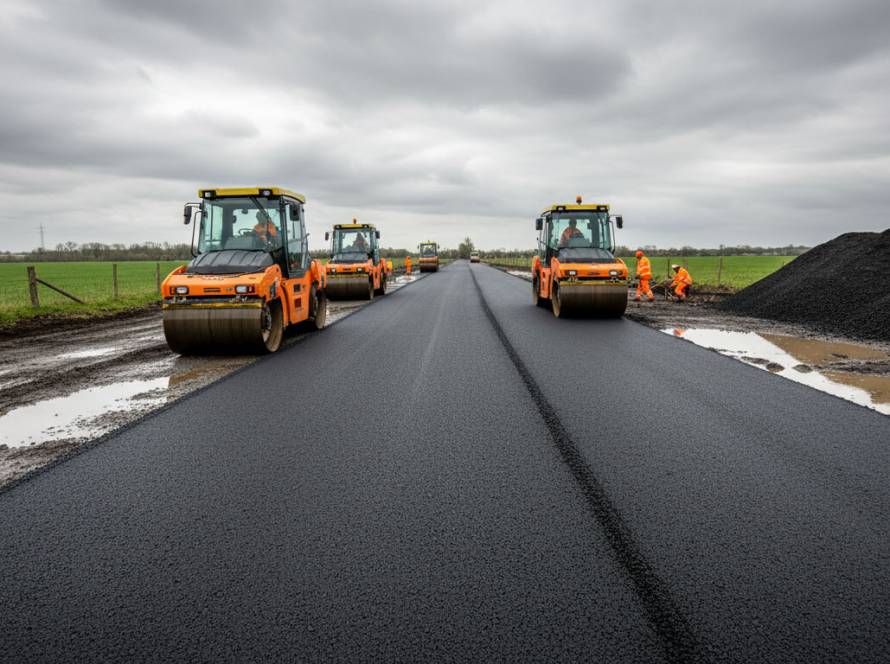
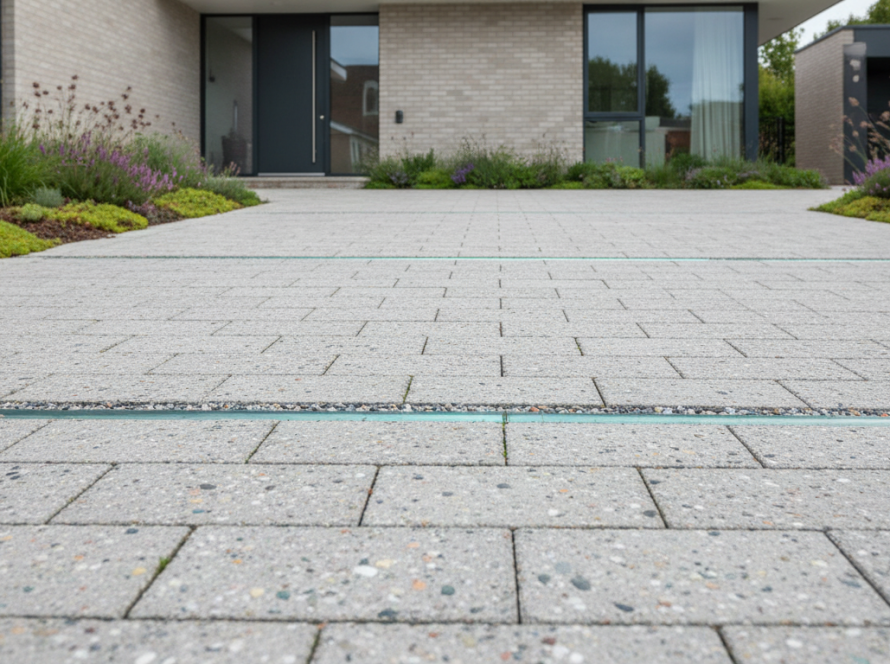
In any road surfacing project, drainage is one of the most important but often overlooked elements of long-term performance. Commercial access roads, service yards, and industrial estate routes experience regular traffic, heavy vehicles, and frequent weather exposure. Without effective water management, even well-installed surfaces can deteriorate quickly.
Commercial road drainage UK planning focuses on ensuring that rainwater moves safely away from the surface structure before it can weaken the layers beneath. When water remains on the surface or seeps into the base layers, it gradually compromises structural stability. Over time, this leads to cracking, deformation, and potholes.
Professional contractors involved in commercial road surfacing understand that drainage design must be considered before surfacing begins. Surface materials alone cannot compensate for poor water management. The effectiveness of the entire road system depends on directing water away from the structure efficiently and consistently.
How Water Damages Road Surfaces
Water can damage road surfaces in several ways, particularly when it penetrates below the top layer of tarmac or asphalt. Once water reaches the sub-base, it can weaken the load-bearing capacity of the road structure.
Repeated cycles of water infiltration and traffic loading cause small cracks to widen and surface layers to shift. In colder climates, freeze-thaw cycles can accelerate this process, but even in the milder UK climate, standing water and persistent moisture still contribute to surface breakdown.
Surface pooling is one of the most visible signs of drainage problems. When rainwater cannot flow away naturally, it collects in shallow depressions. This constant saturation weakens the binder in the surface layer and allows water to penetrate deeper into the structure.
Over time, this process leads to the formation of potholes. When damage reaches this stage, repairs often become necessary. Services such as pothole repairs address the symptoms of water damage, but the root cause is frequently inadequate drainage.
Preventing these issues requires planning drainage from the earliest design stage of a road surfacing project.
The Importance of Surface Gradients
One of the most effective drainage solutions in commercial surfacing is proper surface grading. Gradients allow rainwater to flow naturally towards designated drainage channels rather than collecting on the road surface.
Even a slight slope can significantly improve water runoff. Engineers typically design commercial road surfaces with a crossfall or camber that guides water towards the edges of the road. From there, it can be directed into drainage channels, gullies, or surrounding ground where it can disperse safely.
Without this controlled gradient, water will follow unpredictable paths across the surface. This often leads to pooling in low spots, especially in high-traffic turning areas or loading zones where heavy vehicles create additional surface stress.
Professional installation techniques, such as machine lay tarmac, help ensure that surfaces are installed with consistent levels and accurate gradients. Machine laying allows contractors to achieve smooth, uniform finishes that support efficient water runoff.
Sub-Base Drainage and Structural Stability
While surface drainage is important, water management must also extend below the visible road layer. The sub-base plays a crucial role in supporting traffic loads and distributing weight across the ground beneath.
If water accumulates within the sub-base, the material becomes less stable. This can lead to rutting, settlement, and structural movement. Over time, these problems become visible at the surface as cracking or deformation.
Effective commercial road drainage UK systems often include permeable sub-base materials that allow water to move through the structure without becoming trapped. In some cases, additional drainage pipes or channels are installed beneath the surface to redirect groundwater away from the road.
This layered approach ensures that both surface water and subsurface moisture are properly controlled. When the sub-base remains dry and stable, the road structure can maintain its strength and durability for many years.
Drainage Channels and Edge Management
In many commercial developments, drainage channels are installed alongside access roads and service routes. These channels collect runoff from the road surface and transport it away from the area.
Properly designed channels must be positioned at the correct level relative to the road surface. If they are too high, water will not flow into them. If they are too low, debris and sediment may accumulate, reducing drainage efficiency.
Edge restraints also play a role in maintaining the integrity of drainage systems. Strong edges prevent the surface from spreading outward and ensure that gradients remain consistent. Without proper edge control, road surfaces can gradually deform, altering drainage patterns and causing water to pool.
Contractors experienced in tarmac installation take these factors into account when planning road edges, kerbs, and channel placement.
The combination of surface slope, drainage channels, and edge restraints creates a controlled pathway for water to leave the road quickly and safely.
Common Drainage Problems on Commercial Sites
Commercial sites often present unique drainage challenges compared with residential roads. High traffic volumes, heavy vehicles, and large paved areas can all influence how water behaves during rainfall.
One common issue is insufficient drainage capacity. If gullies or channels are too small for the amount of runoff produced during heavy rain, water will overflow onto the road surface. This increases the risk of pooling and surface erosion.
Another challenge occurs when resurfacing projects are carried out without reviewing existing drainage infrastructure. If the new surface raises road levels slightly, it may reduce the effectiveness of nearby drainage channels.
Poor maintenance can also create problems over time. Leaves, dirt, and debris often block drainage systems, preventing water from flowing freely. Regular inspection and cleaning are essential to maintain effective drainage.
Property managers responsible for commercial premises often rely on experienced contractors listed within the our services section of professional surfacing providers to assess and address these issues.
Planning Drainage During the Design Stage
The most effective drainage systems are those that are planned before construction begins. During the design stage, engineers evaluate factors such as ground conditions, rainfall patterns, traffic loads, and surrounding land levels.
These considerations determine the appropriate drainage strategy for the site. In some locations, natural slopes allow water to flow away from the road without extensive infrastructure. In others, engineered drainage systems are required to manage runoff effectively.
Design planning also helps ensure that road surfacing integrates properly with surrounding areas such as car parks, footpaths, and landscaped zones. When these surfaces connect without proper drainage planning, water can easily flow from one area to another, creating unexpected pooling or flooding.
Experienced contractors often review previous projects when planning new installations. Viewing completed work in a professional portfolio can provide useful insight into how drainage solutions perform in real-world commercial environments.
Long-Term Benefits of Proper Drainage
Investing in proper commercial road drainage UK systems offers significant long-term benefits for property owners and site managers. Effective drainage reduces the likelihood of structural damage, which in turn lowers long-term maintenance costs.
Roads that remain dry are far less likely to develop cracks, rutting, or potholes. This improves safety for both vehicles and pedestrians while preserving the appearance of the site.
Good drainage also extends the lifespan of surfacing materials. Tarmac and asphalt surfaces are designed to withstand heavy traffic, but their performance depends on stable underlying layers. When those layers remain dry and well-supported, the surface can maintain its structural integrity for many years.
For commercial developments where access roads are essential to daily operations, reliable surfacing is critical. Delivery vehicles, staff traffic, and service access all depend on safe, durable road infrastructure.
By prioritising drainage during design and installation, property owners can ensure their road surfaces perform as intended for the long term.
Why Professional Surfacing Expertise Matters
Drainage design is rarely a simple matter of adding a few channels or slopes. It requires an understanding of materials, site conditions, and construction techniques. Small errors in level measurements or installation methods can significantly affect water movement.
Professional contractors combine engineering knowledge with practical installation experience to achieve the correct results. They assess ground conditions, establish accurate gradients, and install drainage features that integrate with the surrounding environment.
This level of planning helps ensure that commercial road surfaces remain durable, safe, and resistant to water damage throughout their service life.
When drainage is handled correctly from the beginning, road surfacing becomes a long-term investment rather than a recurring maintenance problem.