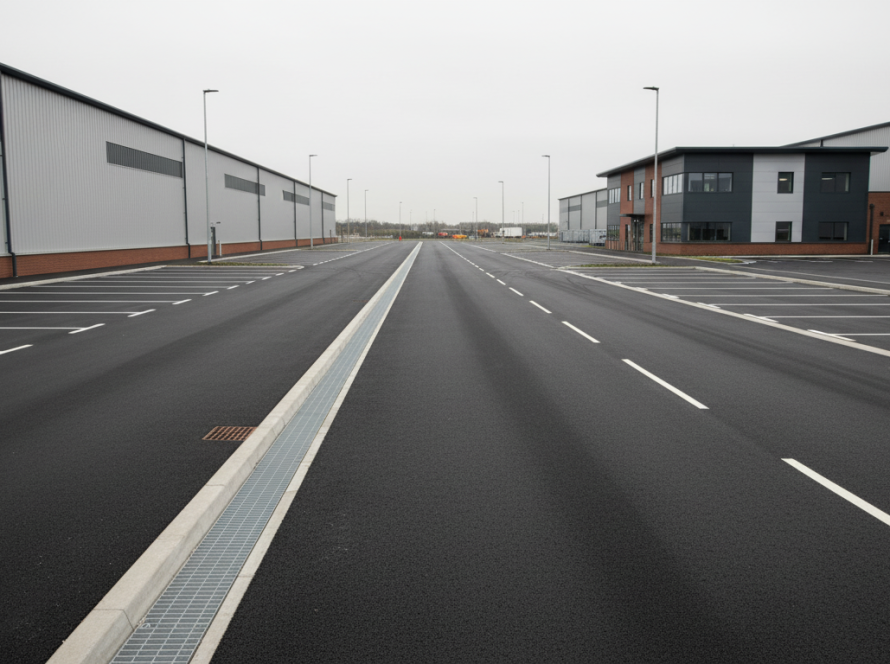
Loading bays and service yards are among the most heavily used external areas on commercial sites. They are subjected to constant vehicle movements, high axle loads, tight turning circles, and frequent stopping and starting. Unlike general access roads, these areas experience concentrated stress in specific zones where delivery vehicles reverse, turn, and idle. As a result, the approach to loading bay road surfacing UK projects must prioritise structural strength, surface durability, and long-term performance rather than appearance alone.
Service yards often support a mix of rigid lorries, articulated HGVs, forklifts, and vans. This varied traffic profile places uneven pressure across the surface, particularly along wheel tracks and turning points. If the surfacing design does not account for these conditions, premature wear such as deformation, cracking, or surface failure is likely to occur. For property managers and site operators, understanding these demands is essential when planning surfacing works or assessing existing surface issues.
Why Standard Road Surfacing Is Often Inadequate
Standard road surfacing solutions designed for light vehicular traffic are rarely suitable for loading bays. The stresses created by slow-moving, heavily laden vehicles differ significantly from those experienced on estate roads or car parks. Heavy braking forces, static loads during unloading, and repeated turning movements all accelerate surface fatigue.
In many cases, failures occur not because of poor materials but due to inappropriate specification. A surface that performs well on a general access road may not withstand the same conditions in a confined service yard. This is why loading bay road surfacing UK schemes typically require thicker asphalt layers, enhanced sub-base construction, and careful attention to joint detailing and edge support.
The Importance of Sub-Base Design in Service Yard Surfacing
The long-term success of any loading bay surface begins below ground level. The sub-base provides the foundation that distributes loads from vehicles into the ground beneath. In service yards, where axle loads are high and concentrated, sub-base quality becomes critical.
A well-designed sub-base must be constructed using properly graded aggregate, compacted in controlled layers to achieve the required bearing capacity. Any weakness at this stage will eventually reflect through the finished surface as rutting or settlement. Inadequate compaction or insufficient thickness often leads to uneven surfaces that pose safety risks and disrupt operations.
For commercial sites, investing in professional sub-base preparation is not an optional extra but a fundamental requirement. This is a key part of comprehensive commercial surfacing and road surfacing works, where performance and reliability are more important than short-term cost savings.
Asphalt and Tarmac Choices for Loading Bays
Selecting the right surfacing material is another critical decision. Asphalt and tarmac are widely used for loading bays due to their strength, flexibility, and ease of maintenance. However, not all asphalt mixes are suitable for heavy-duty environments.
Loading bays often require dense, high-strength surface courses that resist deformation under static loads. Binder layers must also be designed to absorb stresses without cracking. The use of inappropriate mixes can result in early surface movement, particularly during warmer weather when asphalt becomes more flexible.
Professional tarmac installation and road surfacing services ensure that material selection aligns with site-specific demands. This includes considering traffic frequency, vehicle weight, and operational patterns rather than relying on standard specifications.
Managing Turning Areas and High-Stress Zones
One of the most common problem areas in service yards is the turning circle. Vehicles manoeuvring into loading bays place extreme lateral forces on the surface, especially when turning at low speeds. These forces can cause surface shear, leading to cracking and surface breakdown if not properly managed.
Designing these areas often involves increasing asphalt thickness or incorporating reinforced layers to improve resistance to movement. Attention must also be paid to surface regularity, as uneven levels increase stress and accelerate wear. Proper profiling and compaction during installation are essential to ensure the surface performs as intended.
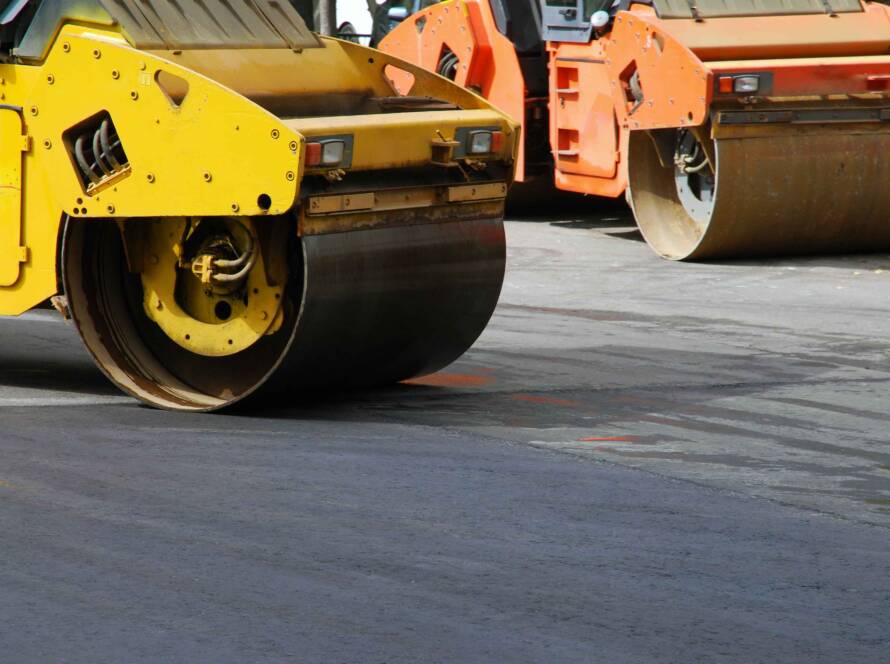
In some cases, machine-laid asphalt provides greater consistency and strength across these critical zones. The controlled application achieved through machine lay tarmac can be particularly beneficial for larger service yards where uniform performance is required across wide areas.
Drainage Considerations in Service Yard Surfacing
Effective drainage plays a significant role in the longevity of loading bay surfaces. Standing water weakens asphalt over time, increases the risk of freeze-thaw damage, and creates slip hazards for vehicles and pedestrians. Service yards are especially vulnerable due to flat gradients and obstructions such as loading docks and buildings.
Surface water must be directed away efficiently through appropriate falls, channels, and drainage points. Poor drainage design often leads to water pooling along wheel tracks or near bay entrances, accelerating surface deterioration. In the UK climate, where rainfall is frequent, drainage should always be treated as a core design element rather than an afterthought.
Maintenance Challenges in High-Use Commercial Areas
Even with the best design and materials, loading bay surfaces require ongoing maintenance. The intensity of use means that minor defects can quickly develop into larger problems if left unaddressed. Small cracks or surface wear may not seem urgent, but in heavy-use environments they allow water ingress and structural weakening.
Routine inspections help identify early signs of distress, enabling targeted repairs before operational disruption occurs. Timely interventions such as localised resurfacing or pothole repairs can extend the lifespan of the surface and reduce long-term costs. For site managers, planned maintenance is far more cost-effective than emergency repairs that interrupt deliveries and site access.
Safety and Compliance in Loading Bay Surfacing
Safety is a primary concern in service yards, where vehicles, pedestrians, and equipment operate in close proximity. Surface defects such as rutting, uneven levels, or loose material increase the risk of accidents and vehicle damage. A well-constructed surface contributes to predictable vehicle behaviour and safer working conditions.
Compliance with health and safety expectations also requires surfaces to remain structurally sound and free from hazards. Poor surfacing can expose property owners to liability if accidents occur due to known defects. This makes professional installation and maintenance not just a practical choice but a responsible one.
Planning Surfacing Works Around Operational Needs
One of the biggest challenges with loading bay surfacing projects is minimising disruption. Many commercial sites operate on tight schedules, with deliveries forming a critical part of daily operations. Surfacing works must therefore be planned carefully to maintain access and safety throughout the project.
Phased construction, out-of-hours working, and clear traffic management plans are often required. Experienced contractors understand how to sequence works to keep service yards operational while achieving a high-quality finish. This level of planning is an integral part of professional service delivery rather than an optional extra.
Long-Term Value of Professional Loading Bay Surfacing
For property owners and facility managers, loading bay road surfacing UK projects should be viewed as long-term investments rather than short-term fixes. A surface designed and installed to suit heavy-duty use will perform reliably for many years, reducing maintenance costs and operational disruptions.
Poorly specified or rushed installations often lead to repeated repairs, increased downtime, and higher overall expenditure. By contrast, professionally delivered surfacing provides predictable performance, improved safety, and better value over the life of the asset. Reviewing completed examples through a contractor’s portfolio can help demonstrate the practical benefits of quality workmanship in real-world commercial environments.