Road surface failure is a persistent issue across the UK, affecting private access roads, commercial estates, car parks, and shared lanes. While many surfaces are designed to last for decades, premature deterioration can occur within just a few years if key principles of design, preparation, and installation are overlooked. For property owners and site managers, understanding the causes of early failure is essential for protecting investment, maintaining safety, and avoiding repeated repair costs.
In the UK climate, surfaces are exposed to regular rainfall, temperature fluctuations, and varying traffic loads. These conditions place constant stress on road construction layers, meaning even minor weaknesses can develop into visible defects. Early road surface failure UK projects often share common underlying problems that originate long before the final surface is laid.
Inadequate Ground Preparation
One of the most frequent causes of early road surface failure is insufficient ground preparation. The performance of any surfaced area depends heavily on the condition of the ground beneath it. If the existing soil is unstable, poorly compacted, or unsuitable for the intended traffic load, the finished surface will inevitably suffer.
Ground preparation involves assessing soil conditions, removing unsuitable material, and installing a stable foundation capable of supporting the surface structure. When this process is rushed or incomplete, settlement can occur. This leads to surface deformation, cracking, and uneven levels that become more pronounced over time. In many UK cases, visible failure is blamed on the surface material, when the real issue lies beneath.
Professional contractors experienced in commercial road surfacing understand that thorough preparation is essential for long-term performance, particularly on access roads serving mixed vehicle types.
Poor Sub-Base Construction
Closely linked to ground preparation is the quality of the sub-base. The sub-base acts as the structural platform for the surface layer, distributing loads and preventing movement. Inadequate thickness, incorrect material selection, or poor compaction can all result in early surface failure.
In the UK, sub-bases must be designed to cope with wet ground conditions and repeated loading. When sub-base construction is compromised, the surface above may initially appear sound but will gradually show signs of distress. Cracks, rutting, and depressions often develop as traffic causes the surface to flex beyond its design limits.
Sub-base issues are particularly common on private roads and lightly trafficked areas where construction standards may be reduced to save costs. Unfortunately, these savings are often short-lived, as remedial works become necessary far sooner than expected.
Inadequate Drainage Provision
Water is one of the most damaging factors affecting road surfaces in the UK. Without effective drainage, moisture can penetrate through joints, cracks, and porous layers, weakening the structure from within. Over time, this leads to stripping, potholes, and surface breakup.
Early road surface failure UK sites frequently show signs of poor drainage design. Standing water after rainfall, soft verges, and saturated sub-base layers are all indicators that water is not being managed correctly. Even high-quality surfacing materials will fail prematurely if water is allowed to accumulate beneath or within the surface.
Proper drainage design includes consideration of surface falls, edge detailing, and sub-surface drainage systems. Integrating drainage at the construction stage is far more effective than attempting to address water issues after failure has already begun.
Incorrect Material Selection
Choosing the wrong surfacing material for the intended use is another common cause of early failure. Different applications require different performance characteristics, and not all surfaces are suitable for every environment.
For example, access roads serving commercial premises require materials capable of withstanding heavier loads and frequent turning movements. Using lighter-duty materials in these areas often results in surface deformation and cracking within a short period. Similarly, surfaces exposed to slow-moving traffic and stationary loads may require different specifications than those designed for free-flowing vehicles.
Engaging experienced contractors who provide tarmac installation services helps ensure materials are selected based on practical performance rather than initial appearance or cost alone.
Insufficient Compaction During Installation
Compaction plays a critical role in the durability of road surfaces. If surfacing layers are not compacted correctly, air voids remain within the material. These voids allow water ingress and reduce the overall strength of the surface.
Inadequate compaction often occurs when works are carried out too quickly, using unsuitable equipment, or in poor weather conditions. While the surface may look acceptable immediately after installation, weaknesses become apparent as traffic loading increases.
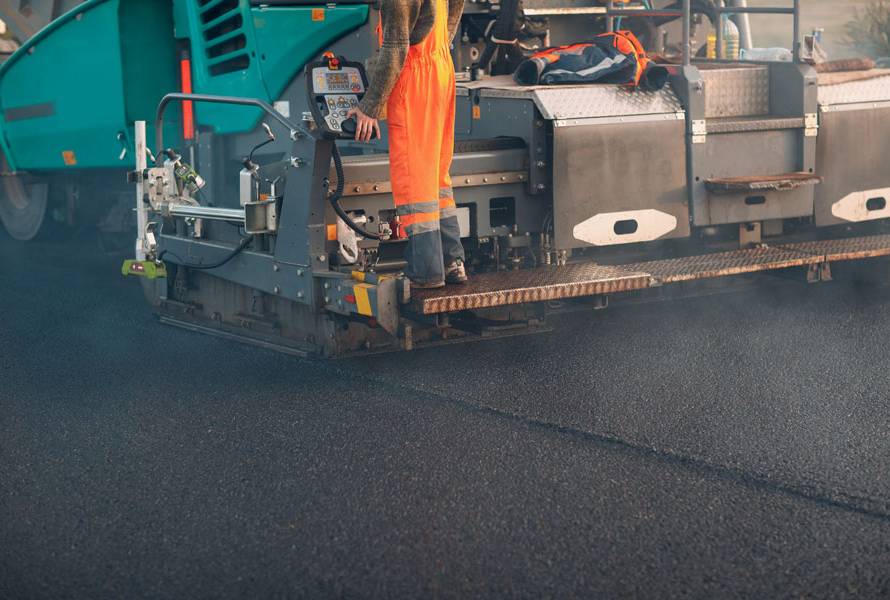
Modern installation methods, such as machine-laid tarmac provide more consistent compaction and thickness control, reducing the risk of early failure and improving overall surface lifespan.
Overloading Beyond Design Capacity
Many early road surface failure UK cases arise because the surface is subjected to loads beyond its original design capacity. This is common on sites where usage changes over time, such as residential developments that later accommodate delivery vehicles or construction traffic.
When a surface is not designed for heavier loads, stress concentrates in specific areas, leading to cracking, rutting, and edge breakdown. Turning areas and junctions are particularly vulnerable, as these experience higher shear forces compared to straight runs.
Regular reviews of site usage and timely upgrades can help prevent this type of failure, ensuring the surface continues to meet operational demands.
Poor Edge Support and Detailing
Edges are often the weakest point of a road surface. Without adequate restraint, surfaces can spread laterally under traffic loads, leading to cracking and material loss. This is especially common on private roads bordered by soft ground or landscaping.
Early signs of edge failure include crumbling edges, visible gaps, and water ingress along the perimeter. Over time, this damage can extend into the main running surface, accelerating overall deterioration.
Proper edge detailing, kerbing, or structural restraints should always be incorporated during construction to provide long-term stability.
Delayed Maintenance and Minor Repairs
Even well-constructed surfaces require ongoing maintenance. Small defects such as hairline cracks or localised depressions can allow water to penetrate and undermine the structure if left untreated.
In the UK, freeze-thaw cycles exacerbate minor defects, turning small issues into significant failures within a single winter season. Prompt intervention through professional pothole repair services can significantly extend the life of a surface and prevent widespread damage.
Delaying maintenance often results in higher long-term costs and more disruptive repair works.
Environmental and Weather-Related Factors
The UK climate presents unique challenges for road surfacing. Frequent rainfall, temperature fluctuations, and occasional extreme weather events all contribute to surface stress. While these factors cannot be controlled, their impact can be mitigated through appropriate design and construction practices.
Surfaces designed without allowance for thermal movement or moisture management are more likely to fail prematurely. Experienced contractors account for these conditions, ensuring materials and construction methods are suited to the local environment.
Preventing Early Road Surface Failure
Preventing early road surface failure UK projects ultimately comes down to informed decision-making and professional execution. From initial assessment through to installation and maintenance, each stage plays a role in determining long-term performance.
Property owners and site managers benefit from working with contractors who prioritise proper preparation, suitable materials, and proven installation methods. Reviewing previous projects through a contractor’s portfolio of completed works can provide valuable insight into their approach and experience.
Investing in quality at the outset reduces the likelihood of premature failure, protects budgets, and ensures road surfaces remain safe and functional for years to come.