Most road surfaces don’t fail suddenly.
They warn you — quietly at first.
Hairline cracks, pooling water, uneven levels, or loose edges are often dismissed as minor issues. But left unaddressed, these early signs lead to structural failure, safety risks, and expensive repairs. Understanding when a road surface needs attention — and acting early — can save time, money, and disruption.
Early Warning Signs of Road Surface Failure
A road doesn’t need to be full of potholes to be a problem. Some of the most serious issues start subtly.
Cracking and Surface Splits
Small cracks allow water to penetrate the surface. Over time, this weakens the base layer, causing expansion, movement, and eventual surface breakdown.
Standing Water After Rain
Poor drainage is a major cause of road failure. If water doesn’t run off correctly, it seeps into the structure below, accelerating damage.
Uneven Levels and Depressions
Sunken areas often indicate a weak or poorly compacted base. These spots worsen under traffic load and can become hazardous quickly.
Loose Edges and Deterioration
Edges are often the first areas to fail. Once they break down, the damage spreads across the surface.
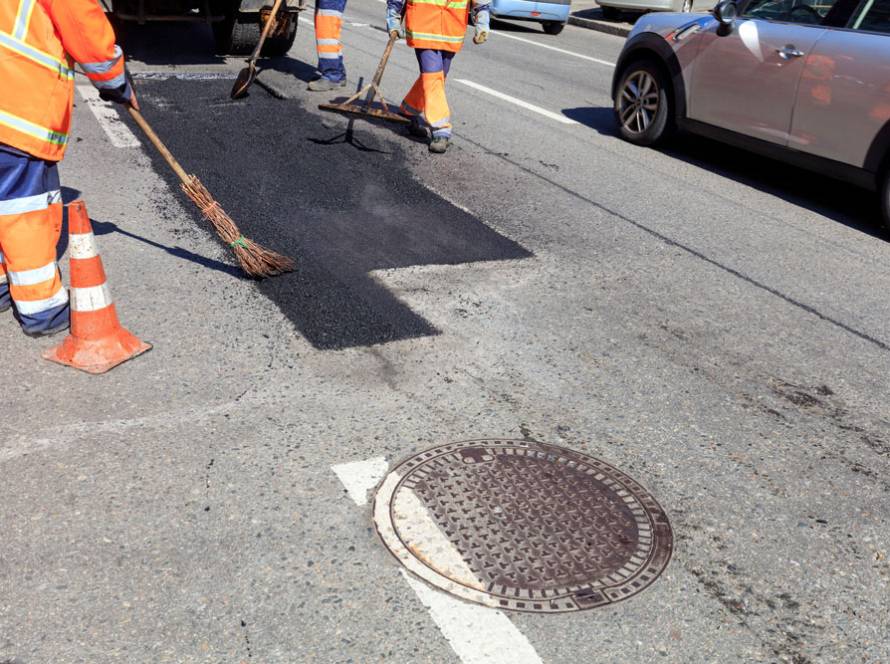
Why Patch Repairs Often Don’t Work Long-Term
Quick fixes may seem cost-effective, but repeated patching is rarely a permanent solution.
Common reasons patch repairs fail include:
- Underlying base issues left untreated
- Water ingress continuing beneath the surface
- Poor material bonding between old and new layers
- Traffic load exceeding the surface design
In many cases, professional resurfacing or full reconstruction is the smarter long-term investment.
Choosing the Right Road Surfacing Solution
Not all roads are used the same way — and neither are surfacing solutions.
Factors that determine the correct approach include:
- Traffic volume and vehicle weight
- Ground conditions and drainage requirements
- Environmental exposure
- Intended lifespan and maintenance expectations
A professional surfacing contractor assesses these elements before recommending the most suitable solution.
What Professional Road Surfacing Involves
High-quality road surfacing is about engineering, not shortcuts.
A proper project typically includes:
- Detailed site inspection and planning
- Correct excavation and base preparation
- Precision laying with accurate levels and falls
- Thorough compaction for long-term stability
- A clean, durable finish designed for real-world use
This process ensures the surface performs under pressure — not just on completion day.
One Contractor, Multiple Surfacing Solutions
Working with a single, experienced contractor simplifies the entire process. From preparation to completion, having all services handled by one team ensures consistency, accountability, and quality control.
To explore the full range of professional surfacing solutions available — including road surfacing, car parks, access roads, and groundworks — view our complete services here:
Why Professional Surfacing Saves Money Over Time
While professional surfacing may cost more upfront, it significantly reduces long-term expenses by:
- Minimising repair frequency
- Extending surface lifespan
- Reducing disruption to operations
- Improving safety and compliance
A properly surfaced road is an asset — not a recurring problem.
Final Thoughts
Road surfaces don’t fail overnight — they fail when early signs are ignored or shortcuts are taken. Investing in professional road surfacing ensures your surface is built to handle traffic, weather, and time.
If your road, access route, or commercial surface is showing signs of wear, the right solution isn’t another temporary fix — it’s expert assessment and proper installation from the ground up.
Explore professional surfacing services and find the right solution for your site.