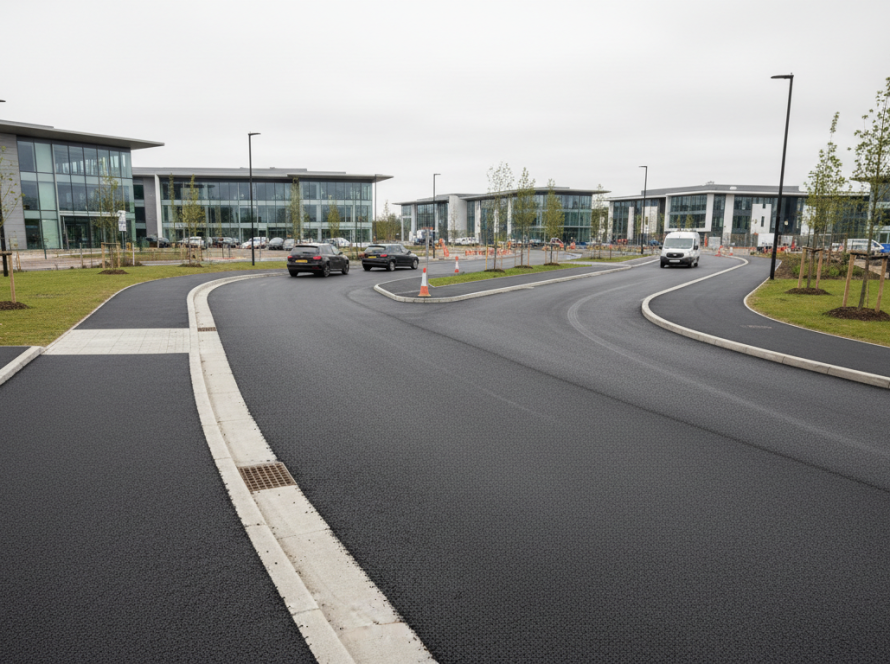
Kerbs are often viewed simply as the boundary between a road and a footpath or verge, but they play a vital structural role in maintaining the integrity of a road. A properly installed kerb provides lateral support for the road surface, helps manage drainage, and protects the edges of the pavement from breaking away under traffic loads.
When even a single kerb becomes loose, the surrounding road construction can begin to weaken. Although the damage may initially appear insignificant, it can create conditions that allow water infiltration, edge movement and progressive structural deterioration. For property owners, commercial site managers and developers responsible for private roads or access routes, recognising the importance of kerb maintenance can help prevent far more expensive repairs later.
How Kerbs Support the Road Structure
Road surfaces rely on more than just layers of asphalt or tarmac. The entire pavement structure works as a system, with kerbs acting as edge restraints that prevent the road from spreading sideways under the weight of passing vehicles.
Without adequate support, repeated traffic loading causes the edges of the pavement to flex more than intended. This movement can gradually weaken the bond between the surface and the underlying layers, creating cracks that allow moisture to penetrate the construction.
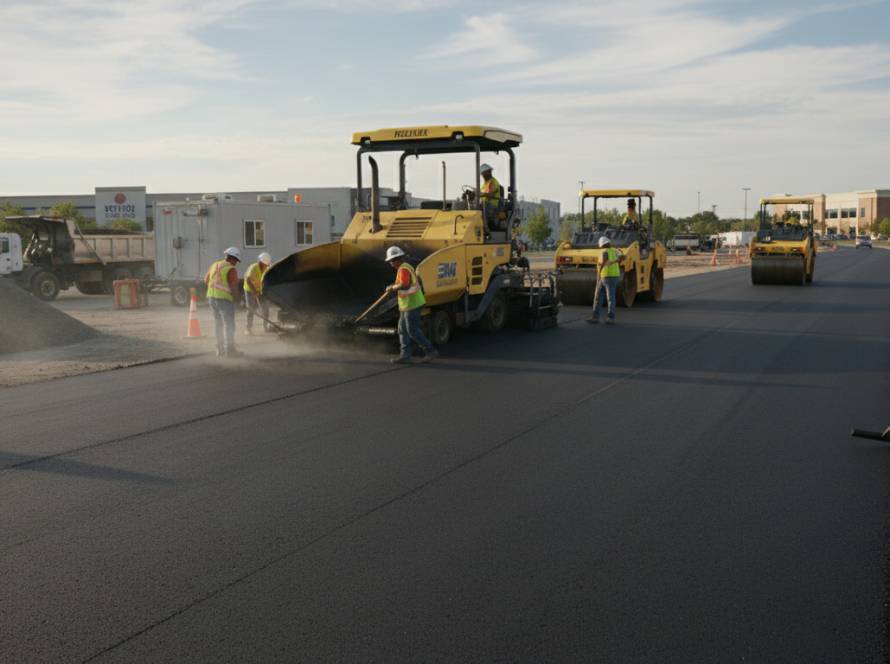
Professional tarmac installation always considers edge support as an essential part of achieving a durable, long-lasting road.
What Causes Kerbs to Become Loose?
Kerbs can become unstable for several reasons. Ageing construction, poor installation, repeated impacts from vehicles, ground movement and water erosion all contribute to movement over time.
Heavy goods vehicles mounting kerbs during deliveries place considerable stress on both the kerb units and their concrete foundation. Likewise, tree roots, frost action and inadequate drainage can slowly displace kerbs from their original position.
Although movement may initially measure only a few millimetres, this is often enough to compromise the surrounding road structure.
Water Quickly Exploits Weak Points
Once a kerb begins to move, small gaps often develop between the kerb and the road surface. These gaps provide an easy path for rainwater to enter the pavement.
Water infiltration is one of the leading causes of road surface failure UK because moisture weakens the sub-base and reduces its ability to support vehicle loads. During colder weather, trapped water can freeze and expand, widening cracks and accelerating deterioration through repeated freeze-thaw cycles.
Over time, what began as a loose kerb can result in widespread pavement damage extending well beyond the original defect.
Edge Breakdown Often Starts First
Road edges generally experience less structural support than the centre of the carriageway. When kerbs no longer provide effective restraint, the pavement edge becomes increasingly vulnerable.
Small cracks often appear first, followed by gradual crumbling of the asphalt. Vehicles travelling close to the edge place additional stress on these weakened areas, causing larger pieces of material to break away.
If repairs are delayed, edge deterioration can spread along significant sections of road, increasing repair costs and disruption.
Drainage Performance Can Be Affected
Kerbs play an important role in directing surface water towards gullies and drainage channels.
A displaced kerb can interrupt this carefully designed flow, allowing water to collect in areas where it would not normally remain. Persistent standing water accelerates surface wear, reduces skid resistance and increases the likelihood of moisture entering the pavement structure.
Good drainage is fundamental to long-term road performance, which is why regular inspections should include both the road surface and its kerb lines.
Traffic Loads Accelerate the Damage
Every vehicle passing over a weakened section of road increases the stress acting on loose kerbs and surrounding materials.
Commercial estates, industrial facilities and retail parks often experience frequent heavy vehicle movements that magnify these forces. Delivery lorries, refuse vehicles and construction traffic all generate substantial loading that can rapidly enlarge relatively minor defects.
Investing in properly designed commercial road surfacing ensures roads are built to accommodate expected traffic volumes while maintaining structural stability.
Loose Kerbs Can Lead to Potholes
As water weakens the underlying layers and edge support continues to deteriorate, the surface eventually begins to collapse.
The first visible signs may include shallow depressions, cracking or loose aggregate. These defects often develop into potholes as traffic repeatedly breaks away unsupported material.
Potholes formed near road edges frequently indicate that the underlying issue extends beyond the surface itself. Simply filling the hole without addressing the loose kerb may only provide a temporary solution.
Where isolated defects have already appeared, prompt pothole repairs help restore safety while preventing further water ingress.
Why Early Intervention Is So Important
Repairing a loose kerb is generally straightforward when detected early. Reinstating the kerb, repairing the surrounding asphalt and restoring proper drainage can often prevent further deterioration.
If left unattended, however, water infiltration and repeated traffic loading continue to weaken larger sections of the pavement. Eventually, repairs may require excavation of the road structure, replacement of the sub-base and full resurfacing.
Early maintenance therefore represents a far more cost-effective approach than allowing relatively minor defects to develop into extensive structural failures.
Routine Inspections Protect Long-Term Performance
Many road defects develop gradually and remain unnoticed until significant damage becomes visible.
Routine inspections should assess not only the road surface but also the condition of kerbs, drainage channels, edges and surrounding infrastructure. Loose kerbs, cracked joints and early movement can all be identified before they begin affecting the wider pavement.
Planned maintenance programmes help property owners manage repair budgets more effectively while reducing the likelihood of emergency works and unexpected disruption.
Conclusion
A single loose kerb may appear insignificant, but it can be the starting point for widespread road deterioration. By allowing water to enter the pavement, reducing edge support and disrupting drainage, an unstable kerb creates the conditions that lead to road surface failure UK.
Regular inspections and prompt repairs help preserve the structural integrity of roads, protect surrounding infrastructure and extend the lifespan of the entire pavement. For commercial premises, residential developments and private access roads alike, maintaining kerbs should be viewed as an essential part of responsible road asset management rather than a cosmetic concern.