When managing a road surface, whether on a commercial site, private estate, or access road, one of the most important decisions is whether to apply an overlay or carry out strengthening works. While both approaches aim to extend the life of a road, they serve very different purposes and are suited to different conditions.
An overlay typically involves applying a new layer of asphalt or tarmac over an existing surface. This is often chosen when the underlying structure remains sound but the surface has deteriorated due to wear, weather, or minor cracking. In contrast, strengthening involves more substantial intervention, addressing deeper structural weaknesses within the road construction.
Understanding when strengthening is required instead of overlaying is critical. Choosing incorrectly can lead to premature failure, increased maintenance costs, and operational disruption.
What Is a Road Overlay?
A road resurfacing overlay UK solution is generally used when the existing road has cosmetic or surface-level defects but retains structural integrity. The process involves laying a new wearing course over the existing surface, improving appearance, skid resistance, and minor imperfections.
When Overlaying Works Well
Overlaying is suitable in situations where the road shows signs of ageing but not structural failure. This includes cases where there is light cracking, minor rutting, or surface fretting. It is also effective when drainage is functioning correctly and there are no signs of deep deformation or sub-base failure.
In these cases, a professional tarmac installation can restore performance efficiently without the need for extensive groundwork.
However, overlaying has limitations. It does not address deeper issues, and applying it over a failing structure often leads to recurring problems.
What Does Road Strengthening Involve?
Road strengthening goes beyond surface treatment. It involves improving the load-bearing capacity of the road by addressing weaknesses in the base or sub-base layers. This may include partial reconstruction, additional base layers, or full-depth repairs.
Strengthening is designed to ensure the road can handle current and future traffic demands, particularly where usage has increased over time.
Key Elements of Strengthening Work
Strengthening typically involves removing compromised layers, rebuilding sections of the road, and installing new materials designed to support heavier loads. It may also include improving drainage systems and adjusting road levels.
This type of work is commonly carried out as part of larger commercial surfacing projects, where long-term durability is essential.
Signs That Strengthening Is Required
Recognising when a road requires strengthening instead of overlaying is essential for avoiding repeated repairs. Surface appearance alone is not always a reliable indicator, as deeper issues may not be immediately visible.
Structural Cracking and Alligator Cracking
One of the clearest signs that strengthening is needed is the presence of structural cracking, often referred to as alligator cracking. This pattern of interconnected cracks indicates that the road structure beneath the surface has failed.
Overlaying such a surface will not resolve the issue. The cracks will quickly reflect through the new layer, leading to further deterioration.
Deep Rutting and Deformation
Rutting caused by heavy traffic is another indicator of structural weakness. If the deformation extends beyond the surface layer and into the base, an overlay will not provide a lasting solution.
Strengthening addresses the root cause by reinforcing or replacing the affected layers, ensuring the road can withstand continued use.
Frequent Pothole Formation
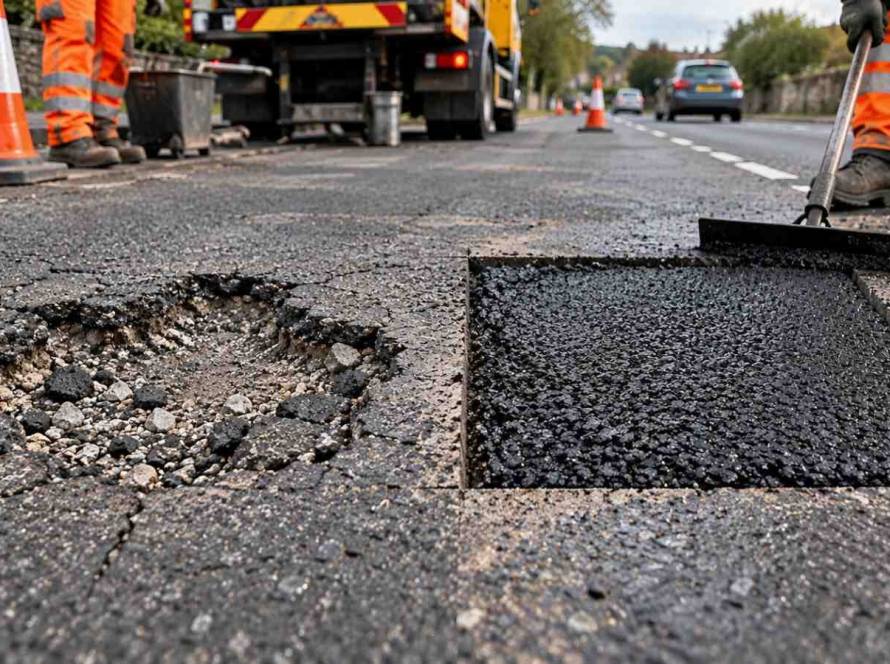
Recurring potholes often signal underlying problems. While localised repairs such as pothole repairs can provide short-term relief, repeated failures suggest that the road structure is compromised.
In such cases, strengthening is necessary to prevent ongoing maintenance issues.
Drainage Failures
Poor drainage can weaken the sub-base over time, leading to instability. If water is infiltrating the road structure, simply overlaying the surface will trap moisture and accelerate deterioration.
Strengthening works often include drainage improvements, ensuring water is effectively managed and does not compromise the road.
When Overlaying Is Not Enough
Overlaying is often chosen for its speed and cost-effectiveness, but it is not always appropriate. Applying an overlay to a structurally unsound road can create a false sense of improvement while allowing underlying issues to worsen.
In high-traffic environments such as industrial estates, logistics hubs, and access roads for heavy vehicles, the demands placed on the surface require a robust foundation. Without strengthening, overlays may fail prematurely, leading to additional costs and disruption.
The Role of Traffic Load in Decision-Making
Traffic load is a critical factor when deciding between overlaying and strengthening. Roads that were originally designed for light use may no longer be suitable if traffic patterns have changed.
Increased Commercial Usage
Many private roads and access routes experience increased usage over time, particularly in commercial settings. Delivery vehicles, construction traffic, and heavy goods vehicles place significant stress on road structures.
In these scenarios, strengthening ensures the road can accommodate higher loads without failure.
Long-Term Performance Considerations
While overlaying may appear cost-effective initially, it may not provide the longevity required for heavily used roads. Strengthening offers a more durable solution, reducing the need for frequent maintenance.
Investing in the correct approach from the outset helps avoid repeated interventions and associated costs.
Cost Implications and Value Over Time
Cost is often a deciding factor when choosing between overlaying and strengthening. Overlaying generally involves lower upfront costs and quicker completion times. However, this must be weighed against long-term performance.
Strengthening requires a higher initial investment but delivers greater durability and reliability. For commercial sites, where downtime and disruption can have significant financial implications, this approach often provides better value over time.
The Importance of Professional Assessment
Determining whether a road requires overlaying or strengthening should always involve a professional assessment. Surface appearance alone does not provide enough information to make an informed decision.
Experienced contractors will assess factors such as structural integrity, traffic load, drainage, and existing materials before recommending a solution. This ensures that the chosen approach aligns with the specific needs of the site.
A comprehensive evaluation may involve core sampling, load testing, and visual inspections, all of which contribute to a more accurate understanding of the road’s condition.
Combining Overlay and Strengthening
In some cases, a combined approach may be appropriate. Sections of the road that are structurally sound can be overlaid, while weaker areas undergo strengthening.
This targeted strategy allows for efficient use of resources while ensuring the entire road performs consistently. It is particularly useful for larger sites where conditions may vary across different sections.
Planning for Future Performance
Whether choosing overlaying or strengthening, it is important to consider future requirements. Roads should be designed and maintained with long-term performance in mind, taking into account potential changes in usage and environmental conditions.
Working with experienced professionals ensures that the chosen solution not only addresses current issues but also supports future demands.
Conclusion
Choosing between overlaying and strengthening is not simply a matter of cost or convenience. It requires a clear understanding of the road’s condition, usage, and long-term requirements.
Overlaying is effective for surface-level improvements where the underlying structure remains sound. Strengthening, on the other hand, is essential when deeper issues are present, ensuring the road can withstand continued use without failure.
Making the right decision at the right time helps protect your investment, reduce maintenance costs, and ensure a safe, durable surface for years to come.